

Sustainable fashion tech is rewriting what it means to dress smart for the modern world. Over 90 million tons of textile waste are produced each year worldwide, much led by North American and European fast fashion. For American urban professionals juggling busy schedules, stylish apparel that supports the environment and daily convenience is more than a trend. This guide reveals how advanced technology and sustainability unite for fashion that elevates your look while protecting your data and the planet.
Table of Contents
- Defining Sustainable Fashion Tech Today
- Types of Sustainable Fashion Technology
- How Tech Enhances Everyday Apparel
- Environmental Impact and Ethical Concerns
- Key Considerations When Choosing Products
Key Takeaways
| Point | Details |
|---|---|
| Sustainable Fashion Tech | This emerging field focuses on reducing the environmental impact of fashion through circular economy principles and innovative technologies. |
| Technological Innovations | Advanced tools like AI, blockchain, and smart textiles promote efficiency, transparency, and less waste in clothing production. |
| Environmental and Ethical Considerations | Sustainability involves not only ecological impacts but also the rights and conditions of workers in the fashion supply chain. |
| Informed Choices | Consumers should evaluate brands based on transparency, material quality, and ethical manufacturing to make responsible fashion choices. |
Defining Sustainable Fashion Tech Today
Sustainable fashion technology represents a revolutionary approach to transforming the textile industry’s environmental impact. By integrating cutting-edge technological solutions, this emerging field seeks to address the critical ecological challenges posed by traditional fashion manufacturing. Sustainable technologies are reimagining how apparel can be produced with minimal environmental damage, focusing on reducing carbon emissions, water pollution, and waste generation.
At its core, sustainable fashion tech challenges the linear production model dominated by fast fashion. Instead of creating disposable clothing that quickly ends up in landfills, these technologies promote a circular economy approach. Innovators are developing advanced materials, production techniques, and design methodologies that prioritize recyclability, durability, and reduced resource consumption. From biodegradable fabrics to zero-waste pattern cutting, the goal is to create fashion that respects both environmental constraints and aesthetic demands.
Understanding sustainable fashion requires acknowledging its complexity as a social and ecological system. The approach goes beyond simple environmental metrics, encompassing broader considerations of social sustainability and systemic transformation. This means evaluating not just the materials and production processes, but also the human and economic impacts of fashion technologies. Urban professionals seeking secure, stylish clothing are increasingly drawn to brands that demonstrate transparent supply chains, ethical labor practices, and genuine commitment to reducing ecological footprints.
Pro tip: When shopping for sustainable fashion tech, look beyond marketing claims and research brands’ actual sustainability certifications and transparent reporting practices.
Types of Sustainable Fashion Technology
Sustainable fashion technologies are rapidly transforming textile production through advanced digital innovations. Industry 4.0 technologies like IoT, AI, blockchain, and digital manufacturing are revolutionizing how clothing is designed, produced, and tracked, creating unprecedented opportunities for environmental responsibility and manufacturing efficiency. These technologies enable precise resource management, waste reduction, and enhanced transparency throughout the fashion supply chain.
Key technological innovations in sustainable fashion include advanced digital design tools, smart manufacturing processes, and intelligent tracking systems. Computer-Aided Design (CAD) and Computer-Aided Manufacturing (CAM) technologies allow designers to create zero-waste patterns, minimizing fabric waste during production. 3D printing and digital fabrication techniques enable on-demand manufacturing, reducing overproduction and inventory waste. Blockchain technologies provide unprecedented supply chain transparency, allowing consumers to trace the entire lifecycle of their garments from raw material sourcing to final production.
The most promising sustainable fashion technologies integrate multiple digital solutions to create holistic, environmentally conscious production models. Artificial Intelligence algorithms can optimize fabric cutting patterns, predict fashion trends to reduce unnecessary production, and recommend more sustainable material choices. Internet of Things (IoT) sensors can track environmental impact in real-time, helping manufacturers make data-driven decisions about resource consumption and waste reduction. Fashion Innovation: Blending Tech With Modern Style demonstrates how these technologies are not just theoretical concepts, but practical solutions transforming the fashion industry.
Here’s a summary of how different technologies drive sustainable fashion innovation:
| Technology Type | Key Benefits | Example Applications |
|---|---|---|
| Blockchain | Supply chain transparency | Garment lifecycle tracking |
| Artificial Intelligence | Production optimization | Trend prediction, pattern cutting |
| Internet of Things | Real-time resource monitoring | Environmental impact tracking |
| 3D Printing & Digital Fabrication | On-demand manufacturing | Custom apparel, reduced waste |
Pro tip: Research clothing brands that openly share their technological innovations and supply chain transparency to make more informed sustainable fashion choices.
How Tech Enhances Everyday Apparel
Technology is revolutionizing everyday apparel by transforming how clothing functions, performs, and adapts to individual needs. Digital innovations are optimizing design processes, reducing material waste, and enabling personalized manufacturing techniques that make clothing more intelligent and responsive to urban professionals’ dynamic lifestyles. From smart sensors embedded in fabrics to AI-driven design algorithms, tech is making clothing more than just a fashion statement.

Smart textiles represent a groundbreaking advancement in everyday apparel technology. These innovative fabrics incorporate sensors and electronic components that can monitor body temperature, track physical activity, and even adjust thermal properties in real-time. Urban professionals can now wear clothing that responds to environmental changes, providing unprecedented comfort and functionality. Moisture-wicking technologies, temperature-regulating materials, and performance-enhancing fabrics are no longer futuristic concepts but practical realities transforming how we experience clothing.
The integration of technology into everyday apparel extends beyond mere functionality. Role of Tech in Everyday Wear: Style Meets Security demonstrates how modern clothing can provide enhanced security features alongside aesthetic appeal. RFID-blocking materials protect personal information, while embedded tracking technologies offer safety benefits for urban commuters. Wearable tech is seamlessly blending protection, performance, and style, creating a new paradigm of clothing that actively supports and protects the wearer throughout their daily activities.
Pro tip: Invest in multi-functional tech apparel that offers both style and practical features, focusing on pieces that enhance your daily performance and personal security.
Environmental Impact and Ethical Concerns
The global fashion industry confronts unprecedented environmental challenges that demand immediate and transformative action. Fast fashion’s current model generates massive greenhouse gas emissions, consumes excessive water resources, and creates immense textile waste that overwhelms global ecosystems. The environmental footprint extends far beyond manufacturing, impacting biodiversity, water systems, and long-term planetary health through continuous production of disposable clothing items.
Ethical concerns in the fashion industry are deeply intertwined with environmental sustainability. Global supply chains often exploit vulnerable workers in developing countries, creating complex socioeconomic challenges that extend beyond traditional environmental metrics. Labor conditions, wage disparities, and unsafe working environments represent critical human rights issues that sustainable fashion technologies aim to address. Transparent production processes, fair labor practices, and responsible manufacturing become crucial elements in creating a more equitable global textile ecosystem.
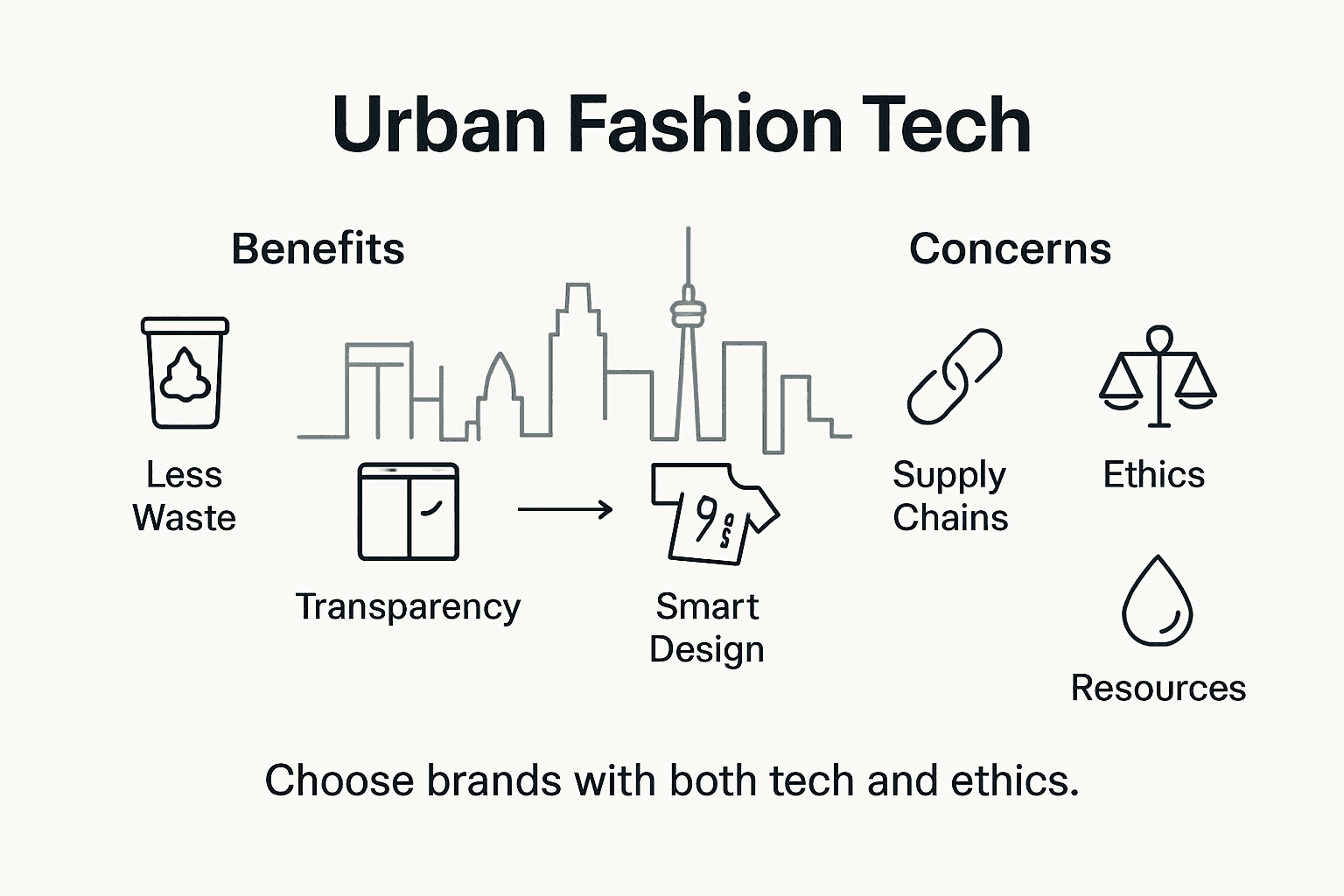
Technology offers promising solutions to mitigate these environmental and ethical challenges. Advanced recycling technologies, blockchain-enabled supply chain tracking, and circular economy design principles can transform how clothing is produced, consumed, and repurposed. Urban professionals increasingly demand accountability, pushing brands to adopt more transparent and responsible manufacturing practices. By integrating digital technologies with sustainable design philosophies, the fashion industry can potentially redesign its entire approach to production, waste management, and resource consumption.
Pro tip: Research clothing brands that provide comprehensive sustainability reports and demonstrate verifiable ethical manufacturing practices before making purchasing decisions.
Key Considerations When Choosing Products
Choosing sustainable fashion tech products requires a holistic approach that evaluates multiple critical factors beyond simple aesthetic appeal. Urban professionals must consider technological functionality, material sustainability, durability, and the broader environmental and ethical implications of their clothing choices. Why Choose Tech Apparel: Complete Essential Guide highlights the importance of understanding the comprehensive value proposition of modern technological apparel.
Key evaluation criteria include the product’s technological integration, performance capabilities, and sustainability metrics. Consumers should assess the specific technological features embedded in the garment, such as moisture-wicking properties, temperature regulation, RFID protection, or smart sensors. Material composition becomes crucial, with preference given to recycled fabrics, organic materials, and textiles produced through low-impact manufacturing processes. Additionally, the potential longevity of the product plays a significant role - clothing that maintains performance and aesthetic quality over multiple wear cycles represents a more sustainable investment.
Beyond individual product characteristics, urban professionals should consider the broader brand philosophy and corporate sustainability practices. This means investigating a company’s supply chain transparency, labor practices, carbon footprint reduction strategies, and commitment to circular economy principles. Reputable brands will provide detailed information about their manufacturing processes, material sourcing, and environmental impact mitigation strategies. Certifications from recognized sustainability organizations can offer additional credibility and assurance of the product’s ethical and environmental credentials.
Consider these critical factors when evaluating sustainable fashion tech products:
| Evaluation Aspect | Why It Matters | What To Look For |
|---|---|---|
| Material Quality | Impacts durability, footprint | Recycled, organic fabrics |
| Technological Functionality | Enhances daily performance | Smart sensors, temperature regulation |
| Ethical Manufacturing | Supports fair labor practices | Certified supply chain, transparency |
| Brand Sustainability | Defines overall impact | Sustainability reports, certifications |
Pro tip: Develop a personal sustainability scorecard that evaluates potential clothing purchases across technological functionality, material quality, durability, and brand ethical standards.
Embrace Secure and Sustainable Urban Style with InvisiTechWear
Sustainable fashion technology is redefining how urban professionals select their apparel by combining ecological responsibility with enhanced security and functionality. If you are seeking clothing and accessories that protect your personal information while embodying smart design and ethical manufacturing, InvisiTechWear offers innovative solutions that align perfectly with these goals. Our collection features tech-enabled products such as RFID-blocking wallets, stylish hoodies designed for durability and comfort, and other intelligent apparel that supports your dynamic lifestyle without compromising sustainability.

Discover the advantage of clothing crafted with cutting-edge technology that prioritizes both your security and the planet’s health. Visit our Products page to explore how smart textiles and functional design merge into fashion you can trust. Act now to join a community of modern consumers who value transparency, innovation, and responsible style by shopping today at InvisiTechWear. Stay ahead with secure urban style that truly makes a difference.
Frequently Asked Questions
What is sustainable fashion tech?
Sustainable fashion tech refers to the integration of advanced technologies in the fashion industry aimed at reducing environmental impacts and promoting social responsibility. It transforms traditional textile practices by focusing on circular economy principles, minimizing waste, and prioritizing ethical production methods.
How can technology enhance the functionality of everyday apparel?
Technology enhances everyday apparel through innovations like smart textiles that can monitor body conditions, moisture-wicking materials, and temperature-regulating fabrics. These features provide comfort, performance, and security, adapting clothing to the dynamic lifestyles of urban professionals.
What should I consider when choosing sustainable fashion tech products?
When choosing sustainable fashion tech products, evaluate material sustainability, technological functionality, durability, and the brand’s commitment to ethical manufacturing practices. Look for recycled or organic materials, embedded technologies, and transparency in supply chains to ensure responsible purchasing.
How does sustainable fashion tech address ethical concerns in the industry?
Sustainable fashion tech addresses ethical concerns by promoting transparency in supply chains and implementing fair labor practices. Technologies like blockchain enable traceability of garments, ensuring that workers’ rights are upheld and that production practices are accountable and responsible.


