

Finding the right balance between modern style and real-world security is a challenge for any urban professional. With city life bringing constant movement and crowded environments, the need for fashion that also protects your valuables has never been greater. Anti-theft apparel integrates advanced security features, like RFID blocking and smart design, directly into stylish clothing, offering a seamless solution for those who refuse to compromise on either safety or appearance.
Table of Contents
- What Defines Anti-Theft Apparel Today
- Types of Anti-Theft Clothing and Accessories
- Essential Security Features and Technologies
- How Fashion and Functionality Blend
- Risks, Limitations, and Common Misconceptions
- Comparing Anti-Theft Apparel to Traditional Wear
Key Takeaways
| Point | Details |
|---|---|
| Innovative Integration | Anti-theft apparel combines stylish design with advanced security features for enhanced personal safety. |
| Key Technologies | Essential technologies include RFID blocking, GPS tracking, and biometric authentication integrated into modern clothing. |
| Fashion Meets Functionality | Modern anti-theft apparel harmonizes aesthetic appeal with protective capabilities, making security a stylish choice. |
| Awareness of Limitations | Consumers should view anti-theft technologies as a supplement to traditional safety practices, not a complete solution to personal security. |
What Defines Anti-Theft Apparel Today
Anti-theft apparel represents a revolutionary intersection between fashion and personal security technology. Modern design focuses on seamlessly integrating protective features into clothing and accessories that look stylish while providing robust protection against theft. Anti-theft systems have evolved from rudimentary locks to sophisticated technological solutions that protect valuables through intelligent design.
Today’s anti-theft apparel encompasses several key technological innovations designed to enhance personal security:
- RFID-blocking materials that prevent unauthorized digital scanning of personal documents
- Hidden compartments with secure zipper mechanisms
- GPS-trackable fabric integrated into jackets and bags
- Slash-resistant textiles preventing quick cutting of clothing or bags
- Biometric authentication features embedded in accessories
The core philosophy behind modern anti-theft apparel is creating wearable security that doesn’t compromise aesthetic appeal. Manufacturers are increasingly using advanced textiles and smart design principles to develop clothing that looks contemporary while offering comprehensive protection. These garments aren’t just about preventing physical theft - they’re about providing digital security in an interconnected world.
Supply chain innovations have also transformed anti-theft apparel standards. Product authentication technologies now enable manufacturers to track items from production through consumer purchase, reducing counterfeiting risks and enhancing overall product integrity.
Pro tip: When selecting anti-theft apparel, prioritize items that balance technological protection with personal style and comfort.
Types of Anti-Theft Clothing and Accessories
Modern anti-theft clothing and accessories have transformed personal security into a sophisticated, stylish experience. Anti-theft systems now integrate cutting-edge technologies directly into wearable items, offering protection that’s both intelligent and discreet. These innovative solutions go far beyond traditional security methods, creating garments that actively defend against theft while maintaining a sleek, contemporary aesthetic.
The primary categories of anti-theft clothing and accessories include:
-
Jackets and Outerwear
- RFID-blocking inner pockets
- GPS-trackable fabric
- Slash-resistant materials
-
Bags and Backpacks
- Hidden compartments
- Lockable zippers
- Biometric authentication features
-
Accessories
- Smart wallets with digital tracking
- Wearable security tags
- Bluetooth-enabled personal safety devices
Technology has revolutionized how we think about personal security in clothing. Retail theft prevention now incorporates sophisticated embedded technologies that protect not just against physical theft, but also digital vulnerabilities like unauthorized scanning and data theft. Modern anti-theft apparel uses advanced materials and smart design to create a multilayered defense system integrated seamlessly into everyday wear.
From urban professionals to frequent travelers, anti-theft clothing offers protection that adapts to diverse lifestyles. These garments leverage advanced sensors, smart textiles, and innovative design principles to create clothing that’s more than just an accessory - it’s a personal security solution. Manufacturers are continuously pushing boundaries, developing clothing that looks stylish while providing comprehensive protection against both physical and digital threats.

Here’s a comparison of anti-theft apparel categories and who benefits most from each:
| Apparel Type | Key User Groups | Distinct Value Provided |
|---|---|---|
| Jackets & Outerwear | Travelers, commuters | Discreet storage, travel security |
| Bags & Backpacks | Students, businesspeople | Secured valuables, hands-free mobility |
| Accessories | Shoppers, city dwellers | Quick-access protection, digital safety |
Pro tip: When selecting anti-theft clothing, prioritize versatility and comfort alongside security features to ensure practical, everyday usability.
Essential Security Features and Technologies
Anti-theft apparel has transformed personal security through sophisticated technological innovations that go far beyond traditional protection methods. Advanced RFID technologies now enable real-time tracking and identification, creating intelligent garments that actively defend against potential security threats with unprecedented precision and sophistication.
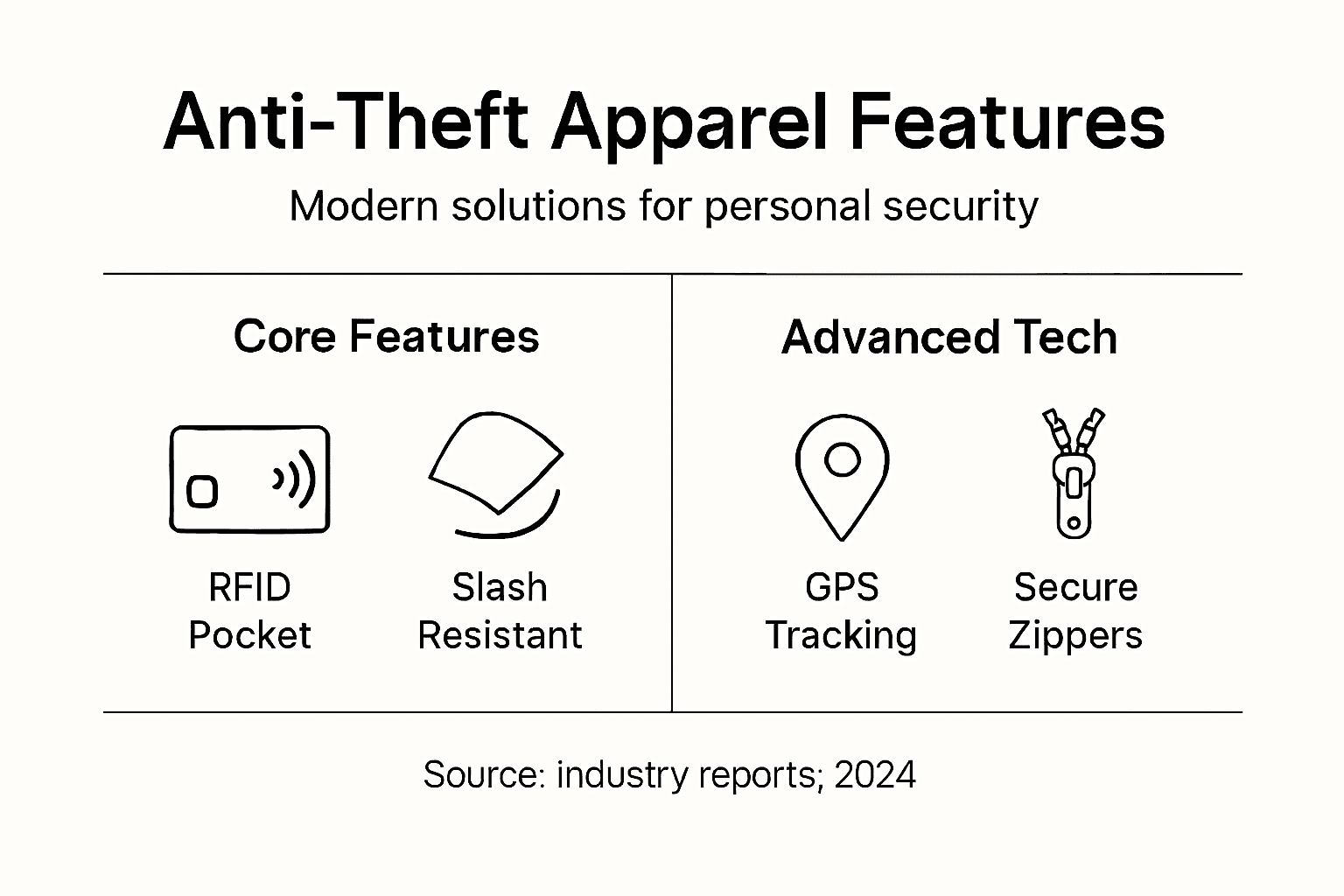
The core security technologies in modern anti-theft apparel include:
-
Digital Protection Systems
- RFID blocking capabilities
- Encrypted communication channels
- Biometric authentication mechanisms
-
Physical Security Features
- Slash-resistant fabrics
- Hidden compartment designs
- Tamper-resistant zippers and closures
-
Tracking and Monitoring Technologies
- GPS-enabled tracking
- Bluetooth-connected security alerts
- Proximity sensors for device protection
Security management technologies have revolutionized how we conceptualize personal security. Modern anti-theft apparel integrates AI-powered video analytics, secure access control systems, and intelligent monitoring capabilities that create comprehensive defense ecosystems within clothing and accessories. These technologies work seamlessly to detect, prevent, and respond to potential security breaches in real-time.
The future of anti-theft technology lies in its ability to become increasingly invisible and intuitive. Emerging innovations are focusing on creating security features that are so seamlessly integrated that they feel like a natural extension of personal style. Manufacturers are developing smart textiles with embedded sensors, adaptive protection mechanisms, and intelligent response systems that can anticipate and neutralize potential security threats before they become actual risks.
Pro tip: Select anti-theft clothing with multilayered security technologies that balance sophisticated protection with comfort and aesthetic appeal.
Below is a summary of advanced security technologies used in modern anti-theft apparel and their main benefits:
| Technology | Purpose | Primary Benefit |
|---|---|---|
| RFID Blocking | Prevent digital theft | Protects cashless payments |
| GPS Tracking | Locate lost/stolen apparel | Enables item recovery |
| Biometric Authentication | User-specific access | Deterrent to unauthorized use |
| Slash-Resistant Fabrics | Resist cutting attacks | Preserves integrity of apparel |
| Encrypted Communication | Secure data transfer | Defends against cyber intrusion |
How Fashion and Functionality Blend
Anti-theft apparel represents a groundbreaking fusion where security meets style, challenging traditional perceptions of protective clothing. Smart fashion innovations have transformed security features from clunky add-ons into seamlessly integrated design elements that enhance rather than detract from aesthetic appeal. Modern designers now view security technologies as fundamental components of contemporary fashion, not just functional afterthoughts.
Key strategies for blending fashion and functionality include:
-
Aesthetic Integration
- Concealed security technologies
- Minimalist design principles
- Color-coordinated protective elements
-
Material Innovation
- Smart fabrics with embedded sensors
- Lightweight protective textiles
- Flexible security-enhanced materials
-
Design Philosophy
- Technology as a design feature
- Invisible protective mechanisms
- Multifunctional garment concepts
Digital transformation in fashion has revolutionized how we perceive clothing’s potential. Anti-theft apparel now represents more than just a protective mechanism - it’s a sophisticated statement about personal security and technological integration. Designers are creating garments that offer robust protection while maintaining high-end fashion aesthetics, effectively making security an integral part of personal style.
The evolution of anti-theft apparel demonstrates a profound shift in technological design. Contemporary manufacturers are developing clothing that responds dynamically to user needs, with security features that adapt seamlessly to different environments and personal preferences. By treating technology as a core design element rather than an external addition, these innovations are redefining the boundaries between fashion, function, and personal protection.
Pro tip: Choose anti-theft clothing that feels like a natural extension of your personal style, not an obvious security device.
Risks, Limitations, and Common Misconceptions
Anti-theft apparel, while innovative, is not an infallible security solution. Biometric technology risks reveal complex challenges surrounding personal privacy and data protection that consumers must carefully consider before investing in high-tech clothing.
Common misconceptions and limitations include:
-
Privacy Concerns
- Potential unauthorized data collection
- Possible surveillance vulnerabilities
- Unintended personal information exposure
-
Technological Limitations
- Inconsistent protection mechanisms
- Battery-dependent security features
- Potential system vulnerabilities
-
Performance Misconceptions
- Overestimating absolute protection
- Assuming universal effectiveness
- Neglecting traditional security practices
Metaverse technology risks highlight that anti-theft apparel is not a guaranteed defense against sophisticated theft techniques. Technological solutions can create a false sense of security, potentially making wearers less vigilant about their personal safety and belongings. Smart consumers understand that these technologies are supplementary tools, not comprehensive security solutions.
The most effective approach involves understanding both the capabilities and limitations of anti-theft technologies. Consumers should view these innovations as intelligent supplements to traditional security practices, not magical shields. Maintaining situational awareness, practicing basic safety protocols, and selecting high-quality, well-designed anti-theft apparel remain critical components of personal security strategy.
Pro tip: Treat anti-theft technologies as an additional layer of protection, not a complete replacement for personal vigilance and common-sense safety practices.
Comparing Anti-Theft Apparel to Traditional Wear
Traditional clothing serves aesthetic and practical purposes, while anti-theft apparel introduces a revolutionary dimension of personal security. Clothing function dynamics have dramatically shifted with the integration of advanced protective technologies that transform garments from passive coverings to active security systems.
Key differences between traditional and anti-theft wear include:
-
Design Philosophy
- Traditional: Aesthetics and comfort
- Anti-Theft: Security and functionality
- Hybrid: Balanced protection and style
-
Material Technology
- Traditional: Standard fabrics
- Anti-Theft: Smart, sensor-embedded textiles
- Enhanced: Performance-driven materials
-
Security Features
- Traditional: No integrated protection
- Anti-Theft: RFID blocking, GPS tracking
- Advanced: Multilayered security mechanisms
Professional attire evolution demonstrates that clothing is no longer just about appearance but about providing intelligent, adaptive solutions. Anti-theft apparel represents a paradigm shift where garments actively protect personal information, physical belongings, and individual safety while maintaining professional and stylish aesthetics.
The technological integration in modern clothing goes beyond simple embellishment. These innovative garments leverage advanced sensors, smart textiles, and sophisticated design principles to create a comprehensive security ecosystem. Unlike traditional wear that remains passive, anti-theft apparel dynamically responds to potential threats, offering wearers peace of mind without compromising personal style or comfort.
Pro tip: When selecting anti-theft apparel, prioritize items that seamlessly blend security features with your existing wardrobe aesthetic.
Experience Next-Level Security and Style with InvisiTechWear
The article highlights the growing need for anti-theft apparel that combines cutting-edge technology with stylish, everyday wear. If you want to protect your valuables and personal information without sacrificing fashion or comfort, InvisiTechWear provides practical solutions designed to meet these exact goals. They understand the challenges of digital threats like RFID scanning and physical risks such as bag slashing, offering garments and accessories equipped with features like RFID-blocking fabrics, hidden compartments, and GPS tracking.

Discover the perfect blend of security and style in their versatile Jackets – Daon Tech collection or explore a wide range of tech-enabled products in their Products – Daon Tech lineup. Don’t wait until your belongings are vulnerable. Visit InvisiTechWear today and upgrade your wardrobe with innovative apparel that empowers your everyday security needs.
Frequently Asked Questions
What is anti-theft apparel and how does it work?
Anti-theft apparel is clothing and accessories designed with integrated security features such as RFID-blocking materials, hidden compartments, and GPS tracking to protect personal belongings from theft. These garments combine fashion with functionality, offering both style and safety.
What are the key features to look for in anti-theft clothing?
When selecting anti-theft clothing, look for features such as RFID-blocking capabilities, slash-resistant fabrics, hidden compartments, and biometric authentication. These elements enhance personal security while ensuring comfort and style.
How does anti-theft apparel compare to traditional clothing?
Anti-theft apparel differs from traditional clothing by incorporating advanced security technologies such as GPS tracking and RFID protection. While traditional clothing focuses on aesthetics and comfort, anti-theft garments prioritize security and functionality, providing active protection against theft.
What are the limitations of anti-theft apparel?
While anti-theft apparel offers innovative protection, it is not foolproof. Limitations include potential privacy concerns with biometric data, reliance on battery life for certain features, and the risk of overestimating the protection these garments provide. It is crucial to combine anti-theft technology with basic safety practices.


