

Smart clothing blends style with technology, inviting urban professionals to rethink what they expect from their wardrobe. Navigating daily routines in cities from New York to London means choosing garments that seamlessly protect and perform. This guide delivers practical steps for inspecting, caring, and testing smart garments, helping you safeguard both your investment and the embedded features that keep you connected and secure.
Table of Contents
- Step 1: Prepare and Inspect Your Smart Garments
- Step 2: Clean and Dry Tech-Infused Fabrics Safely
- Step 3: Store and Handle Clothing to Protect Technology
- Step 4: Test Features to Confirm Proper Functionality
Quick Summary
| Key Point | Explanation |
|---|---|
| 1. Inspect Smart Garments Before Use | Always check for damage, sensor placement, and fabric condition to ensure reliability and longevity of your smart clothing. |
| 2. Follow Gentle Cleaning Techniques | Use cold water, mild detergent, and air dry to protect integrated technology while maintaining garment quality. |
| 3. Store Properly to Preserve Technology | Store smart garments flat or on padded hangers in a cool, dry place to prevent damage to electronic components. |
| 4. Regularly Test Functionality | Perform monthly checks on performance features and connectivity to catch potential issues before they affect daily use. |
Step 1: Prepare and Inspect Your Smart Garments
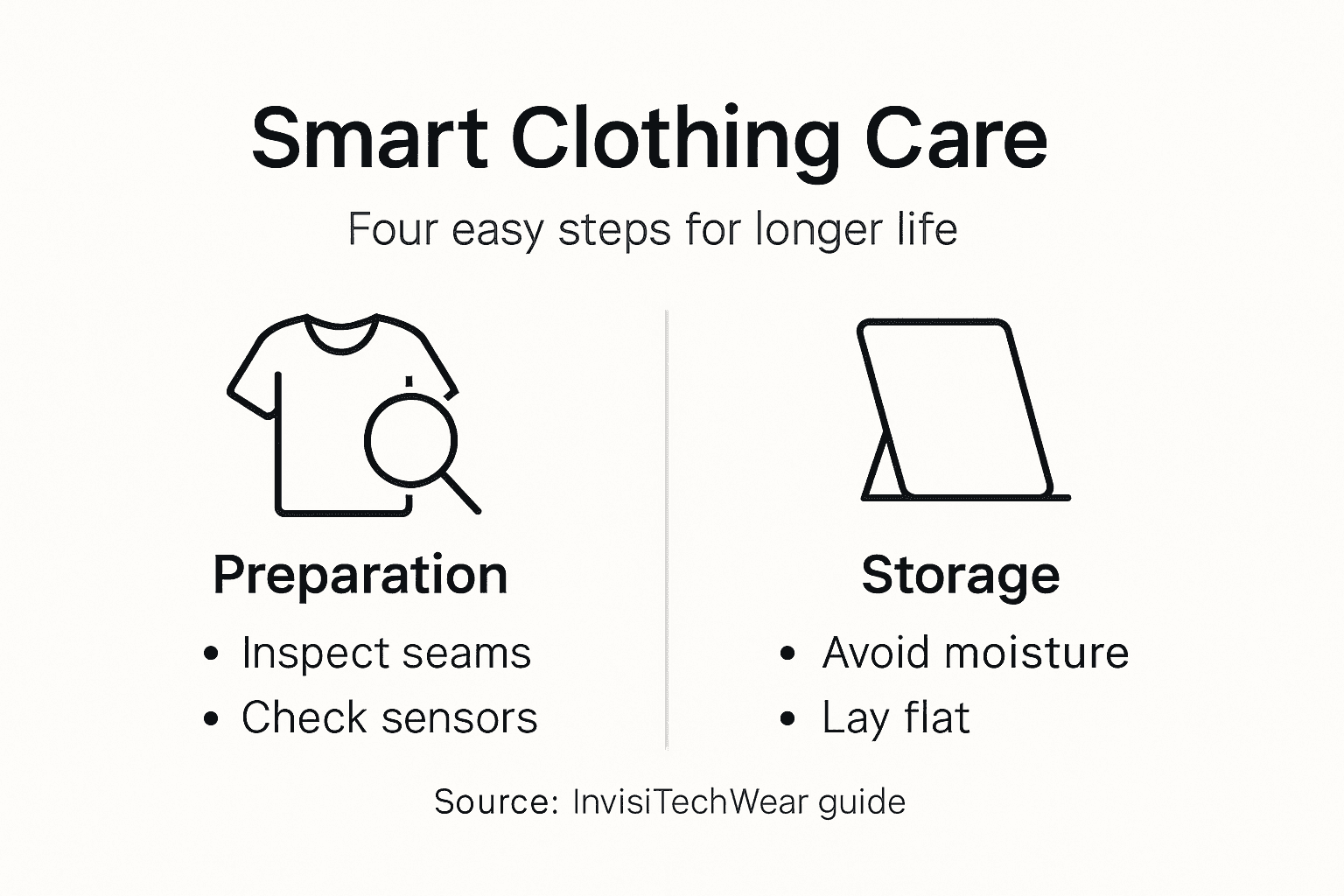
Before wearing your smart clothing, take time to prepare and inspect it properly. This upfront effort ensures your tech-infused garments perform reliably and last longer. You’ll check for damage, verify sensor placement, and confirm everything’s ready for daily use.
Start by laying your smart garment on a clean, flat surface. Look over the entire piece carefully, paying attention to any visible damage or loose threads. Smart clothing often contains integrated sensors and conductive textiles that need to remain undamaged to function properly.
Check these key areas:
- Seams and stitching around sensor areas for fraying or separation
- Conductive elements for discoloration, cracking, or corrosion
- Fabric condition for rips, pilling, or unusual wear patterns
- Closures and fasteners to ensure they operate smoothly
- Sensor placement to confirm nothing has shifted out of position
Proper inspection before your first wear and regularly afterward prevents small issues from becoming major problems.
Examine any electronic components or connectivity ports carefully. Sensor placement and garment condition assessments help optimize performance over time. Make sure connectors look clean and dry, with no visible corrosion or debris.
If your smart garment has a companion app or control interface, activate it now to verify the device pairs successfully with your phone or wearable device. This confirms the integrated technology responds correctly before you depend on it during your day.
Document any existing damage with photos. This creates a baseline so you can track how your garment ages and identify whether new damage occurs from use or maintenance. Store these photos with your purchase receipt for warranty reference if needed.
Pro tip: Keep your smart garment’s documentation and care instructions in a dedicated folder or digital note—you’ll reference them regularly, and having everything organized saves time when questions arise about specific materials or sensors.
Step 2: Clean and Dry Tech-Infused Fabrics Safely
Cleaning your smart garments properly keeps sensors and conductive elements functioning while protecting the environment. The right approach minimizes damage to embedded technology and extends your clothing’s lifespan. You’ll learn gentle washing and drying techniques designed specifically for tech-enhanced fabrics.
Start by checking your garment’s care label for manufacturer recommendations. Different smart clothing may have unique requirements based on their specific sensors and materials. When in doubt, opt for the gentlest approach available.
Wash your smart garments using these steps:
- Use cold water on a short cycle to reduce stress on sensors and embedded technology
- Place the garment in a mesh laundry bag to provide extra protection during the wash
- Select a mild detergent that won’t damage conductive elements or degrade fabrics
- Avoid fabric softeners and bleach as these can interfere with sensor function
- Never use hot water, which can damage electronics and synthetic fibers
Gentle detergents and cold water washing protect your smart clothing’s technology while reducing microfiber pollution.
After washing, drying is critical. Never use a clothes dryer or direct heat, as this damages sensors and conductive textiles. Instead, air dry completely by laying the garment flat on a clean surface away from direct sunlight or heat sources.
Allow adequate drying time before wearing or storing your smart garment. Moisture trapped near electronics can cause corrosion or malfunction. If your garment has removable components or detachable tech elements, dry those separately from the fabric.
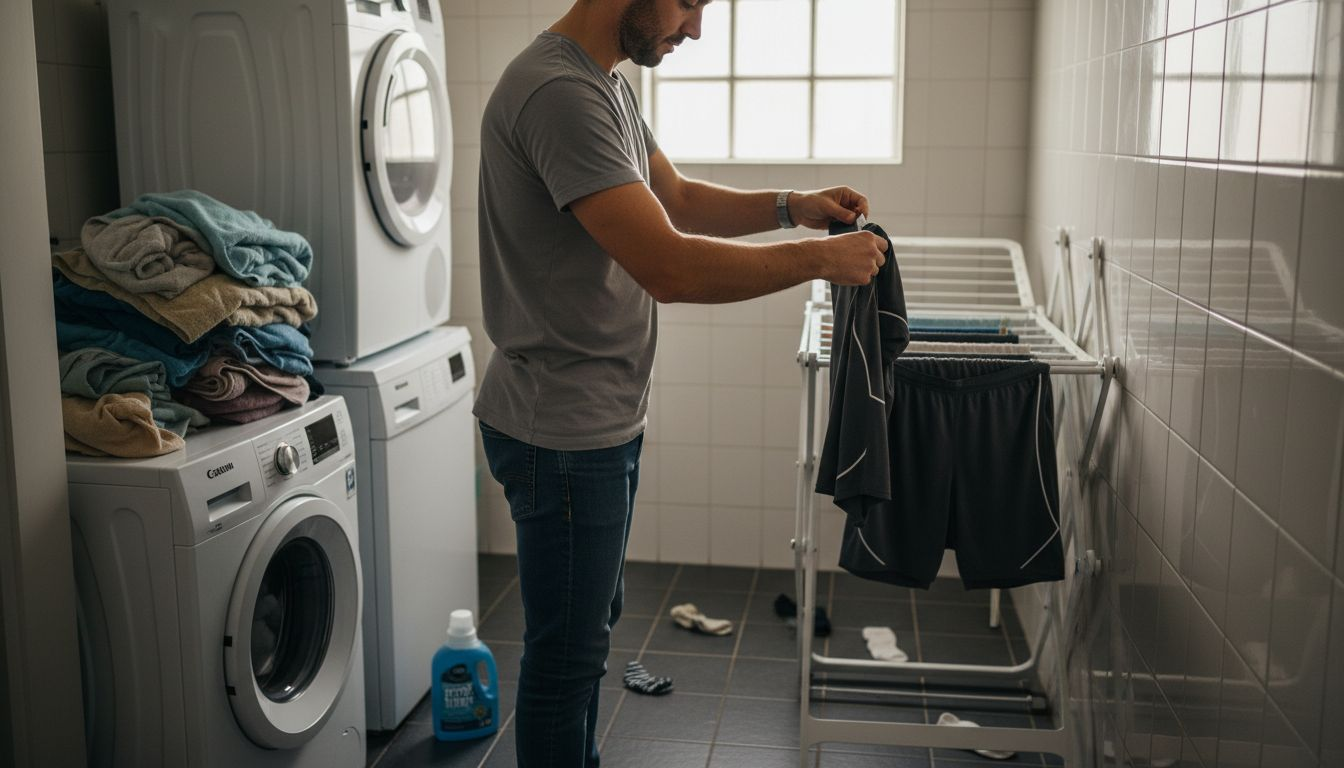
Once dry, verify everything still works correctly. Activate your companion app or check sensor responsiveness to confirm the cleaning process didn’t affect performance. Mesh laundry bags and air drying techniques are standard practices that preserve both your garment’s function and reduce environmental impact.
Pro tip: Wash your smart garments less frequently by spot-cleaning stains immediately and airing them out between wears—this extends both the garment’s life and the lifespan of its integrated technology.
Here’s a quick reference comparing traditional clothing care with smart garment maintenance:
| Aspect | Traditional Clothing | Smart Garments |
|---|---|---|
| Washing Method | Machine wash, any cycle | Cold water, gentle cycle |
| Detergent | Any detergent | Mild, sensor-safe detergent |
| Drying | Machine drying allowed | Air dry only, no heat |
| Storage | Fold or hang anywhere | Flat or padded hanger, moisture control |
| Inspection Frequency | Occasionally | Before each use, regularly |
| Technology Testing | Not required | Monthly checks and app pairing |
Step 3: Store and Handle Clothing to Protect Technology
How you store and handle your smart garments between wears directly impacts sensor accuracy and component longevity. Proper storage protects embedded electronics from environmental stress and physical damage. You’ll learn the best practices for keeping your tech-enhanced clothing in peak condition.
Choose a storage location that maintains stable conditions. Select a cool, dry place away from direct sunlight, extreme heat, or humidity fluctuations. Temperature and humidity control are essential for protecting electronic components within your garments.
Follow these storage and handling guidelines:
- Store flat or hang on padded hangers to avoid creasing sensors or compressing circuitry
- Never fold smart garments tightly, as this can damage flexible electronics and conductive pathways
- Keep away from moisture to prevent corrosion of metal components and sensor degradation
- Avoid excessive bending or stretching, which stresses circuitry and conductive textiles
- Store separately from heavy items that could compress or damage embedded technology
Controlled temperature and humidity are critical for maintaining consistent sensor accuracy and extending component lifespan.
When handling your smart garments daily, treat them with care. Avoid rough handling, pulling on sensor areas, or tugging at electronic components. If your garment has detachable tech elements, remove them before storage to prevent accidental damage.
Check your stored garments periodically. Look for signs of moisture, mold, or corrosion. Activate the companion app occasionally to verify sensors remain functional. This proactive approach catches issues early before they become serious problems.
Flexible and stretchable wearable materials require special attention during handling to maintain circuitry integrity. Never force seams or connectors, and handle attachment points gently to prevent mechanical stress that could compromise performance.
Before wearing stored garments after extended periods, inspect them again for any issues that may have developed during storage. This ensures everything functions properly before you depend on your smart clothing during your day.
Pro tip: Store a silica gel packet in your smart garment’s storage area to absorb excess moisture and maintain optimal humidity levels, especially in humid climates or seasons.
Step 4: Test Features to Confirm Proper Functionality
Regularly testing your smart garment’s features ensures everything works as intended. A quick functionality check catches problems early before they affect your daily use. You’ll learn simple methods to verify sensors, connectivity, and performance features.
Start by opening your garment’s companion app or control interface. Most smart clothing connects via Bluetooth or other wireless protocols to your smartphone or wearable device. Allow the app to search for and pair with your garment if it hasn’t already done so.
Run these basic functionality tests:
- Verify wireless connectivity by checking that your garment appears as a connected device in the app
- Activate sensor readings to confirm data is transmitting correctly to your phone
- Check response times by triggering features and noting how quickly the garment responds
- Test all interactive elements like buttons, toggles, or gesture controls if your garment has them
- Review sensor accuracy by comparing readings to known baseline values when possible
Sensor accuracy and connectivity verification are essential for confirming your garment performs as designed.
Pay attention to how the garment feels during testing. Assess comfort, fit, and whether any components feel loose or uncomfortable. Comfort and functional reliability during extended wear matter as much as sensor performance for long-term satisfaction.
Test your smart garment in the conditions where you normally wear it. If it’s designed for workouts, test it during movement. If it’s for daily wear, test it during typical activities. Real-world testing reveals issues that laboratory testing might miss.
Document your results by taking screenshots of readings or noting any anomalies. Keep records of when you last tested features. This creates a maintenance history that helps identify patterns or declining performance over time.
If you notice any issues during testing, consult your garment’s troubleshooting guide or contact customer support. Don’t ignore warning signs like failed connections, inaccurate readings, or unresponsive features.
To help you troubleshoot, here’s a summary of common smart garment issues and suggested actions:
| Issue | Possible Cause | Suggested Action |
|---|---|---|
| Sensor not responding | Connection lost or corrosion | Check pairing, inspect connectors |
| Inaccurate readings | Sensor shift or dirt | Realign sensors, clean sensor area |
| Fabric deterioration | Improper washing or drying | Follow care instructions, avoid heat |
| Connectivity failure | App issue or battery drain | Restart app, check battery level |
| Physical discomfort | Bent circuitry or fit | Inspect garment, adjust positioning |
Pro tip: Test your smart garment’s features monthly, even if everything seems fine—this routine prevents surprises and helps you catch gradual performance decline before it becomes problematic.
Keep Your Smart Clothing Performing at Its Best with InvisiTechWear
Maintaining smart clothing requires careful attention to sensor placement, gentle cleaning techniques, and proper storage to protect embedded electronics and ensure lasting performance. If you value innovative apparel that blends style with cutting-edge technology, InvisiTechWear offers collections designed for both fashion and function. Explore our Tee Shirts – Daon Tech and Hoodies – Daon Tech crafted to meet the highest standards of durability and smart garment care.

Discover the difference that thoughtful design and quality materials can make in extending your smart wardrobe’s life. Visit InvisiTechWear now and secure apparel that stands up to your maintenance efforts while elevating your everyday tech style. Start shopping today to experience smart fashion that lasts and supports your active lifestyle.
Frequently Asked Questions
How can I inspect my smart clothing for damage before wearing it?
Before wearing your smart clothing, lay it flat on a clean surface and inspect for visible damage like frayed seams or loose threads. Check sensor placement and confirm that conductive elements are in good condition.
What is the best way to clean my smart garments without damaging them?
To clean your smart garments, use cold water on a gentle cycle and a mild detergent that is safe for conductive elements. Always place the garment in a mesh laundry bag for extra protection during the wash cycle and avoid fabric softeners.
How should I store my smart clothing to maintain its technology?
Store your smart clothing in a cool, dry place, either laid flat or hung on padded hangers. Avoid tight folds and ensure that it is kept away from moisture to protect the embedded electronics.
What steps should I take to test the features of my smart garment?
To test your smart garment’s features, open the companion app, check for connectivity, and trigger the sensors to verify functionality. Document your findings and perform these tests at least once a month to ensure optimal performance.
How often should I inspect my smart clothing for wear and tear?
Inspect your smart clothing before each wear, paying close attention to seams, sensor placements, and overall fabric condition. Regular checks will help identify potential issues early, allowing for timely repairs or adjustments.


