

Choosing what to wear is no longer limited to your closet when digital fashion puts endless style at your fingertips. For urban professionals balancing busy schedules and a strong online presence, the shift to virtual clothing offers more than trend appeal—it blends self-expression with new levels of control over your digital identity and data. This article spotlights digital fashion as a practical tool for social media, augmented reality, and even security-conscious wardrobe ownership, giving your look maximum impact where it matters most.
Table of Contents
- Defining Digital Fashion And Core Concepts
- Types Of Digital Fashion And Main Distinctions
- How Digital Fashion Works In Practice
- Real-World Applications And Benefits
- Risks, Limitations, And Common Misconceptions
Key Takeaways
| Point | Details |
|---|---|
| Digital Fashion Revolutionizes Style | Digital fashion represents a new product category focused on virtual clothing, reshaping how individuals express their style without physical clothing constraints. |
| Sustainability Benefits | Digital fashion eliminates waste from traditional clothing production, allowing professionals to expand their wardrobes guilt-free and reduce environmental impact. |
| Diverse Applications | Digital fashion can enhance your online presence across various platforms, making it suitable for social media branding, virtual networking, and personal style curation. |
| Understanding Investment Risks | Familiarize yourself with potential legal, technological, and platform-dependent risks before investing in digital fashion to ensure informed decisions. |
Defining digital fashion and core concepts
Digital fashion isn’t just a niche experiment—it’s a genuine product category reshaping how style works. At its core, digital fashion refers to clothing and accessories that exist exclusively in digital form, designed to be worn virtually on your body through photos, videos, or real-time augmented reality overlays.
Think of it this way: instead of buying a physical jacket that hangs in your closet, you purchase a digital file that appears on your photographed or live-streamed image. It’s the same satisfaction of styling yourself, minus the fabric.
What Makes Digital Fashion Different
[Digital fashion represents] https://www.tandfonline.com/doi/pdf/10.1080/20932685.2023.2251033) a significant evolution from traditional design tools. For years, fashion designers used digital software to preview collections before manufacturing. Now, those digital garments are the final product—sold directly to consumers who wear them online.
The key distinction matters for your lifestyle. You’re not buying something to physically wear tomorrow; you’re acquiring a digital asset for social media presence, gaming avatars, or virtual events.
Core Concepts You Should Know
Digital fashion operates around several essential components:
- Virtual clothing: Garments designed specifically for digital spaces with no physical counterpart
- Augmented reality (AR) integration: Technology that superimposes clothing onto your real body in photos and videos
- Social media presence: Styling your online appearance across Instagram, TikTok, and other platforms
- The metaverse: Virtual worlds where you attend events, work, and socialize while wearing digital outfits
- NFT ownership: Blockchain-verified ownership of exclusive digital pieces
Each element connects to how modern professionals curate multiple identities across digital spaces.
Why This Matters for Your Daily Life
[Digital fashion merges physical concepts with virtual technologies] (https://www.sciencedirect.com/science/article/pii/S0747563222002291) in ways that affect real decisions you make. You might wear the same blazer to three client meetings, but your digital fashion lets you appear in different styles across Zoom calls without physical wardrobe constraints.
The convergence also matters for security-conscious professionals. Many digital fashion purchases now integrate with platforms that track ownership and authenticity—similar concerns that apply when protecting your personal data and identity online.
The Practical Reality
Digital fashion isn’t replacing traditional clothing. Instead, it’s creating parallel styling universes where you maintain different appearances. Your Instagram story might feature you in an exclusive digital jacket worth real money, while you’re physically wearing comfortable work-from-home clothes.
This separation between physical and digital presence appeals directly to young professionals managing multiple professional identities—your in-office self, your client-facing self, and your personal brand online.
Digital fashion gives you control over one aspect of your identity without the physical storage, maintenance, or cost constraints of traditional wardrobes.
Pro tip: Start by exploring how digital fashion applies to your existing social media presence—try AR filters that mimic designer pieces before investing in NFT-based digital clothing to understand which style approach fits your personal brand.

Types of digital fashion and main distinctions
Digital fashion isn’t one monolithic category—it splits into distinct types, each serving different purposes and consumer needs. Understanding these differences helps you determine which digital fashion investments actually fit your lifestyle and professional image.
The main distinction exists between digital fashion as a design tool versus digital fashion as a final product. Design tools help physical fashion brands visualize collections. Final products are what you actually buy and wear online—the garments exist only in digital form.
The Six Major Types
[Digital fashion categories] (https://www.tandfonline.com/doi/pdf/10.1080/20932685.2023.2251033) break down into six distinct product types:
- Virtual clothing for social media: Digital outfits you wear in photos and videos on Instagram, TikTok, and other platforms
- Augmented reality (AR) try-on pieces: Garments you preview on your real body before purchasing physical versions
- Metaverse avatars: Full digital wardrobes for gaming platforms and virtual worlds where you work or socialize
- NFT fashion items: Blockchain-verified digital garments with proof of ownership and exclusivity
- 3D-printed wearables: Virtual designs converted into physical items using advanced printing technology
- Phygital hybrids: Products that blur the line—you buy physical clothing with embedded digital components or exclusive digital content
Each type addresses different professional and social needs.
Here’s a quick comparison of digital fashion types and their ideal uses:
| Digital Fashion Type | Purpose | Best For |
|---|---|---|
| Virtual clothing | Enhance online photos/images | Social media branding |
| AR try-on pieces | Preview styles before buying | Online shopping, wardrobe planning |
| Metaverse avatars | Dress avatars in virtual worlds | Gaming, virtual networking |
| NFT fashion items | Secure ownership and exclusivity | Collectors, digital luxury |
| 3D-printed wearables | Physical output from digital design | Tech-savvy consumers |
| Phygital hybrids | Blend physical and digital benefit | Trendsetters, brand engagement |
Key Distinctions That Matter
The differences between these types affect how you use them. Virtual social media pieces cost less but offer zero physical functionality. They’re purely about your digital appearance.
Augmented reality pieces let you test styles before committing to physical purchases—practical for young professionals experimenting with work wardrobes. Metaverse items represent longer-term digital identity investments.
[Digital garment design and production processes] (https://www.sciencedirect.com/science/article/pii/S0747563222002291) vary significantly across types. Some require custom 3D modeling. Others use standard templates you personalize. NFT items involve blockchain infrastructure, adding authentication layers.
What Separates Digital from Physical
Unlike traditional fashion, digital pieces require no storage space, maintenance, or physical shipping. You purchase instantly and own them permanently across platforms.
However, digital items carry different ownership concerns. Your physical blazer belongs to you forever. A digital piece depends on platform stability—if the company disappears, your access might vanish.
The most successful digital fashion purchases offer real value across your digital life, not just temporary status on one social platform.
Practical Applications for Your Life
A tech-focused professional might invest in AR pieces for virtual meetings, social media outfits for LinkedIn presence, and metaverse avatars for professional networking events in virtual spaces.
The key is recognizing which type matches your actual digital activities. Don’t buy expensive NFT fashion if you never attend metaverse events.
Pro tip: Start with free or low-cost AR filters and social media digital pieces to understand your digital fashion preferences before investing in high-ticket NFT items or metaverse wardrobes.
How digital fashion works in practice
Digital fashion isn’t mysterious once you understand the mechanics. The process involves creating virtual garments, enabling consumers to access them, and integrating them into everyday digital spaces. It’s surprisingly straightforward when you break it down.
The journey starts with design and ends with you wearing a digital piece across multiple platforms. Each step involves specific technology and strategic choices about where your digital clothes live.
The Design to Consumer Pipeline
Fashion brands begin with 3D design software that allows designers to create garments without physical prototypes. These tools let them visualize fabrics, colors, and movements digitally before any manufacturing occurs.
Once designed, [3D simulation and real-time virtual dressing] (https://ualresearchonline.arts.ac.uk/id/eprint/20659/) enable consumers to preview how items look on their actual bodies. You upload a photo or use your camera, and the software overlays the digital garment onto your image instantly.
How You Actually Wear Digital Fashion
Digital fashion reaches you through several channels:
- Augmented reality (AR) apps: Dedicated applications that let you try on pieces before purchase
- Social media filters: Instagram and TikTok filters that apply digital clothing to your photos and videos
- Metaverse platforms: Virtual worlds where your avatar wears digital pieces during events or professional meetings
- NFT marketplaces: Blockchain-based platforms where you purchase and own exclusive digital garments
- Brand websites: Direct purchases from fashion companies offering digital-only collections
Each channel uses different technology, but they all deliver the same core experience—wearing something that exists only digitally.
The Technology Behind the Scenes
[Specialized 3D design software and augmented reality technology] (https://www.tandfonline.com/doi/pdf/10.1080/20932685.2023.2251033) work together to make this possible. Designers create detailed 3D models complete with realistic fabric behavior. When you view the piece, sophisticated algorithms calculate how it drapes and moves on your specific body shape.
This isn’t simple photo editing—it’s real-time 3D rendering that accounts for lighting, angles, and physics. That’s why a digital jacket looks convincing when you move your arm.
From Purchase to Ownership
When you buy a digital piece, you receive a digital file or NFT certificate proving ownership. Unlike physical clothing, there’s no shipping, no warehouse storage, no wait time.
You access your purchases through dedicated apps or platforms. Some brands let you download files. Others keep pieces in cloud storage you access anytime. NFT pieces exist on blockchain, proving permanent ownership regardless of platform changes.
Digital fashion works because it solves real problems—instant gratification, unlimited wardrobes, and zero physical constraints.
Practical Workflow for Your Life
Here’s what actually happens when you buy and use digital fashion:
- Browse digital collections on brand websites or AR apps
- Use AR to preview items on your body
- Purchase instantly without shipping waits
- Download or access your digital wardrobe immediately
- Wear pieces in social media content, video calls, or metaverse events
- Share looks with your network across platforms
The entire process from browsing to wearing takes minutes instead of days.
Pro tip: Start with free AR try-on apps from major brands to understand how the technology works before investing in paid digital pieces—this helps you identify which platforms you actually use regularly.
Real-world applications and benefits
Digital fashion isn’t theoretical anymore—it’s solving actual problems for brands, professionals, and the environment right now. The practical applications range from reducing waste to creating new revenue streams, all while giving you more styling freedom.
These benefits matter directly to your life and career, whether you realize it or not.
Sustainability and Environmental Impact
Traditional fashion production creates massive waste. A single physical garment requires materials, manufacturing, shipping, and eventually ends up in a landfill when you’re done with it. Digital fashion eliminates this entirely.
[Digital fashion and metaverse technologies reduce physical resource consumption] (https://link.springer.com/article/10.1007/s44265-023-00016-z) by offering unlimited wardrobes without manufacturing anything physical. You can own 500 digital outfits and produce zero waste. No water usage. No chemical dyes. No shipping emissions.
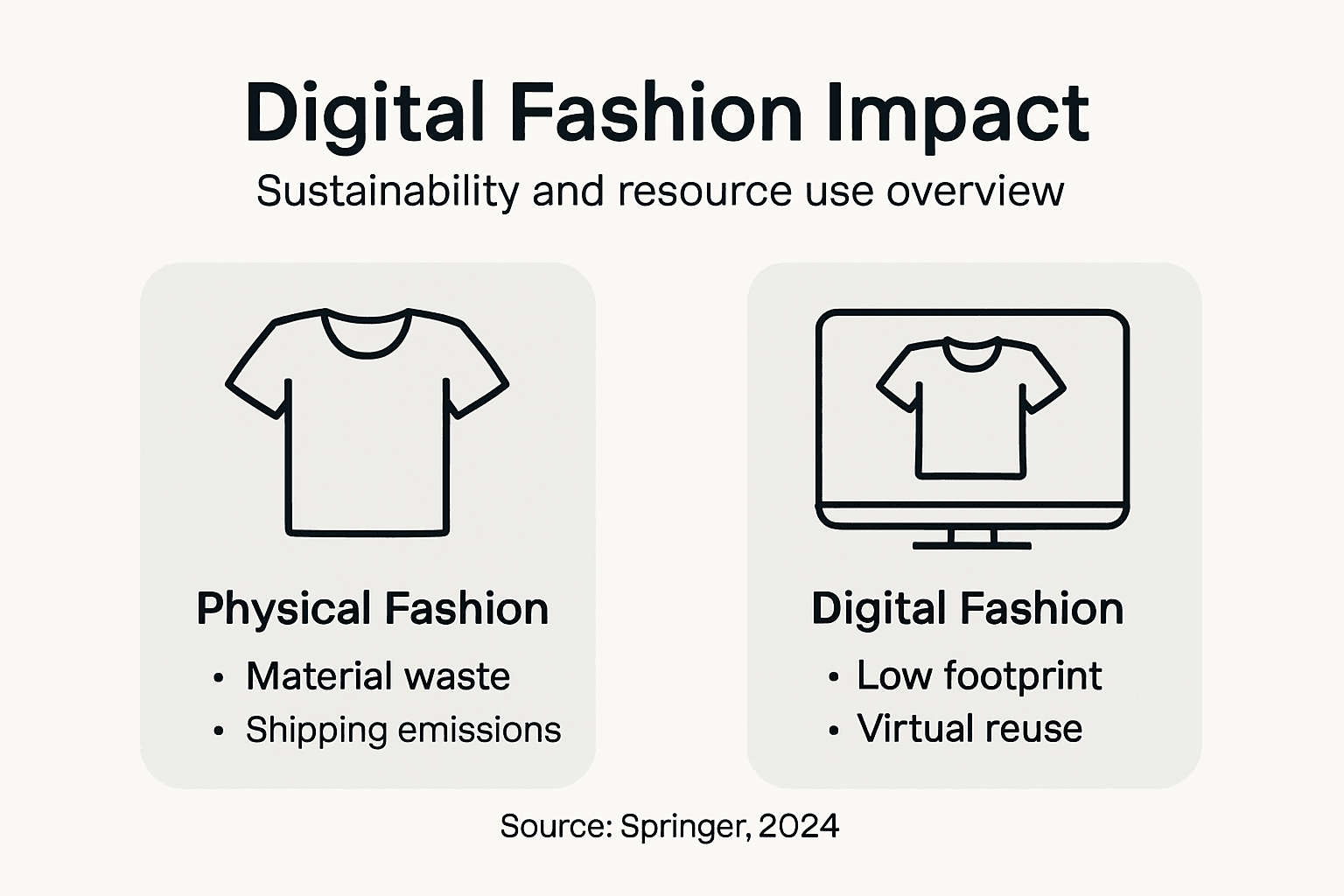
For a professional conscious about your environmental footprint, digital pieces let you expand your wardrobe guilt-free.
Business Benefits Creating Better Products
Fashion brands gain enormous advantages from digital offerings:
- Lower production costs: No fabric, manufacturing, or inventory management needed
- Faster market testing: Launch styles instantly to see what sells before manufacturing
- Global reach: Sell the same digital piece to customers worldwide simultaneously
- Higher profit margins: Digital pieces cost pennies to reproduce once created
- Data insights: Track exactly which styles resonate with audiences in real time
These advantages translate to better, more responsive fashion companies creating products you actually want.
Consumer Benefits You Actually Use
[Virtual try-ons and digital fashion shows create enhanced consumer experiences] (https://www.tandfonline.com/doi/pdf/10.1080/20932685.2023.2251033) that change how you shop. You preview items before buying. You attend global fashion events from your living room. You build unlimited wardrobes without storage concerns.
Digital fashion also solves the overconsumption problem. Instead of buying five physical jackets you might wear once, you purchase digital versions for specific occasions.
Professional and Social Applications
Digital fashion delivers concrete benefits across your professional life:
- Video call presence: Look polished in Zoom meetings while wearing comfortable clothes at home
- LinkedIn branding: Curate your professional image across social platforms
- Event networking: Attend virtual conferences in exclusive digital outfits that reflect your professional identity
- Personal brand building: Maintain consistent style across your digital presence
- Content creation: Film content in unlimited outfit changes without wardrobe constraints
You’re not just buying fashion—you’re investing in how you present yourself professionally.
The Market Expansion Advantage
Digital fashion opens fashion to people who previously couldn’t participate. A custom-fitted digital piece costs less than shipping a physical item. Someone with limited storage space gains unlimited wardrobe capacity. People with mobility concerns try on clothes without leaving home.
This accessibility benefits everyone while creating sustainable growth for the fashion industry.
Digital fashion solves three critical problems simultaneously: environmental harm, consumer overconsumption, and limited accessibility—making it genuinely valuable, not just trendy.
Pro tip: Start with digital pieces that match your actual digital activities—if you record content, invest in striking video call outfits; if you attend metaverse events, build an avatar wardrobe; this ensures you use what you buy and actually benefit from your investment.
Risks, limitations, and common misconceptions
Digital fashion sounds perfect until you hit real-world problems. Understanding the actual risks and limitations prevents you from wasting money on hype or getting caught in legal complications. The misconceptions about digital fashion are surprisingly widespread.
Let’s address what actually matters before you invest.
Common Misconceptions About Digital Fashion
Many people dismiss digital fashion as a novelty or pure marketing gimmick. This completely misses the point. Digital fashion is a legitimate product category with genuine utility, not just brand hype.
Another misconception: digital fashion will replace physical clothing. It won’t. Digital fashion complements physical fashion by solving different problems. You still need clothes to wear in person. Digital pieces enhance your online presence and professional image.
People also assume digital fashion is only for wealthy early adopters. Actually, free AR filters and affordable digital pieces make this accessible to anyone with a smartphone.
Real Technology and Access Barriers
Not everyone has reliable technology access. [Technological barriers limit consumer adoption of digital fashion] (https://www.tandfonline.com/doi/pdf/10.1080/20932685.2023.2251033) in developing regions and among less tech-savvy demographics. High-end AR requires newer smartphones. Metaverse platforms need solid internet connections. NFT purchases require cryptocurrency knowledge.
These barriers are real, even if they’re shrinking over time.
Legal and Copyright Complications
[Copyright and authorship challenges in digital fashion] (https://academic.oup.com/jiplp/article/18/1/42/6974661) create genuine legal risks you should understand. Digital designs have less protection than physical fashion. Someone could easily copy your digital piece and resell it. Authorship becomes murky when AI tools generate designs.
The legal framework for digital fashion is still being written. You could purchase an NFT piece only to discover the creator didn’t actually own the design. Copyright disputes are increasing.
Practical Limitations Worth Knowing
Digital fashion comes with real constraints:
- Platform dependency: Your pieces exist on company servers—if the platform dies, you might lose access
- Limited functionality: Digital pieces are visual only; they don’t provide physical protection or warmth
- Compatibility issues: A piece designed for one platform might not work on another
- Rapid obsolescence: Digital trends move fast; your expensive NFT could become worthless quickly
- Storage and backup risks: Digital files can corrupt; you need proper backup systems
These aren’t deal-breakers, but they’re important considerations.
Review key risks and limitations before you invest in digital fashion:
| Risk/Limit | What It Means | Impact on Consumers |
|---|---|---|
| Platform dependency | Access tied to company servers | Loss if platform shuts down |
| Legal uncertainty | Copyright rules are unclear | Risk of ownership disputes |
| Tech barriers | Needs updated devices | Limited adoption for some users |
| Rapid trend changes | Fast-moving digital styles | Value can drop quickly |
| Storage vulnerability | Files can corrupt or vanish | Needs secure backup solutions |
The Ownership Question
Do you actually own digital pieces you purchase? The answer is complicated. With NFTs, you own the blockchain certificate. With regular digital files, you typically own a license to use them, not ownership of the underlying design.
This distinction matters legally and financially. Your rights vary by platform and purchase type.
Digital fashion is genuinely valuable, but it’s not magic—understand what you’re actually buying before investing significant money in this space.
Market Resistance and Consumer Skepticism
Massive skepticism exists around digital fashion’s value. Many professionals view it as wasteful spending on nothing tangible. This skepticism affects adoption rates and platform stability. Companies might abandon digital fashion projects if they don’t see rapid returns.
You’re also betting on platform longevity—metaverse platforms and NFT marketplaces disappear regularly.
Pro tip: Before making significant digital fashion investments, research the platform’s funding, ownership stability, and user base—avoid platforms less than two years old or those with declining user engagement, and start with affordable pieces rather than expensive NFTs until you understand the legal and technical landscape.
Embrace Functional Fashion That Complements Your Digital Style
As digital fashion reshapes how you present yourself online and across virtual platforms, balancing your physical wardrobe with smart, tech-enabled accessories becomes essential. The article highlights the importance of crafting multiple professional identities and styling your digital presence without the constraints of traditional clothing. At InvisiTechWear, we understand your need for practical, stylish, and secure fashion solutions that keep pace with modern lifestyle demands.
Explore our Tech Accessories & Everyday Carry – Daon Tech collection for innovative pieces like RFID-blocking wallets and Bluetooth earphone organizers that merge security with sleek design. These products support your professional image and digital engagement with convenience and confidence.
Elevate your real-world style with accessories designed to complement your digital fashion ventures. Visit InvisiTechWear now to discover fashion that works as hard as you do. Start integrating tech-savvy solutions into your everyday carry today and stay ahead in both virtual and physical style.
Frequently Asked Questions
What is digital fashion?
Digital fashion refers to clothing and accessories that exist exclusively in digital form, designed to be worn virtually on your body through photos, videos, or augmented reality.
How does digital fashion differ from traditional clothing?
Digital fashion allows you to wear and showcase virtual outfits without the need for physical materials, storage, or maintenance. It exists primarily in social media, gaming, and virtual environments.
What are the different types of digital fashion?
Digital fashion includes several types such as virtual clothing for social media, AR try-on pieces, metaverse avatars, NFT fashion items, 3D-printed wearables, and phygital hybrids. Each type serves distinct consumer needs and purposes.
How does buying digital fashion work?
When you buy digital fashion, you purchase a digital file or NFT certificate that proves ownership. You can then access your pieces through dedicated apps, social media filters, or metaverse platforms, allowing you to wear them instantly in virtual settings.


