

Most advice about innovation in clothing misses one crucial detail—over 60 percent of American consumers now demand fashion that merges technology, practicality, and style. For fashion-forward urbanites worldwide, functional apparel is no longer a futuristic dream but a daily need in fast-paced environments. Discover how modern apparel combines advanced technology, adaptive design, and security features to create pieces that work as smartly as they look.
Table of Contents
- Defining Innovation In Modern Apparel
- Types Of Technological Advances In Fashion
- How Smart Clothing Enhances Daily Life
- Security And Functionality In Tech-Infused Apparel
- Challenges And Consumer Mistakes In Adopting Fashion Tech
Key Takeaways
| Point | Details |
|---|---|
| Emphasis on Technology | Modern apparel innovation integrates technology, enhancing functionality and personal utility while addressing real-world challenges. |
| Sustainability Focus | The future of fashion prioritizes sustainable practices, blending user needs with environmental considerations. |
| Consumer Awareness | Consumers should research tech-integrated apparel thoroughly to avoid common pitfalls and make informed purchases. |
| Smart Clothing Benefits | Smart textiles offer improved comfort, health monitoring, and personalized experiences, revolutionizing daily life. |
Defining Innovation in Modern Apparel
Innovation in modern apparel transcends traditional design boundaries, representing a dynamic fusion of technology, functionality, and aesthetic expression. The fashion industry has rapidly transformed from purely aesthetic considerations to a complex ecosystem where technological integration becomes paramount. Technological advancements are fundamentally redefining how we conceptualize clothing, moving beyond conventional manufacturing processes.
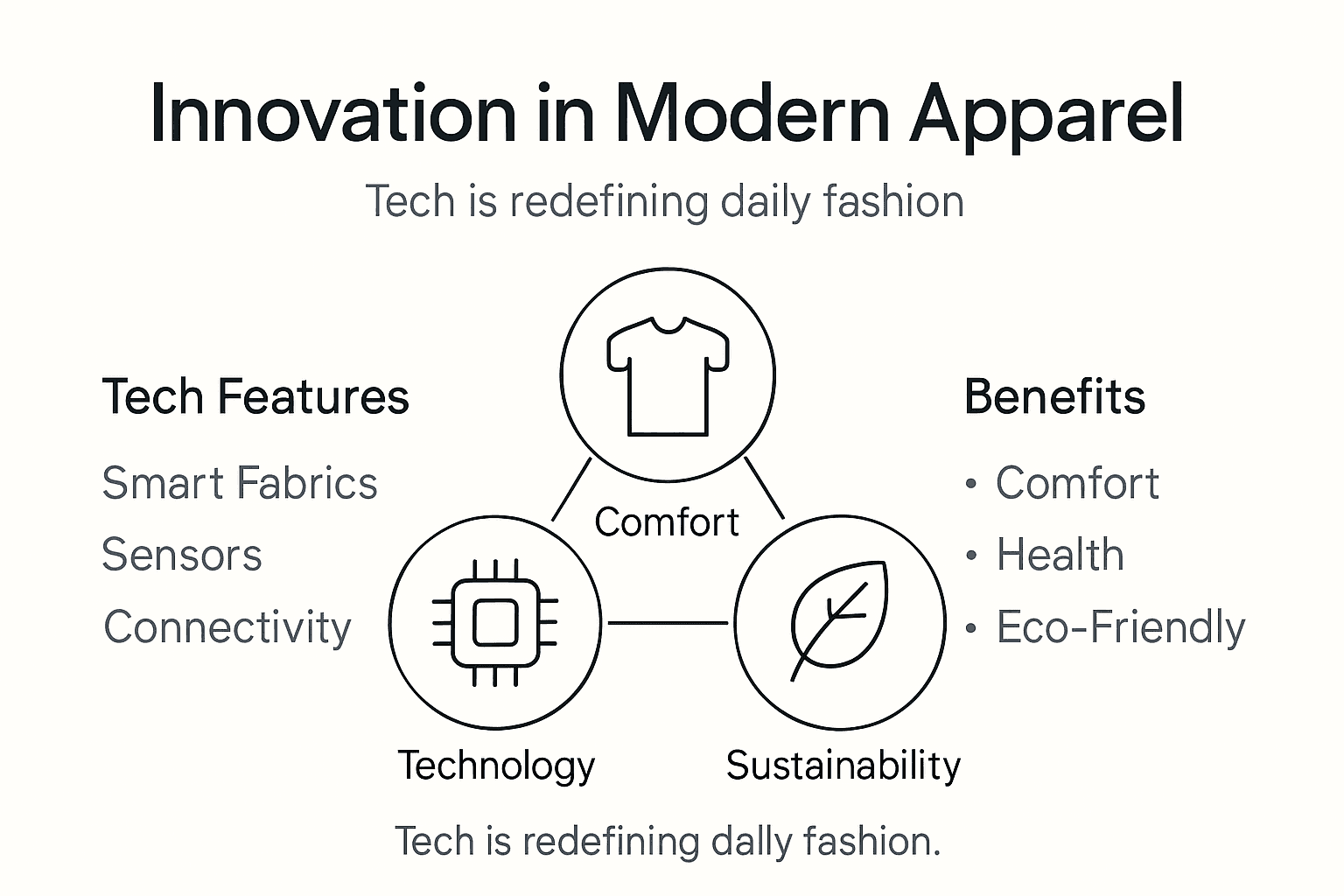
At its core, apparel innovation involves three critical dimensions: material science, digital technologies, and sustainable practices. Designers now leverage advanced textiles that can regulate temperature, resist stains, or even monitor physiological data. Smart fabrics embedded with sensors, biodegradable materials, and adaptive clothing represent cutting-edge developments that blur traditional boundaries between fashion, technology, and personal utility.
The contemporary approach to apparel innovation prioritizes solving real-world challenges while maintaining aesthetic appeal. Fashion meets technological functionality through solutions like moisture-wicking fabrics, UV-protective clothing, and garments with integrated digital interfaces. These innovations address practical needs without compromising style, creating a new paradigm where clothing becomes an intelligent, responsive extension of personal technology.
Pro Tip - Innovation Insight: Research emerging fashion technologies and understand how they solve practical problems before investing in tech-integrated apparel. Always prioritize garments that seamlessly blend functionality with your personal style.
Keywords that define modern apparel innovation include adaptability, connectivity, sustainability, and user-centricity. The future of fashion lies not just in how clothing looks, but in how intelligently it can serve individual needs while minimizing environmental impact.
Types of Technological Advances in Fashion
Technological advances in fashion represent a revolutionary transformation of the clothing industry, pushing boundaries far beyond traditional design and manufacturing techniques. Comprehensive surveys reveal over 580 distinct technological applications reshaping how we conceptualize, produce, and interact with clothing. These innovations span multiple domains, creating unprecedented opportunities for personalization, sustainability, and functional design.
Key technological advances can be categorized into several critical areas. Smart textiles emerge as a primary innovation, integrating electronic components and advanced materials that can monitor physiological data, regulate temperature, and adapt to environmental conditions. Technological innovations are fundamentally transforming the fashion supply chain, with developments like 3D printing enabling custom manufacturing, blockchain ensuring transparency, and artificial intelligence driving design personalization.
Digital technologies have dramatically expanded fashion’s capabilities, introducing techniques like virtual fitting rooms, AI-powered design generation, and predictive trend analytics. Designers now leverage machine learning algorithms to analyze consumer preferences, create complex textile patterns, and develop clothing that responds dynamically to user needs. These technologies bridge the gap between aesthetic creativity and functional performance, allowing unprecedented levels of customization and user engagement.
Pro Tip - Technology Integration: Start with one smart clothing piece that solves a specific problem in your wardrobe, and gradually expand your tech-enabled fashion collection as you understand the practical benefits and personal preferences.
As technological capabilities continue evolving, the future of fashion promises increasingly intelligent, adaptive, and personalized clothing experiences that seamlessly blend style, functionality, and individual expression.
Here’s a comparison of major technological advances shaping modern apparel innovation:
| Category | Key Example | Main Purpose | Business Impact |
|---|---|---|---|
| Smart Textiles | Temperature-regulating fabrics | Enhances user comfort and adaptability | Drives customer satisfaction and repeat sales |
| Digital Technology | Virtual fitting rooms | Personalized shopping experience | Reduces returns, boosts engagement |
| Blockchain | Supply chain tracking | Increases transparency and trust | Builds brand credibility and enables sustainability claims |
| Nanofabrics | Antibacterial coatings | Improves health and hygiene | Appeals to health-conscious clients |
How Smart Clothing Enhances Daily Life
Advanced technological integration in clothing represents a transformative approach to improving everyday human experiences through intelligent textile design. Smart clothing goes beyond traditional fabric functionality, emerging as a sophisticated solution that adapts to individual user needs, monitors health metrics, and provides unprecedented levels of comfort and performance optimization.

The practical applications of smart clothing span multiple domains of daily life. Nanofabrics have revolutionized textile capabilities, introducing advanced materials engineered with nanoparticles that provide enhanced protection and functionality. These innovative textiles offer remarkable features like water resistance, bacterial protection, temperature regulation, and environmental adaptability. Athletes, professionals, and everyday consumers can now access clothing that actively responds to physiological changes, monitors vital signs, and provides real-time feedback about personal health and performance.
Beyond individual wellness, smart clothing creates interconnected experiences that seamlessly blend technology with personal expression. Embedded sensors and intelligent materials enable garments to communicate environmental data, adjust to temperature fluctuations, and even charge electronic devices. Imagine workout clothing that tracks muscle performance, professional attire that maintains optimal temperature, or outdoor gear that provides instantaneous environmental feedback - these are no longer futuristic concepts but current technological realities.
Pro Tip - Smart Clothing Integration: Start by selecting one smart clothing item that addresses a specific personal need, whether health tracking, comfort enhancement, or performance optimization, and gradually expand your tech-enabled wardrobe.
As technological capabilities continue expanding, smart clothing promises to become an increasingly intuitive extension of personal technology, transforming how we interact with our environment and understand our own physiological responses.
Security and Functionality in Tech-Infused Apparel
Advanced manufacturing techniques are revolutionizing apparel security and functionality, transforming clothing from passive protective layers into active technological interfaces. Modern tech-infused apparel goes beyond traditional design, integrating sophisticated security features that protect personal data, monitor environmental conditions, and provide unprecedented levels of individual safety and convenience.
The intersection of security technologies and clothing design creates multifunctional garments that address contemporary urban challenges. Embedded RFID-blocking materials prevent unauthorized digital scanning, while intelligent fabrics with biometric sensors can detect potential health risks or environmental threats. Fashion exhibitions like Manus x Machina demonstrate how technological innovation bridges traditional craftsmanship with cutting-edge security solutions, highlighting the potential for clothing to become a sophisticated personal protection system.
Tech-infused apparel represents a holistic approach to personal security, combining digital protection with physical performance enhancement. Innovative textiles now incorporate features like temperature regulation, moisture-wicking capabilities, and electromagnetic radiation shielding. These advanced materials create a comprehensive protective ecosystem that adapts to user needs, offering protection against both digital and physical vulnerabilities while maintaining aesthetic appeal and personal style.
Pro Tip - Security Clothing Strategy: Prioritize versatile tech-infused garments that offer multiple security features, focusing on pieces that integrate seamlessly with your existing wardrobe and lifestyle.
As technological capabilities continue expanding, smart clothing promises to become an increasingly sophisticated personal security interface, transforming how individuals protect and monitor their personal information and physical well-being.
Challenges and Consumer Mistakes in Adopting Fashion Tech
Consumer digitalization in fashion presents complex challenges that extend far beyond simple technology adoption. Modern consumers often approach tech-infused apparel with unrealistic expectations, leading to disappointment and costly mistakes that can undermine their technological investment. Understanding these potential pitfalls is crucial for making informed purchasing decisions in an increasingly sophisticated fashion technology landscape.
The primary consumer challenges emerge from several key misconceptions about tech-enabled clothing. Many individuals assume that higher price points automatically correlate with superior functionality, when in reality, technological integration requires nuanced understanding of design, performance, and practical application. Research exploring technology and fashion adoption reveals systematic errors in consumer decision-making, including overestimating device longevity, underestimating maintenance requirements, and failing to consider compatibility with existing technological ecosystems.
Technological literacy plays a significant role in successful fashion tech adoption. Consumers frequently make critical errors such as neglecting proper care instructions for tech-integrated garments, misunderstanding the actual capabilities of smart textiles, and purchasing items without considering their specific lifestyle needs. Advanced clothing technologies require a more sophisticated approach to maintenance, charging, and functional integration than traditional apparel, demanding that users develop new understanding and interaction patterns with their technological wardrobe.
Pro Tip - Tech Apparel Adoption: Research thoroughly, start with one versatile tech-enabled piece, and gradually build your understanding of technological clothing integration by experiencing its practical benefits firsthand.
Successful navigation of fashion technology requires a balanced perspective that combines technological curiosity with practical skepticism, ensuring that consumers make informed choices aligned with their genuine lifestyle requirements.
The table below summarizes common consumer pitfalls in adopting fashion technology and ways to avoid them:
| Consumer Mistake | Consequence | Smart Solution |
|---|---|---|
| Overestimating product longevity | Disappointment, returns | Research expected lifespan |
| Ignoring care instructions | Damage or malfunction | Follow brand-specific garment care |
| Buying without assessing needs | Underused purchases | Identify specific personal challenges |
| Neglecting compatibility | Limited tech integration | Check device/apparel system support |
Elevate Your Wardrobe with Innovation That Matters
The article highlights how modern apparel innovation blends technology, functionality, and style to meet real-world challenges like security, comfort, and adaptability. If you are looking to embrace clothing and accessories that go beyond conventional fashion, InvisiTechWear offers solutions designed to enhance your lifestyle with smart, tech-infused products. Whether it is protecting your personal information with RFID-blocking gear or enjoying clothes built for modern comfort and versatility, our collection addresses key pain points like security and practical usability.
Discover how you can upgrade your daily wear with stylish, functional Hoodies and Jackets that combine modern aesthetics with cutting edge technology. We invite you to explore a curated lineup of innovative fashion essentials at InvisiTechWear and experience apparel that supports your dynamic lifestyle.

Ready to redefine your wardrobe with tech-forward fashion that truly performs? Visit our Products page now and shop smart apparel designed for those who demand more from their clothing. Don’t wait to upgrade your style and security with InvisiTechWear’s innovative collection tailored for today’s modern consumer.
Frequently Asked Questions
What is the definition of innovation in modern apparel?
Innovation in modern apparel refers to the integration of technology, functionality, and aesthetic expression, transforming clothing from mere decorative items to complex systems that address practical needs and enhance user experience.
How are smart textiles changing the clothing industry?
Smart textiles are revolutionizing the clothing industry by incorporating electronic components and advanced materials that can monitor health metrics, regulate temperature, and adapt to various environmental conditions, thereby enhancing comfort and functionality in apparel.
What are the practical benefits of tech-infused apparel?
Tech-infused apparel offers numerous benefits, including improved health monitoring, enhanced comfort through temperature regulation, increased functionality like moisture-wicking, and the ability to respond to environmental changes, making clothing act as an extension of personal technology.
What challenges do consumers face when adopting fashion technology?
Consumers often face challenges such as unrealistic expectations regarding product longevity, misunderstanding maintenance needs, and failing to evaluate compatibility with existing technology, leading to potential disappointment and underutilization of tech-enabled clothing.


