

Losing track of your wallet or worrying about data security feels outdated when your clothing itself steps in to help. For tech-forward urban professionals balancing busy schedules in global cities like New York, London, or Toronto, microchip clothing offers a blend of style and real-time functionality. By integrating semiconductor chips directly into textile fibers, these garments deliver instant security, authentication, and health monitoring without sacrificing comfort or appearance.
Table of Contents
- What Is Microchip Clothing and How It Works
- Types of Microchip Apparel and Technology Used
- Advanced Sensor Technologies
- Everyday Uses and Benefits for Urban Professionals
- Privacy, Security, and Legal Considerations
- Comparing Microchip Clothing to Traditional Apparel
Key Takeaways
| Point | Details |
|---|---|
| Microchip Clothing Enhances Functionality | Integrates RFID and sensors into garments, enabling capabilities like location tracking and health monitoring. |
| Durability is Key | Modern designs ensure washability and flexibility, surviving multiple laundry cycles without degradation. |
| Privacy Concerns Must Be Addressed | Continuous data collection raises risks, necessitating awareness of data handling and privacy policies. |
| Cost vs. Utility Consideration | Weigh the additional features against actual needs, as microchip clothing can be 2–4 times more expensive than traditional apparel. |
What Is Microchip Clothing and How It Works
Microchip clothing blends tiny semiconductor chips directly into fabrics and garments to unlock entirely new capabilities. These aren’t bulky electronics taped onto your jacket—they’re integrated components that function as seamlessly as the threads themselves.
At its core, microchip clothing uses RFID (Radio-Frequency Identification) chips and other semiconductor technology embedded within textile fibers. The chips communicate wirelessly to transmit and receive data, transforming ordinary clothing into functional tools.
Here’s what makes this technology practical for everyday wear:
- Embedded durability: Microchip yarn technology embeds semiconductor chips inside protective polymer micropods within yarn fibers, making garments machine-washable and durable
- Flexible integration: Chips attach using advanced textile manufacturing techniques without compromising fabric flexibility or comfort
- Data capability: Clothing can now capture, store, and transmit information ranging from location data to health metrics
- Minimal weight: Modern microchip designs are becoming increasingly smaller, adding virtually no perceptible bulk to garments
How the Technology Actually Functions
Microchip clothing systems work through a straightforward process. The embedded semiconductor chips receive power from radio waves transmitted by a reader device—typically your smartphone or a security scanner.
When activated, the chip responds by broadcasting a unique identifier or stored data back to the reader. For security applications, this means your wallet, jacket, or bag can verify its authenticity instantly. For tracking purposes, the chip signals its location when scanned.
The transmission happens wirelessly and instantaneously, requiring no batteries or manual interaction from you. Your garment handles everything automatically.
Key capabilities include:
- Authentication verification: Confirms whether an item is genuine or counterfeit
- Location tracking: Enables real-time positioning of valuable items
- Access control: Grants or denies entry based on chip verification
- Data logging: Records temperature, movement, or health data over time
- Inventory management: Tracks items through supply chains or personal collections
What’s changed recently is the evolution toward washability and flexibility. Earlier microchip textiles couldn’t survive standard laundry, limiting their practical value. Modern polymer-protected designs maintain functionality through dozens of wash cycles.
The real innovation isn’t just embedding chips—it’s engineering them to survive real-world use without degradation.
For a tech-savvy professional juggling multiple responsibilities, this means your clothing becomes an active participant in your security and convenience systems, not just something you wear.
Pro tip: When shopping for microchip clothing, verify that products explicitly mention machine-washability and specify wash temperature limits—not all embedded chip designs are created equal.
Types of Microchip Apparel and Technology Used
Microchip apparel comes in several distinct varieties, each using different semiconductor technologies to achieve specific functions. The type you choose depends entirely on what problem you’re solving—security, tracking, health monitoring, or convenience.
The most common form is RFID-based apparel, which uses passive radio-frequency identification tags woven directly into fabrics. These chips require no battery and activate only when scanned by a reader device. Your wallet, jacket, or bag gets an embedded tag that verifies authenticity or location when needed.
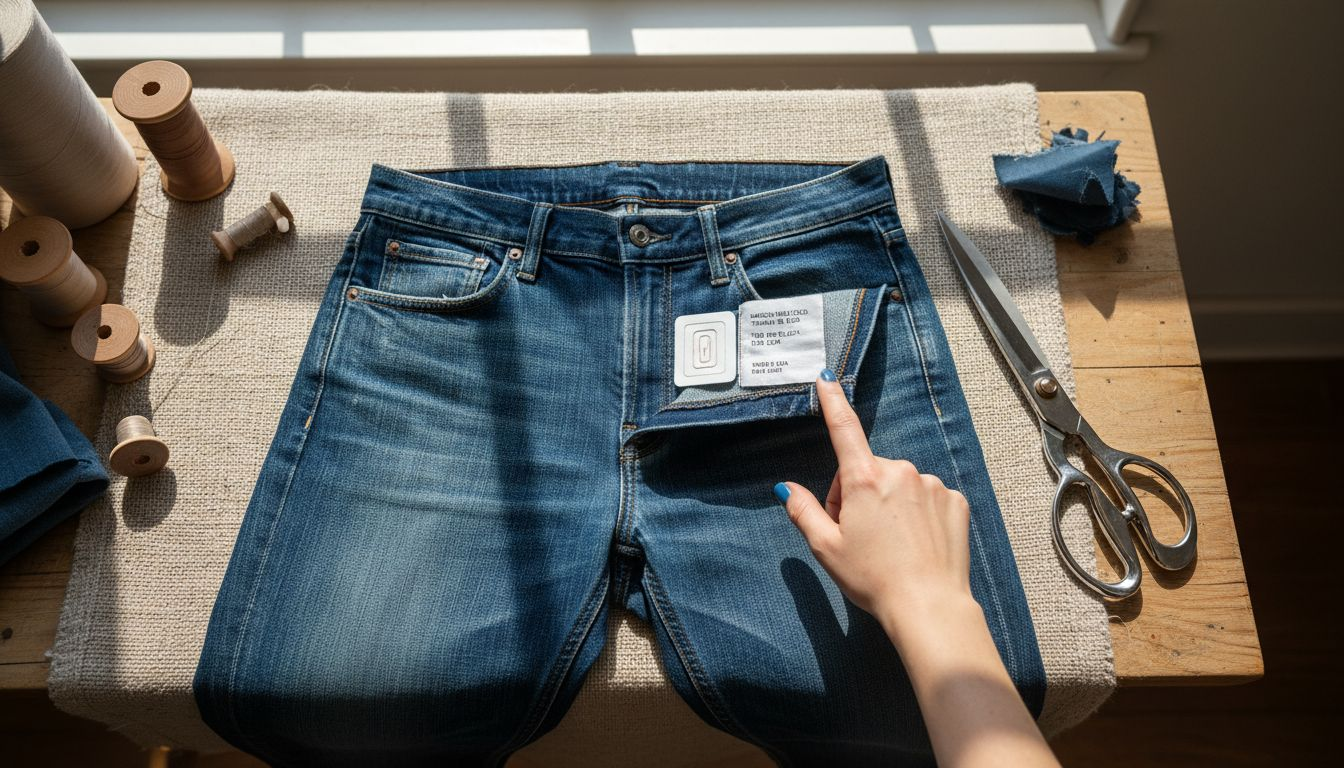
Passive RFID technology dominates logistics and anti-counterfeit applications because it’s affordable, durable, and maintenance-free. The chip sits dormant until activated, making it perfect for everyday wear.
Here’s what separates the major microchip apparel categories:
Here’s a quick comparison of microchip clothing types and their most suitable professional uses:
| Apparel Type | Technology Used | Best For |
|---|---|---|
| Passive RFID Clothing | RFID tags woven in | Security, anti-counterfeit |
| Active Sensor Garments | Thermistors, sensors | Health, activity tracking |
| Flexible Integrated Circuits | Bendable microchips | Smart alerts, comfort |
| Communication-Enabled Clothing | Real-time transmitters | Emergency notification |
- Passive RFID clothing: Basic tracking and authentication with zero power consumption
- Active sensor garments: Embedded thermistors and temperature sensors in socks, shirts, or athletic wear
- Flexible integrated circuits: Advanced chips that bend and flex without losing function
- Health-monitoring textiles: Garments measuring heart rate, temperature, and movement data
- Communication-enabled clothing: Pieces that transmit real-time alerts or data to your phone
Advanced Sensor Technologies
Beyond basic RFID, modern microchip apparel incorporates sophisticated sensors. Temperature sensor socks use electronic temperature sensor yarns with embedded thermistors and copper wiring woven throughout the fabric itself.
These advanced designs let your clothing monitor environmental conditions or your body’s response to them. Runners can track core temperature in real time. Security professionals can verify item authenticity instantly.
Semiconductor chips embedded in yarn cores use protective polymer micropods that maintain full textile flexibility while enabling active sensors and sophisticated data collection. This approach allows garments to survive daily washing without degradation.
The technology spectrum includes:
- Passive RFID: Lowest cost, longest lifespan, no batteries required
- Active sensors: Real-time data collection with moderate power needs
- Flexible circuits: Complex functionality in breathable, wearable form
- Integrated systems: Multiple sensors working together for comprehensive monitoring
What matters for urban professionals is durability. Earlier microchip apparel failed after a few washes, limiting practical value. Modern polymer-protected designs survive dozens of wash cycles at standard temperatures.
The real differentiator isn’t the technology itself—it’s whether it survives your actual lifestyle without maintenance or replacement.
Choosing between these options depends on your specific need. RFID-embedded jackets work for security and anti-theft tracking. Temperature-sensing athletic wear benefits runners and outdoor workers. Tech-infused clothing for daily wear blends all these capabilities into pieces that look and feel like normal garments.
Pro tip: Match the microchip type to your actual use case—passive RFID works perfectly for wallets and bags, while active sensors make sense only if you’ll consistently use the data they generate.
Everyday Uses and Benefits for Urban Professionals
Microchip clothing transforms how you manage security, health, and daily logistics. For tech-savvy professionals juggling multiple responsibilities, these garments solve real problems without adding friction to your routine.
The most immediate benefit is enhanced security and anti-theft protection. Your wallet, laptop bag, or jacket now contains an embedded chip that alerts you instantly if separated from your phone. RFID-enabled apparel lets you verify authenticity in seconds, protecting against counterfeit items worth thousands of dollars.
Beyond physical security, microchip clothing enables sophisticated workforce tracking and access control. Your blazer or identification badge becomes your access key—no separate card required. Facilities authenticate your presence automatically, streamlining entry processes and enhancing workplace security.
Here’s what actually matters for your professional life:
- Biometric health monitoring: Real-time tracking of heart rate, body temperature, and stress levels during high-pressure workdays
- Fitness integration: Automatic logging of steps, calories, and activity without reaching for your phone
- Environmental sensing: Awareness of air quality, temperature, and humidity around you
- Inventory management: Tracking expensive equipment, samples, or client materials instantly
- Emergency response: Instant location data during critical situations or health events
Real-World Productivity Gains
Microchip clothing for urban professionals supports productivity by eliminating friction from daily tasks. Instead of searching for misplaced items, you locate them immediately. Instead of manual health checks, your garment continuously monitors wellness.
Consider a consultant traveling between client offices. Your RFID-enabled jacket authenticates you at multiple buildings, eliminates lost credentials, and tracks your movements for billing purposes. Your embedded temperature sensor alerts you if stress levels climb dangerously during crucial presentations.
Smart textiles enable active work-life balance through data-driven wellness insights. Early warning signs of health issues surface before they become problems. You make behavioral adjustments based on actual physiological data, not guesswork.
Key productivity benefits include:
- Time savings: Minutes saved daily across authentication, tracking, and health monitoring
- Security confidence: Peace of mind knowing valuable items are protected
- Health insights: Actionable data preventing burnout or illness
- Seamless integration: No additional devices or apps cluttering your routine
- Professional appearance: All functionality hidden within normal-looking clothing
The value compounds over time. A professional reducing health emergencies by 40% through early detection saves hospital visits, sick days, and medication costs. Someone preventing equipment loss saves thousands annually.
Microchip clothing doesn’t require lifestyle changes—it makes your current lifestyle smarter and safer.
Functional fashion features designed specifically for urban professionals blend seamlessly into your existing wardrobe. You’re not adopting “smart clothing.” You’re simply wearing better versions of clothes you already own.
Pro tip: Start with one RFID-enabled piece targeting your biggest security concern—usually a wallet or work bag—then expand to health-monitoring garments once you establish the habit of checking data insights.
Privacy, Security, and Legal Considerations
Microchip clothing collects intimate data continuously—your location, heart rate, movement patterns, and biometric information. This capability creates serious privacy risks that demand your attention before purchasing.
The core issue is straightforward: your garment becomes a surveillance device. Unlike your smartphone, you can’t easily disable it or see when it’s transmitting. Wearable electronics embedded in clothing raise continuous data collection risks, including unauthorized access to biometric and behavioral data. A data breach exposes not just your location, but your health conditions, stress levels, and daily routines.
Understanding the risks means knowing what data your garment captures and who accesses it.
Key privacy concerns include:
- Continuous tracking: Location data transmitted whenever your chip is active
- Biometric exposure: Heart rate, temperature, and stress metrics stored without encryption
- Behavioral profiling: Companies inferring your habits from movement and activity patterns
- Third-party access: Data sold to insurers, employers, or advertisers without your knowledge
- Device hacking: Malicious actors intercepting unencrypted transmissions
Legal Requirements You Must Know
Microchip clothing falls under data protection regulations like GDPR (General Data Protection Regulation) in Europe and various state laws in the United States. These laws impose strict requirements on companies handling your personal data.
Data protection regulations require companies to implement transparency and accountability when collecting biometric information. Companies must disclose exactly what data they capture, how long they store it, and who can access it. Your consent must be explicit and ongoing—not buried in terms and conditions.
For urban professionals, this matters because your employer or insurance company could theoretically access your microchip data. Some jurisdictions restrict this; others don’t. Cross-border enforcement creates gray areas where your rights depend entirely on your location and the company’s location.
What you need to verify:
- Explicit consent processes: Confirm the company requests permission before data collection
- Data minimization: They collect only what’s necessary for stated purposes
- Encryption standards: Biometric data transmits and stores encrypted
- Retention limits: Data deletion timelines are specified in writing
- Access restrictions: Clear policies on who can view your information
The legal requirement is transparency—but that only protects you if you actually read the policies.
Many microchip apparel companies operate in regulatory gray zones. They claim they don’t store data, only transmit it. They insist they don’t sell information. Yet their privacy policies often contradict these claims or remain vague about data handling.
Before purchasing, request their privacy policy explicitly. Ask whether biometric data is encrypted. Ask where servers are located. Ask about third-party access. Legitimate companies answer these questions directly.
You can also review privacy choice options and opt-out mechanisms before committing to any purchase.
Pro tip: Request written confirmation from the manufacturer about data encryption, storage duration, and third-party access restrictions before purchase—email creates documentation if issues arise later.
Comparing Microchip Clothing to Traditional Apparel
Traditional apparel does one job: it covers your body and provides basic warmth or style. Microchip clothing does that same job while simultaneously collecting data, verifying authenticity, and monitoring your health. The difference is fundamental.
Traditional clothing is passive. It responds to your body temperature and environment through fabric properties alone. You wear a cotton shirt because cotton breathes. You wear wool because it insulates. The fabric’s physical characteristics determine its function.
Microchip clothing is active. Microchip clothing extends utility with embedded electronics for real-time sensing and communication, enabling adaptive responses that traditional fabrics cannot achieve. Your shirt doesn’t just insulate—it measures your core temperature and alerts you if heat stress develops. Your jacket doesn’t just protect—it verifies you’re authorized to enter a building.
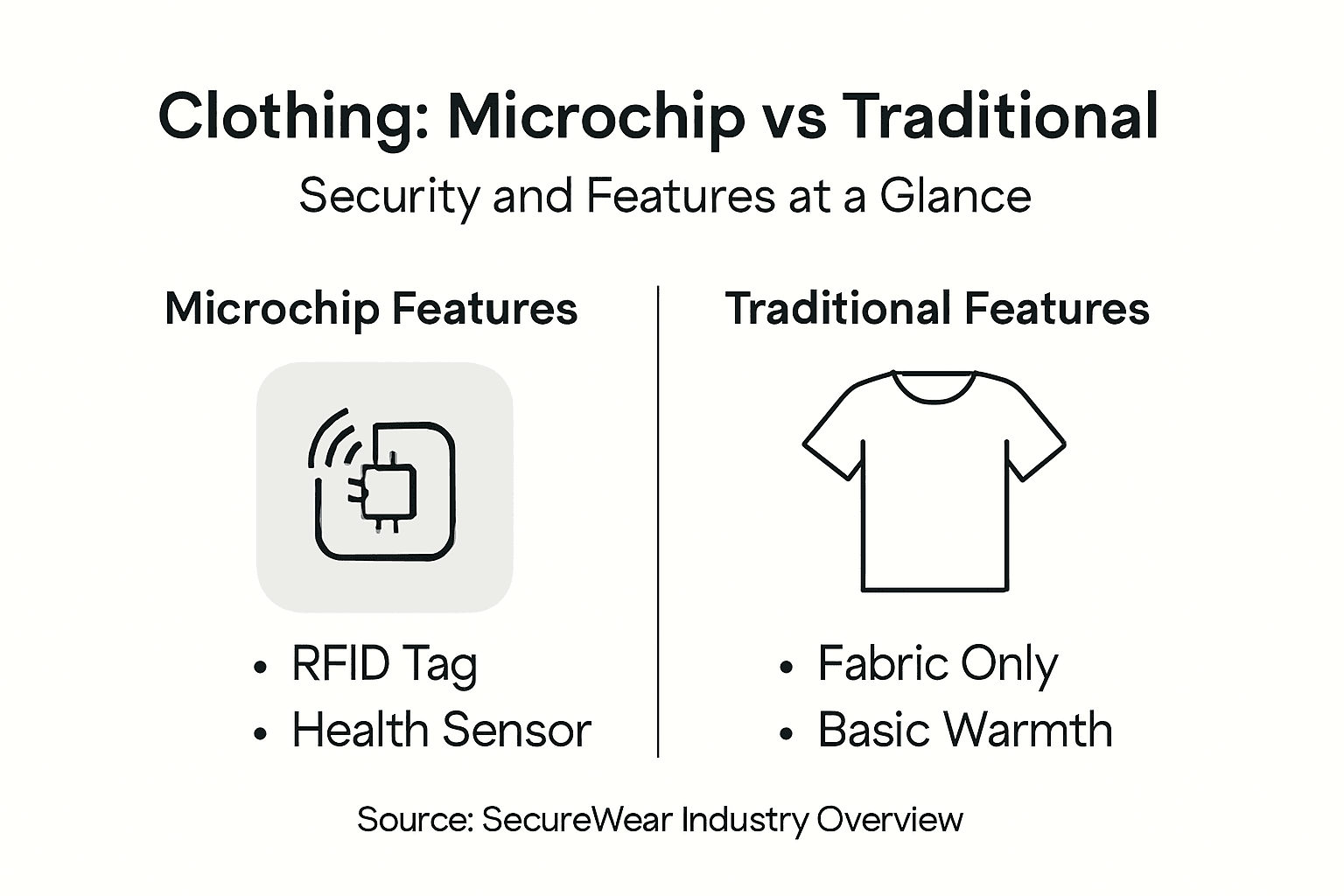
Here’s how they compare across practical dimensions:
Below is a summary of core differences between traditional and microchip apparel for decision-making:
| Aspect | Traditional Apparel | Microchip Clothing |
|---|---|---|
| Functionality | Covers, insulates, comforts | Authenticates, monitors, tracks |
| Maintenance Needs | Wash and store normally | Software updates needed |
| Lifespan | Lasts several years | May become obsolete |
| Cost Range | $50–$300 typical | 2–4x traditional price |
- Function scope: Traditional apparel provides warmth, protection, and style; microchip clothing adds tracking, authentication, and health monitoring
- Data collection: Traditional apparel generates no data; microchip clothing continuously captures location and biometric information
- Maintenance: Traditional apparel requires washing and storage; microchip clothing requires software updates and battery management
- Cost: Traditional quality pieces cost fifty to three hundred dollars; microchip equivalents currently cost two to four times more
- Lifespan: Traditional apparel lasts years unchanged; microchip clothing may become obsolete as technology evolves
The Sustainability and Complexity Trade-off
Microchip clothing represents digital transformation in textiles requiring energy-efficient digital ecosystems, whereas traditional apparel relies on simple, time-proven production methods. This creates an important paradox: smarter clothing is simultaneously more complex and potentially less sustainable.
Traditional apparel manufacturing is mature. Companies have perfected cotton cultivation, fabric weaving, and garment construction over centuries. Environmental impacts are well-understood and increasingly managed through certifications and standards.
Microchip clothing manufacturing is nascent. Production requires semiconductors, sophisticated assembly, and integration testing. E-waste becomes a consideration when your jacket stops receiving software updates after five years.
The practical trade-offs matter:
- Durability: Traditional apparel outlasts most fashion trends; microchip clothing faces obsolescence
- Repairability: Traditional apparel can be patched or resized; microchip clothing requires manufacturer service
- Environmental cost: Traditional production has lower upfront environmental impact; microchip production is energy-intensive
- Scalability: Traditional manufacturing is globally established; microchip manufacturing remains concentrated
- Actual utility: Traditional apparel works forever; microchip clothing depends on connected ecosystems
Traditional apparel solves one problem elegantly; microchip clothing solves multiple problems with added complexity.
For urban professionals, the decision depends on whether you actually need the features microchip clothing provides. If you want anti-theft protection for expensive items, microchip technology delivers measurable value. If you’re seeking health monitoring, the continuous biometric data is genuinely useful.
But if you’re purchasing microchip clothing simply because it’s trendy, you’re paying premium prices for complexity you don’t need. Expert comparisons of tech-infused clothing options can help you identify which features actually solve your problems versus which ones add unnecessary cost.
Pro tip: Before buying microchip clothing, list the specific problems you want solved, then verify whether the technology actually addresses those problems—don’t buy features you won’t use.
Experience the Future of Secure and Stylish Wear Today
Microchip clothing introduces remarkable advances in authentication, tracking, and health monitoring but also brings challenges like securing your personal data and ensuring durability. If you want to protect your valuables without sacrificing style or convenience, combining smart technology with trusted physical safeguards is key. At InvisiTechWear, we understand these needs with our expertly crafted RFID-blocking wallets & bags – Daon Tech designed to protect against digital theft while fitting seamlessly into your urban lifestyle.

Explore our curated collection of tech-enabled fashion accessories that offer peace of mind beyond traditional apparel. Visit InvisiTechWear to shop now and upgrade your everyday security with style and innovation. Don’t wait until a security breach or lost item costs you time and money. Empower your wardrobe with smart solutions built for the modern professional.
Frequently Asked Questions
What is microchip clothing?
Microchip clothing incorporates tiny RFID (Radio-Frequency Identification) chips and semiconductor technology embedded in fabrics, allowing the garments to communicate wirelessly and perform various functions such as tracking and authentication.
How does microchip clothing work?
Microchip clothing works by embedding semiconductor chips within the fabric, which receive power from radio waves from a scanner or smartphone. Once activated, these chips transmit unique identification or data back to the reader without the need for batteries or manual interaction.
What are the different types of microchip apparel?
Microchip apparel includes various types like passive RFID clothing, active sensor garments, flexible integrated circuits, and communication-enabled clothing, each designed to offer specific functionalities such as tracking, health monitoring, or real-time alerts.
What are the privacy concerns related to microchip clothing?
Privacy concerns with microchip clothing include continuous tracking of location, unauthorized access to biometric data, and the potential for behavioral profiling by third parties. It’s vital to understand how your data will be used and the security measures in place to protect it.


