

Stepping out in New York or Los Angeles, your choice of wallet speaks as much about your style as it does your approach to security. For urban professionals balancing individuality with peace of mind, the concept of identity theft remains top of mind even as experts largely agree that RFID scams pose a low risk. This guide unpacks how RFID wallets really work, what separates fact from fiction, and how you can protect your cards without compromising personal flair.
Table of Contents
- RFID Wallets Explained And Common Misconceptions
- How RFID Blocking Technology Protects Data
- Varieties Of RFID Wallets And Design Features
- Identity Theft Risks And Real-World Threats
- Comparing RFID Wallets With Alternative Solutions
Key Takeaways
| Point | Details |
|---|---|
| RFID Security Risks | Experts agree that RFID scams are unlikely due to strong encryption methods used by credit card companies. |
| Protection Alternatives | RFID-blocking wallets are useful but not essential, as multiple security measures are already implemented by banks. |
| Design and Functionality | Modern RFID wallets combine style and functionality, appealing to urban professionals while providing security. |
| Comprehensive Strategy | Combining RFID protection with digital security apps enhances overall personal information security. |
RFID Wallets Explained and Common Misconceptions
RFID technology has transformed how we interact with payment systems, but misunderstandings about its security persist. Radio Frequency Identification (RFID) enables contactless transactions through embedded microchips in credit cards, passports, and other identification documents. While convenient, these technologies have sparked debates about potential electronic vulnerabilities.
Contrary to widespread fears, experts largely agree that RFID scams pose a low risk. Major credit card companies have implemented robust encryption methods that make unauthorized scanning extremely difficult. The perception of widespread electronic pickpocketing often exceeds the actual occurrence of such incidents.
Here are the key aspects of RFID technology urban professionals should understand:
- Encryption Protection: Modern contactless cards use advanced security protocols
- Limited Scan Range: Most RFID chips can only be read within extremely close proximity (2-4 centimeters)
- Transaction Verification: Banks employ multiple authentication mechanisms beyond chip data
While RFID-blocking wallets provide an additional layer of security, they aren’t strictly necessary for most urban consumers. Credit card companies already implement multiple safeguards against potential electronic theft. However, for individuals seeking extra peace of mind, these wallets offer a practical solution.
Pro tip: Always monitor your financial statements regularly and enable transaction alerts, which provide more comprehensive protection than physical wallet technologies.
How RFID Blocking Technology Protects Data
Radio Frequency Identification (RFID) technology has become increasingly prevalent in modern urban life, embedding digital security concerns into everyday transactions. As contactless payment systems and smart identification documents proliferate, understanding how RFID blocking technology creates protective barriers has never been more critical for tech-savvy consumers.
The core mechanism of RFID blocking relies on creating an electromagnetic shield that prevents unauthorized data transmission. By using specialized materials like thin metal layers or conductive fabrics, these protective wallets and sleeves generate a Faraday cage effect that interrupts radio wave communications between RFID chips and potential scanning devices.
Key components of effective RFID blocking technology include:
- Metal Layering: Thin metallic barriers that reflect or absorb radio waves
- Specialized Fabrics: Engineered materials with electromagnetic interference properties
- Frequency Disruption: Blocking signals at common RFID transmission ranges (13.56 MHz)
RFID blocking works by absorbing or reflecting radio waves, preventing data transmission and unauthorized access to personal information.
While RFID blocking provides an additional security layer, it’s important to understand that modern credit card companies already implement robust encryption methods. These wallets serve as an extra precaution for individuals seeking maximum protection against potential electronic pickpocketing scenarios.
Pro tip: Periodically check your cards and digital devices for signs of unauthorized access, and consider rotating your RFID-blocking wallet to maintain consistent protection.
Varieties of RFID Wallets and Design Features
Modern urban professionals demand more than just security from their accessories - they want style, functionality, and intelligent design. Top RFID wallets combine cutting-edge protection with sophisticated materials that reflect personal taste and technological awareness.
The contemporary RFID wallet market offers diverse designs catering to different preferences and lifestyles. Material selection plays a crucial role, with premium options ranging from full-grain leather to innovative materials like carbon fiber and lightweight metals such as aluminum and titanium. These materials not only provide robust RFID-blocking capabilities but also communicate a sense of refined urban sophistication.
Key design features to consider include:
- Compact Profiles: Ultra-slim designs that minimize bulk
- Advanced Organization: Multiple compartments for cards and cash
- Durable Construction: Reinforced stitching and strong structural integrity
- Versatile Aesthetics: Styles spanning minimalist, classic, and modern looks
RFID wallets are more than protective accessories - they’re a statement of personal security and style.
The evolution of RFID wallet design has transformed these accessories from purely functional items into fashion statements. Manufacturers now prioritize both electromagnetic shielding and aesthetic appeal, understanding that urban professionals seek products that seamlessly blend technology with personal expression.
Pro tip: When selecting an RFID wallet, prioritize a design that not only blocks signals effectively but also complements your personal style and daily professional aesthetic.
Identity Theft Risks and Real-World Threats
In today’s hyper-connected digital landscape, urban professionals face increasingly sophisticated risks of electronic identity theft. RFID technology introduces complex privacy vulnerabilities that extend far beyond traditional security concerns, enabling malicious actors to exploit digital tracking and data skimming techniques.

The spectrum of RFID-related security threats is multifaceted and continuously evolving. Cybercriminals can potentially leverage these technologies to conduct unauthorized tracking, clone identification credentials, and access personal information through subtle electronic interception methods. These risks are particularly pronounced in densely populated urban environments where proximity and technological density create multiple potential breach points.
Key identity theft risks include:
- Unauthorized Tracking: Potential location monitoring through RFID signals
- Data Cloning: Replication of personal identification information
- Electronic Profiling: Aggregation of personal data without consent
- Replay Attacks: Intercepting and reusing electronic authentication signals
Modern digital threats require proactive, sophisticated defensive strategies that go beyond traditional security measures.
While the risks are real, understanding and implementing robust countermeasures can significantly mitigate potential vulnerabilities. Advanced RFID-blocking technologies, combined with situational awareness and regular digital security audits, provide urban professionals with powerful tools to protect their personal information.
This table summarizes the main risks of RFID technology and recommended responses:
| Threat Type | Potential Impact | Suggested Response |
|---|---|---|
| Data Cloning | Identity theft, fraud | Use RFID-blocking accessories |
| Unauthorized Tracking | Location monitoring | Rotate wallets, stay vigilant |
| Electronic Profiling | Data aggregation | Minimize card exposure |
| Replay Attacks | Unauthorized entry or purchases | Regular card security updates |
Pro tip: Regularly monitor your financial statements and enable two-factor authentication on all digital platforms to create an additional layer of protection against potential electronic identity theft.
Comparing RFID Wallets With Alternative Solutions
Urban professionals seeking comprehensive digital security have multiple options beyond traditional RFID-blocking wallets. Consumer research reveals innovative alternatives that provide flexible protection without completely replacing existing accessories.
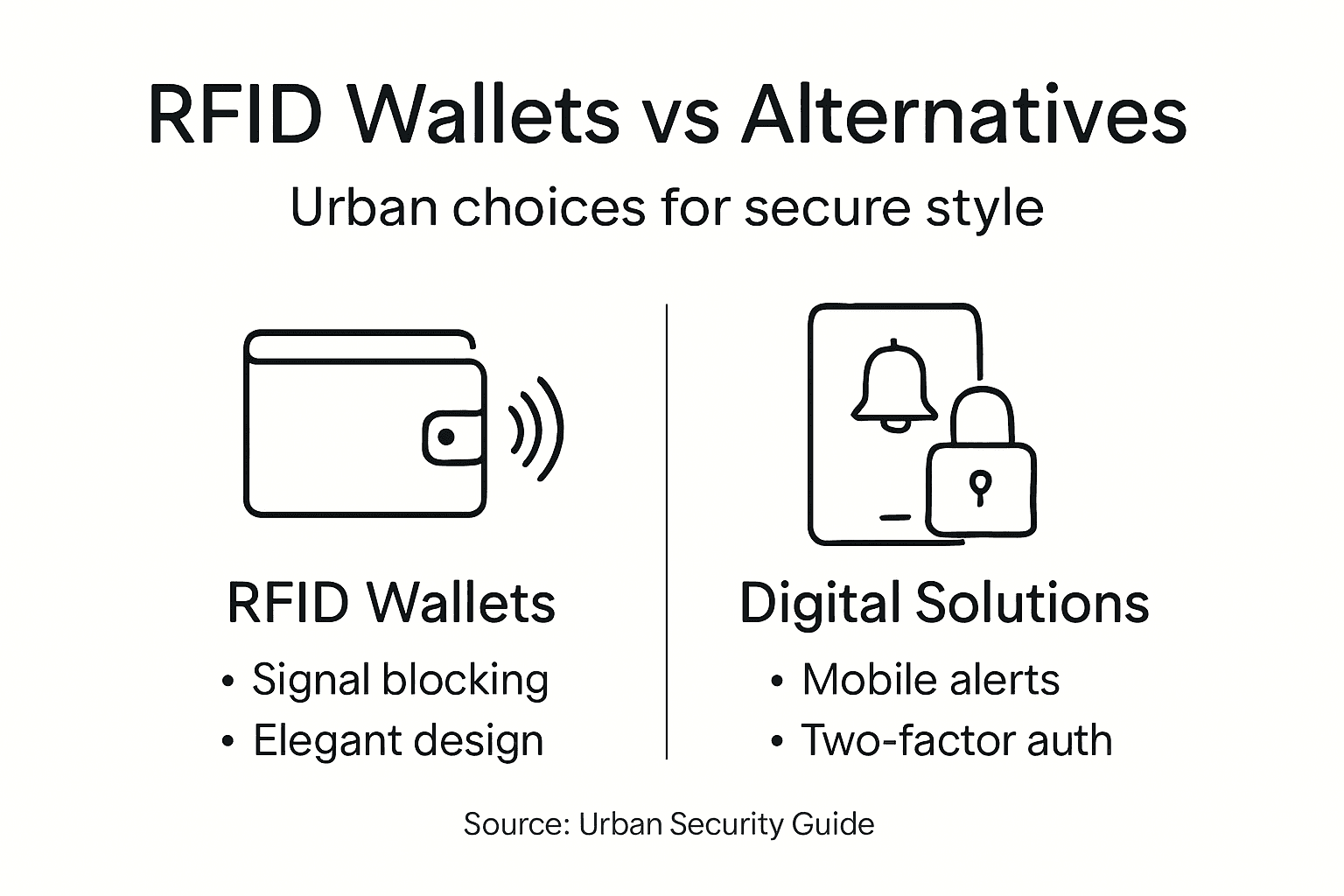
The digital security landscape offers several strategic approaches to protecting personal information. Alternative protection methods range from specialized RFID-blocking cards that integrate with existing wallets to advanced digital security protocols that create multiple layers of defense against potential electronic intrusions.
Key alternative solutions include:
- RFID Blocking Cards: Slim inserts compatible with traditional wallets
- Digital Security Apps: Real-time monitoring of financial transactions
- Encryption Sleeves: Lightweight protective covers for cards
- Faraday Pouches: Comprehensive signal-blocking accessories
Digital security is not about a single solution, but a comprehensive approach to protecting personal information.
Each alternative solution offers unique advantages, allowing urban professionals to customize their digital security strategy based on individual lifestyle and risk tolerance. The goal remains consistent: creating robust barriers against potential electronic identity theft while maintaining convenience and personal style.
Here’s how RFID wallets compare to alternative digital security solutions:
| Solution Type | Key Benefit | Portability | Best For |
|---|---|---|---|
| RFID Wallet | Physical data protection | Fits in pocket | Everyday city use |
| RFID Blocking Card | Works with existing wallets | Ultra-compact | Minimalists |
| Digital Security App | Real-time monitoring | Smartphone required | Tech-savvy professionals |
| Faraday Pouch | Complete signal blocking | Bulky for daily use | High-risk situations |
| Encryption Sleeve | Shields specific cards | Highly portable | Travelers and commuters |
Pro tip: Combine multiple security strategies, such as RFID-blocking accessories and digital monitoring apps, to create a comprehensive personal security ecosystem.
Elevate Your Urban Security and Style with InvisiTechWear’s RFID Solutions
Understanding the real risks of electronic identity theft and the benefits of RFID blocking technology is the first step toward protecting your personal information. Modern RFID wallets offer a blend of advanced electromagnetic shielding and sleek design that perfectly suits the demands of busy urban professionals. If you value cutting-edge security that fits seamlessly into your daily lifestyle, InvisiTechWear delivers products engineered to block unauthorized scanning while enhancing your personal style. Our selection addresses key concerns like unauthorized tracking, data cloning, and replay attacks, ensuring peace of mind without compromising sophistication.
Discover our full range of RFID-blocking wallets & bags – Daon Tech designed with premium materials and intelligent organization. Whether you prefer ultra-slim profiles or durable constructions, our collection fits your security goals and fashion preferences. Dive deeper into our innovative offerings on the Featured – Daon Tech page and explore additional tech-infused apparel and accessories that complement your security-conscious lifestyle.

Take control of your personal security today with smart, stylish solutions from InvisiTechWear. Shop now to protect your data with sophistication and act before potential RFID threats impact your privacy. Your journey to secure, modern living starts here.
Frequently Asked Questions
What are RFID wallets and how do they work?
RFID wallets are accessories designed to protect personal information stored on RFID-enabled cards by using specialized materials that block radio frequency signals, preventing unauthorized scanning and data theft.
Do I really need an RFID wallet for security?
While RFID-blocking wallets provide an additional layer of security, most credit card companies use advanced encryption methods to protect against unauthorized access, making RFID wallets more of a personal choice than a necessity for most consumers.
What materials are commonly used in RFID wallets?
RFID wallets are made from various materials including full-grain leather, carbon fiber, aluminum, and titanium, each providing different levels of RFID protection and style.
How can I ensure the effectiveness of my RFID wallet?
To maximize the protection offered by your RFID wallet, ensure it is well-made with quality materials, monitor your financial accounts regularly, and consider using additional digital security measures like transaction alerts and encryption apps.


