

Finding everyday clothing that matches the demands of a fast-paced city life is tough, especially when you care about style, sustainability, and safety. For many urban professionals, eco-friendly tech-wear is not just an american trend but a global movement, with over 60 percent of young adults seeking smarter, greener wardrobe options. This article unpacks the must-know ideas behind eco-friendly tech-wear, showing how the right materials and innovations bring both convenience and security to the daily routine.
Table of Contents
- Eco-Friendly Tech-Wear: Core Concepts Explained
- Key Types and Innovations in Tech-Wear
- Benefits of Sustainable Materials and Design
- Impact on Security, Convenience, and Daily Use
- Comparing Eco-Friendly and Conventional Tech-Wear
Key Takeaways
| Point | Details |
|---|---|
| Focus on Sustainability | Eco-friendly tech-wear prioritizes sustainable materials and practices, reducing environmental impact while enhancing performance. |
| Technological Integration | Smart textiles provide advanced features like moisture management and temperature regulation, transforming clothing into adaptive tools. |
| Circular Design Principles | Eco-friendly tech-wear emphasizes circular production methods that minimize waste and promote longevity. |
| Convenience and Security | Wearable technology incorporated in eco-friendly garments enhances personal safety and simplifies urban living through integrated features. |
Eco-Friendly Tech-Wear: Core Concepts Explained
Eco-friendly tech-wear represents a revolutionary intersection between sustainability, fashion, and technological innovation. By integrating advanced materials and smart design principles, these garments transform how urban professionals approach clothing functionality and environmental responsibility. Sustainable fashion technologies are redefining clothing’s role beyond traditional aesthetic and protective functions.
At its core, eco-friendly tech-wear focuses on three primary dimensions: material innovation, technological integration, and environmental consciousness. Advanced sustainable fabrics like recycled polyester, organic cotton, and biomaterials enable clothing that minimizes ecological impact while maximizing performance. These materials are engineered to reduce waste, decrease carbon footprint, and provide superior durability compared to traditional textiles.
Technology plays a critical role in modern sustainable fashion. Smart textiles now incorporate features like temperature regulation, moisture-wicking capabilities, and even built-in connectivity options that enhance urban professionals’ daily experiences. By prioritizing multifunctional design, eco-friendly tech-wear transforms clothing from a passive accessory into an active, adaptive tool that supports lifestyle efficiency and environmental stewardship.
Here’s a summary of core eco-friendly tech-wear materials and their key advantages:
| Material Type | Ecological Benefit | Performance Advantage |
|---|---|---|
| Recycled Polyester | Reduces plastic waste | Superior durability |
| Organic Cotton | No toxic pesticide use | Breathable comfort |
| Biomaterials | Low carbon footprint | Adaptive properties |
| Eco Nanomaterials | Minimal energy consumption | Antibacterial action |
Pro tip: When selecting eco-friendly tech-wear, prioritize brands that transparently communicate their sustainability metrics and provide clear information about material sourcing and manufacturing processes.
Key Types and Innovations in Tech-Wear
The landscape of tech-wear is rapidly evolving, driven by groundbreaking innovations that transform how urban professionals interact with their clothing. Organic nanomaterials in textiles are creating unprecedented opportunities for multifunctional, environmentally conscious apparel that goes far beyond traditional design constraints.
Key innovations in tech-wear span several critical domains. Intelligent textiles now incorporate advanced features like temperature regulation, moisture management, and environmental responsiveness. Some cutting-edge designs include biomimetic materials that adapt to body temperature, self-cleaning fabrics that repel stains and bacteria, and even color-changing textiles for climate awareness that visually represent environmental shifts. These technologies are not just aesthetic enhancements but functional tools that provide urban professionals with adaptive, responsive clothing solutions.
The primary categories of tech-wear innovations can be categorized into three primary segments: protective technologies, connectivity features, and sustainable design. Protective technologies include materials with enhanced durability, UV protection, and antibacterial properties. Connectivity features integrate sensors, wireless charging capabilities, and even biometric tracking. Sustainable design focuses on circular fashion principles, utilizing recycled materials, reducing carbon footprint, and creating clothing with extended lifecycle potential.
Pro tip: When exploring tech-wear, prioritize pieces that offer multiple functional benefits and demonstrate clear sustainability credentials to maximize both performance and environmental responsibility.
Benefits of Sustainable Materials and Design
Sustainable materials are revolutionizing the tech-wear industry by offering unprecedented environmental and functional advantages. Organic nanomaterials in textile design represent a breakthrough in creating apparel that minimizes ecological impact while dramatically enhancing performance characteristics. These innovative materials provide urban professionals with clothing that is not just environmentally responsible, but also technologically superior.
The environmental benefits of sustainable materials are profound and multifaceted. Life cycle assessments of sustainable footwear demonstrate significant reductions in water consumption, energy use, and greenhouse gas emissions compared to traditional manufacturing processes. Sustainable textiles typically involve green synthesis methods that minimize toxic waste, reduce carbon footprint, and create longer-lasting products that ultimately decrease overall manufacturing environmental impact.
Beyond environmental advantages, sustainable materials offer remarkable performance benefits. Advanced eco-friendly textiles now incorporate features like antibacterial properties, self-cleaning capabilities, and enhanced durability. These materials can regulate temperature, manage moisture, and provide superior protection, transforming clothing from a passive garment into an active, responsive tool that adapts to urban professionals’ dynamic lifestyles. The integration of cutting-edge sustainable technologies represents a holistic approach to fashion that prioritizes both environmental stewardship and individual performance.
Pro tip: Invest in versatile, multi-functional sustainable tech-wear pieces that offer maximum performance features while minimizing environmental impact.
Impact on Security, Convenience, and Daily Use
Wearable technology has dramatically transformed how urban professionals navigate security and convenience in their daily lives. Wearable tech integrated into sustainable clothing provides unprecedented levels of personal protection and functional convenience, turning everyday garments into smart, adaptive tools that enhance personal safety and lifestyle efficiency.
The security features of modern tech-wear extend far beyond traditional protective clothing. Embedded sensors and smart fabrics now offer real-time health monitoring, environmental tracking, and personal safety enhancements. Eco-friendly wearable technologies can track user activity, detect potential health risks, and even harvest energy from body movement, transforming clothing from a passive item into an active personal security and wellness system.

Convenience in urban life has been redefined by these technological innovations. Smart textiles now incorporate features like contactless payment capabilities, device charging interfaces, and advanced connectivity options that streamline daily interactions. Urban professionals can now wear garments that not only protect and monitor their personal well-being but also integrate seamlessly with digital ecosystems, reducing the need for multiple devices and simplifying complex urban lifestyles.
Pro tip: Select tech-wear with multiple integrated features to maximize personal security, convenience, and technological efficiency in your daily urban routine.
Comparing Eco-Friendly and Conventional Tech-Wear
The divide between eco-friendly and conventional tech-wear represents a critical transformation in urban fashion and sustainability. Innovative materials in footwear technology reveal stark differences in environmental impact, performance, and long-term sustainability between traditional and forward-thinking clothing approaches.
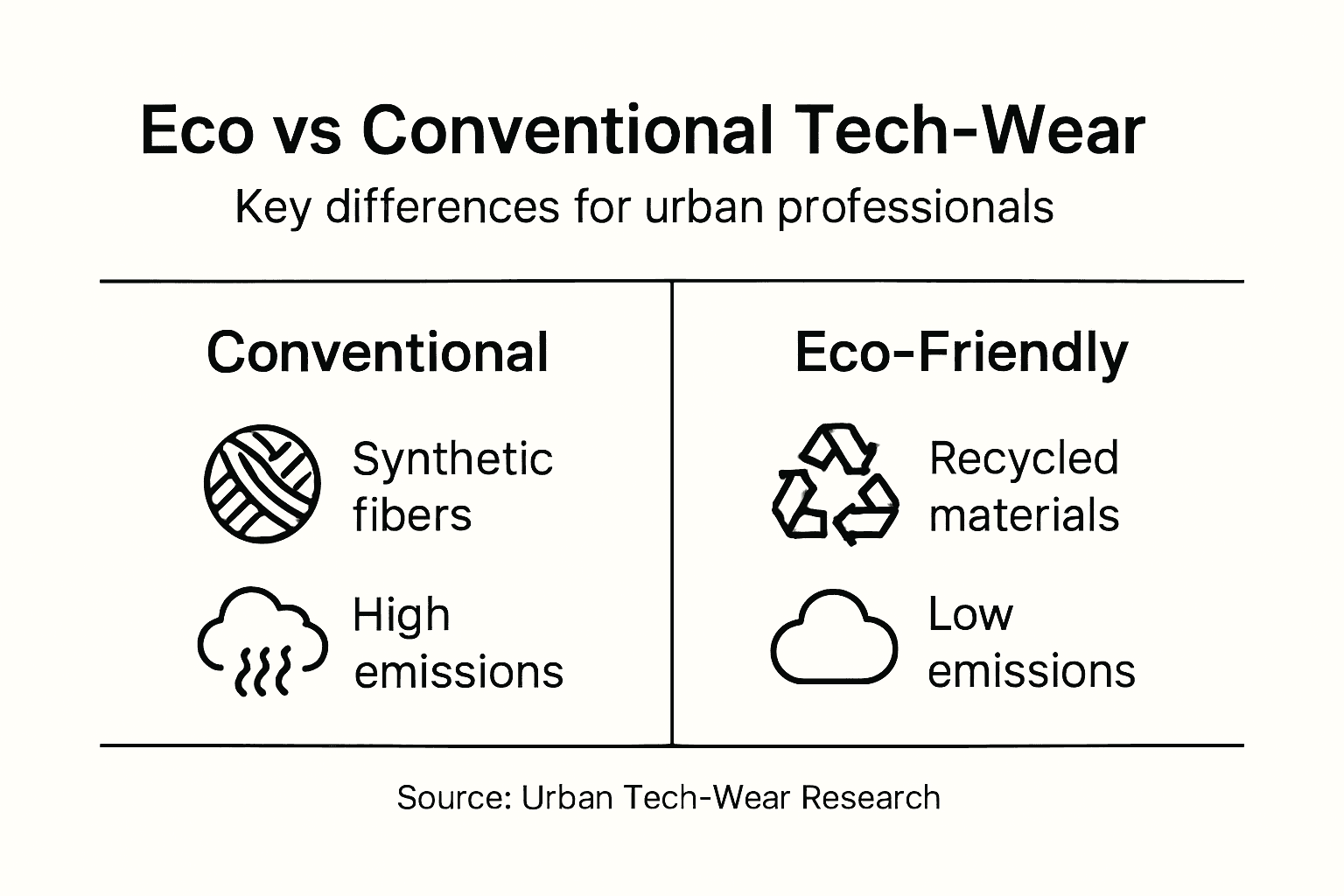
Conventional tech-wear typically relies on petroleum-based synthetic materials, high-energy manufacturing processes, and linear production models that generate substantial waste. In contrast, eco-friendly alternatives prioritize circular design principles, utilizing recycled materials, renewable resources, and production methods that dramatically reduce carbon footprints. Sustainable clothing technologies demonstrate significant advantages in waste reduction, toxic substance elimination, and overall environmental conservation.
The performance metrics between these two approaches further highlight the superiority of eco-friendly tech-wear. While conventional garments often prioritize short-term cost reduction, sustainable alternatives invest in durability, advanced material science, and multifunctional design. These eco-conscious pieces typically offer superior moisture management, temperature regulation, and technological integration, proving that environmental responsibility need not compromise functional excellence.
This table compares conventional and eco-friendly tech-wear approaches for quick reference:
| Attribute | Conventional Tech-Wear | Eco-Friendly Tech-Wear |
|---|---|---|
| Material Source | Petroleum-based synthetics | Recycled or renewable fibers |
| Manufacturing | High energy, linear model | Low impact, circular model |
| Durability | Often short lifespan | Emphasizes long-term wear |
| Environmental Impact | High waste, emissions | Strong conservation focus |
Pro tip: Always examine the material composition and manufacturing process when selecting tech-wear, prioritizing brands that transparently communicate their sustainability credentials.
Experience the Future of Urban Living with Eco-Friendly Tech-Wear
Urban professionals today face the challenge of balancing style, sustainability, and smart functionality in their daily wardrobe. This article highlighted how eco-friendly tech-wear offers advanced materials like recycled polyester and organic cotton combined with innovative features such as temperature regulation and antibacterial action. You deserve clothing and accessories that not only reduce environmental impact but also enhance your security and convenience throughout your busy day.
Discover how eco-conscious fashion can elevate your everyday life with high-performance tech-infused apparel and accessories designed for modern living.

Upgrade your urban lifestyle now with InvisiTechWear. Explore our curated selection of tech-enabled products and accessories that blend innovation, style, and sustainable design. Visit InvisiTechWear today to shop smart, live secure, and wear the future.
Frequently Asked Questions
What is eco-friendly tech-wear?
Eco-friendly tech-wear is a blend of sustainability, fashion, and technology, focusing on using advanced materials and innovative designs to create clothing that minimizes ecological impact while enhancing performance for urban professionals.
What are the key benefits of using eco-friendly materials in tech-wear?
Eco-friendly materials, such as recycled polyester and organic cotton, provide significant environmental benefits by reducing waste and carbon footprint. They also enhance performance with features like durability, breathability, and moisture management.
How does technology enhance functionality in eco-friendly tech-wear?
Technology enhances eco-friendly tech-wear through features like temperature regulation, moisture-wicking capabilities, and built-in connectivity. These smart textiles transform clothing from passive items to active tools that support daily efficiency and personal security.
What are the main differences between eco-friendly and conventional tech-wear?
Eco-friendly tech-wear typically uses recycled or renewable materials and follows a circular manufacturing model, resulting in lower environmental impact. In contrast, conventional tech-wear relies on petroleum-based synthetics and high-energy processes, often leading to greater waste and shorter product lifespans.


