

Eco-conscious choices are more than just a trend for the modern american—it is a lifestyle shift backed by real environmental impact. As more than 60 percent of global consumers seek out sustainable fashion, urban professionals now demand apparel that merges smart tech and minimal footprint without sacrificing style. This article unpacks how sustainable techwear is changing the game, blending advanced materials and smart features for those who value aesthetics, performance, and responsibility in every layer.
Table of Contents
- Defining Sustainable Techwear and Key Concepts
- Techwear Categories and Eco-Friendly Materials
- Innovative Features and Real-World Applications
- Environmental and Consumer Benefits Explained
- Challenges, Trade-Offs, and Future Directions
Key Takeaways
| Point | Details |
|---|---|
| Sustainable Techwear Integration | Combines technology, fashion, and environmental awareness to create multifunctional clothing while minimizing ecological impact. |
| Environmentally Responsible Materials | Focuses on using recycled materials and advanced textiles to enhance durability and lower carbon footprints. |
| Technological Innovations | Incorporates IoT, AI, and blockchain for better resource management and transparency throughout textile supply chains. |
| Consumer Value Proposition | Provides long-lasting, adaptable garments that justify investment through reduced frequency of purchases and superior performance. |
Defining Sustainable Techwear and Key Concepts
Sustainable techwear represents a revolutionary intersection of technology, fashion, and environmental consciousness, transforming how urban professionals interact with clothing. At its core, this innovative approach integrates cutting-edge digital technologies with environmentally responsible design principles, creating apparel that goes beyond traditional functionality. Digital technologies are enabling dramatic shifts in textile production by supporting traceability, resource efficiency, and circular economy models.
The fundamental characteristics of sustainable techwear include advanced material selection, intelligent design strategies, and technological integration that minimizes environmental impact. These garments are typically constructed using recycled materials, engineered fabrics with minimal waste production, and smart technologies that enhance durability and adaptability. Innovative approaches like modular designs, carbon-neutral manufacturing processes, and embedded technological features allow clothing to serve multiple purposes while reducing overall environmental footprint.
Key technological innovations driving sustainable techwear include Internet of Things (IoT) sensors, AI-powered manufacturing processes, and blockchain tracking systems that provide unprecedented transparency in textile supply chains. These technologies enable manufacturers to create garments with precise resource allocation, reduced waste, and enhanced performance metrics. By integrating smart textiles with sustainable production techniques, techwear transforms clothing from a disposable consumer good into a long-lasting, multifunctional asset that adapts to users’ changing needs.
Pro tip: When selecting sustainable techwear, prioritize brands that provide clear documentation about their material sourcing, manufacturing processes, and technological innovations.
Techwear Categories and Eco-Friendly Materials
Sustainable techwear encompasses diverse categories that prioritize environmental responsibility and technological innovation. Techwear categories focus on durability and functionality, strategically moving beyond traditional fast fashion’s disposable model. These categories include performance gear, smart textiles, and multifunctional apparel designed to minimize environmental impact while maximizing utility for urban professionals.
Eco-friendly materials form the foundation of sustainable techwear, with innovative textile technologies transforming how clothing is produced and consumed. Sustainable fabric innovations now include recycled polyester, organic cotton, and advanced bioengineered fibers that dramatically reduce carbon footprint. These materials are carefully selected to provide technical performance while maintaining environmental integrity, allowing manufacturers to create garments that are both technologically advanced and environmentally responsible.

The primary techwear categories include performance gear for athletes and outdoor enthusiasts, urban technical wear for city professionals, modular clothing systems with adaptable components, and smart textiles embedded with technological sensors and adaptive capabilities. Each category emphasizes different aspects of sustainability: performance gear focuses on durability, urban technical wear prioritizes versatility, modular systems reduce waste through interchangeable components, and smart textiles optimize resource utilization through intelligent design principles.
Here’s a concise comparison of prominent sustainable techwear categories and their defining advantages:
| Techwear Category | Key Materials | Main Advantage | Eco Benefit |
|---|---|---|---|
| Performance Gear | Engineered recycled fabrics | Enhanced durability for athletic use | Reduces waste, longer lifespan |
| Urban Technical Wear | Organic fiber blends | Versatile for city professionals | Minimizes frequent purchases |
| Modular Clothing Systems | Bioengineered textiles | Adaptable, components replaceable | Lowers resource consumption |
| Smart Textiles | Advanced sensor-integrated materials | Real-time biometric & environmental response | Optimizes energy/resource use |
Pro tip: When exploring sustainable techwear, examine the material composition and manufacturing process to ensure genuine environmental commitment beyond marketing claims.
Innovative Features and Real-World Applications
Smart textiles have revolutionized techwear by integrating advanced technological capabilities directly into fabric structures. Multifunctional wearable technologies now provide unprecedented functionality across health, sports, and fashion sectors, transforming how individuals interact with their clothing. These innovative features include adaptive temperature regulation, moisture-wicking properties, embedded biometric sensors, and dynamic environmental response mechanisms that adjust to user needs in real-time.
Innovative textile technologies are expanding the practical applications of techwear beyond traditional clothing limitations. Environmental monitoring capabilities now allow garments to track air quality, UV exposure, and pollution levels, providing wearers with instant data about their surrounding environment. Health-focused applications include biometric tracking, posture correction sensors, and adaptive compression technologies that support physical performance and wellness objectives.
Real-world applications of sustainable techwear span multiple industries, from professional athletics to urban commuting and emergency response scenarios. Performance gear now integrates advanced materials that provide superior protection, enhanced mobility, and reduced environmental impact. Urban professionals benefit from clothing with built-in connectivity features, secure communication interfaces, and adaptive design elements that seamlessly transition between professional and recreational environments. Specialized sectors like healthcare and outdoor exploration are experiencing transformative innovations that blend technological precision with human-centric design principles.
Pro tip: Research the specific technological capabilities of techwear garments before purchasing, focusing on functional features that directly enhance your lifestyle and professional needs.
Environmental and Consumer Benefits Explained
Sustainable techwear represents a transformative approach to clothing that delivers substantial environmental and consumer advantages. Sustainable production strategies dramatically reduce carbon emissions, minimize textile waste, and optimize resource consumption through innovative design principles. By prioritizing circular production methods, these garments significantly decrease the fashion industry’s environmental footprint while providing consumers with high-performance, long-lasting clothing solutions.
Techwear’s consumer value proposition extends far beyond traditional fashion models, offering multifunctional garments that promote responsible consumption. Consumers benefit from clothing that adapts to diverse environmental conditions, reduces the frequency of purchases, and supports a more intentional approach to personal wardrobe management. These innovative textiles provide enhanced durability, versatility, and performance characteristics that justify their initial investment through extended usability and reduced replacement cycles.
The environmental benefits of sustainable techwear are profound and multifaceted. Advanced manufacturing techniques enable significant reductions in water consumption, energy use, and raw material waste. Consumers actively participate in sustainable practices by choosing garments designed with environmental consciousness, supporting a broader shift toward responsible fashion consumption. Technologies like recycled material integration, modular design, and precision manufacturing create clothing systems that minimize ecological impact while maximizing functional utility across professional and personal environments.
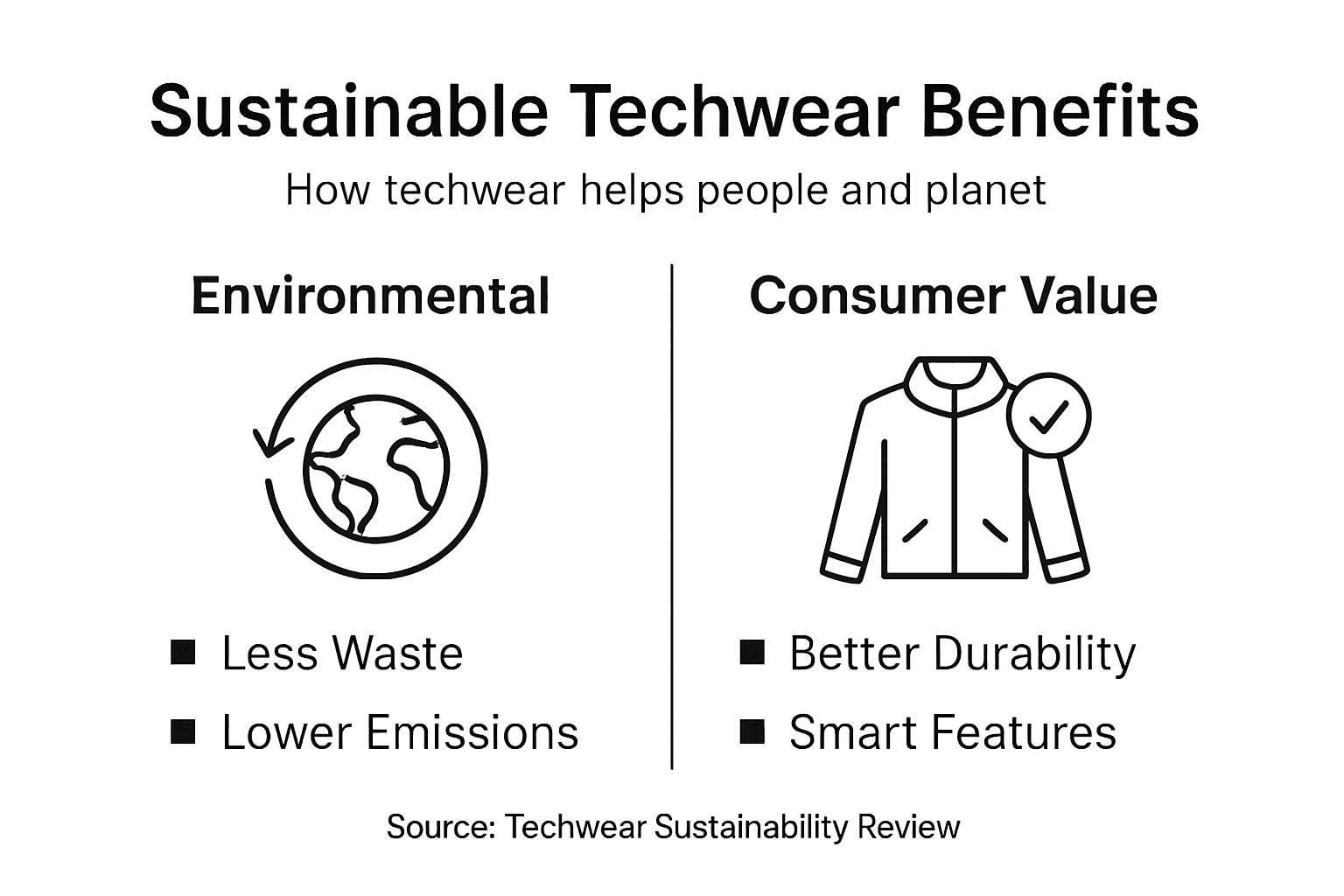
Below is a summary of how sustainable techwear benefits both the environment and consumers:
| Benefit Type | Impact on Environment | Value for Consumers | Example |
|---|---|---|---|
| Reduced Emissions | Lowers carbon footprint | Supports conscious consumption | Carbon-neutral manufacturing |
| Less Water Usage | Conserves vital resources | Promotes sustainable choices | Efficient dyeing methods |
| Extended Usability | Minimizes textile waste | Justifies initial investment | Durable multifunctional apparel |
| Innovative Materials | Limits raw material usage | Delivers advanced performance | Recycled polyester |
Pro tip: Evaluate techwear purchases by considering total lifecycle value, focusing on durability, versatility, and environmental impact rather than just upfront cost.
Challenges, Trade-Offs, and Future Directions
Sustainable techwear confronts significant technological and institutional barriers that require comprehensive strategic approaches. Digital integration challenges demand interdisciplinary collaboration, advanced skill development, and substantial investments in research and innovation. The complexity of merging advanced technological capabilities with sustainable design principles necessitates breaking down traditional silos between fashion, engineering, and environmental disciplines.
The primary trade-offs in sustainable techwear involve balancing technological sophistication, production costs, and environmental performance. Advanced materials and smart textile technologies often come with higher initial development expenses, potentially limiting widespread adoption. Manufacturers must navigate complex decisions about material selection, performance capabilities, and sustainability metrics, weighing the long-term environmental benefits against short-term economic considerations. This delicate balance requires nuanced strategies that prioritize both technological innovation and ecological responsibility.
Future directions for sustainable techwear emphasize developing robust regulatory frameworks, fostering continuous technological innovation, and creating comprehensive sustainability strategies. Emerging trends point toward increased integration of artificial intelligence, advanced recycling technologies, and modular design principles that enable greater flexibility and reduced waste. The ultimate goal is creating a holistic ecosystem where technological performance, consumer experience, and environmental stewardship are seamlessly integrated, transforming how society conceptualizes clothing and technological interaction.
Pro tip: Continuously educate yourself about emerging sustainable technologies and maintain a flexible perspective on how clothing can evolve beyond traditional consumption models.
Discover Sustainable Techwear Designed for Your Modern Lifestyle
The article highlights how integrating advanced technology with sustainable design can transform everyday apparel into functional, eco-friendly assets. You may face challenges balancing style, durability, and environmental impact in your wardrobe choices. At InvisiTechWear, we understand these needs and focus on smart clothing solutions that combine innovation with sustainability. Our selection of tech-infused Hoodies and Jackets feature materials and designs engineered to enhance durability while embracing responsible production methods.

Elevate your lifestyle today by exploring InvisiTechWear’s curated collections at https://invisitechwear.com. Shop intelligently for apparel that supports your active, conscious lifestyle with functionality built right in. Choose products that deliver real-world benefits and contribute to a sustainable future. Take the step now and experience the perfect union of technology, style, and environmental mindfulness.
Frequently Asked Questions
What is sustainable techwear?
Sustainable techwear is an innovative fusion of technology, fashion, and environmental consciousness. It comprises clothing designed with advanced materials and smart technologies aimed at minimizing environmental impact while maximizing functionality.
What are the key benefits of sustainable techwear?
The key benefits include reduced environmental footprint through eco-friendly materials and manufacturing processes, enhanced durability, versatility for various situations, and the integration of smart features that improve user experience and functionality.
How does sustainable techwear contribute to reducing waste in the fashion industry?
Sustainable techwear minimizes waste through practices like using recycled materials, implementing modular designs, and adopting circular economy principles, which extend the lifespan of garments and decrease the frequency of purchases.
What innovative features can be found in sustainable techwear?
Innovative features in sustainable techwear include adaptive temperature regulation, moisture-wicking properties, embedded biometric sensors, and real-time environmental monitoring capabilities, enhancing both performance and user comfort.


