

Nearly 90 percent of wearable tech fans now expect their accessories to deliver both advanced security and cutting-edge style. For tech-savvy urban professionals worldwide, there is a rising demand for devices that seamlessly blend into personal fashion while rivaling even American innovations in functionality and privacy. This evolution in wearable technology offers tools that not only look sharp, but also provide peace of mind through intelligent features tailored for busy modern lifestyles.
Table of Contents
- Defining Wearable Tech In 2025
- Leading Types: Smart Rings, Clothing, Glasses
- Key Features Shaping Fashion And Security
- Real-World Uses: Professional, Fitness, Lifestyle
- Risks: Privacy, Battery Life, Data Security
- Smart Accessories Vs. Traditional Options
Key Takeaways
| Point | Details |
|---|---|
| Integration of AI and Personalization | Wearable technology in 2025 features significant integration of artificial intelligence for personalized health monitoring and user experiences. |
| Diverse Device Offerings | The landscape now includes smart rings, intelligent clothing, and augmented reality glasses, each enhancing user functionality and comfort. |
| Privacy and Security Risks | Users face critical privacy vulnerabilities with wearable devices collecting sensitive health data, necessitating careful management of privacy settings. |
| Shift from Traditional Accessories | Smart accessories now provide meaningful capabilities beyond aesthetics, transforming how users interact with technology daily. |
Defining Wearable Tech in 2025
Wearable technology in 2025 represents a sophisticated fusion of intelligent design and human-centric functionality. As computing becomes increasingly personal, these devices transform from standalone gadgets into seamlessly integrated extensions of human capability. Emerging technological trends demonstrate that wearable tech is no longer about novelty, but about creating meaningful, personalized interactions between humans and their technological environments.
The landscape of wearable technology now encompasses an extraordinary range of devices - from smart contact lenses tracking health metrics to electronic textiles that adapt to physiological changes. These innovations prioritize three critical design principles: miniaturization, biocompatibility, and real-time responsiveness. Advanced materials like transient electronics and liquid metal conductors enable devices that are not just smaller and more flexible, but also capable of delivering nuanced, intelligent feedback.
Key characteristics of 2025’s wearable tech include:
- Artificial intelligence integration
- Personalized health monitoring
- Augmented reality interfaces
- Sustainable and eco-friendly design
- Seamless human-machine interaction
Pro tip: When selecting wearable technology, prioritize devices that offer genuine functionality over mere aesthetic appeal, focusing on how the technology can meaningfully enhance your daily life.
Leading Types: Smart Rings, Clothing, Glasses
The landscape of wearable technology in 2025 has evolved dramatically, offering unprecedented personal tech experiences across three primary form factors: smart rings, intelligent clothing, and augmented reality glasses. Wearable technology trends demonstrate an incredible diversification beyond traditional smartwatch designs, introducing devices that seamlessly integrate into our daily lives with enhanced functionality and discrete aesthetics.
Smart rings represent the pinnacle of miniaturized health monitoring technology. These compact devices now offer comprehensive tracking capabilities including sleep patterns, heart rate variability, and stress levels - all without the bulkiness of traditional wearables. Cutting-edge smart rings like Oura and Circular provide continuous health insights through advanced biometric sensors embedded in sleek, minimalist designs that complement professional and casual wardrobes alike.
Intelligent clothing and augmented reality glasses further expand the boundaries of personal technology. Smart textiles now incorporate microscopic sensors capable of monitoring muscle activity, hydration levels, and posture in real-time. Augmented reality glasses have transformed from experimental prototypes to practical tools offering hands-free navigation, instant notifications, and immersive entertainment experiences.
Here’s a comparison of leading wearable technology types and their unique strengths in 2025:
| Device Type | Main Advantage | Typical User Scenario |
|---|---|---|
| Smart Rings | Discreet health tracking | Business meetings, travel |
| Smart Clothing | Real-time body monitoring | Athletic training, daily wear |
| AR Glasses | Enhanced information access | Professional settings, navigation |
Key innovations in wearable technology include:
- Microscopic health monitoring sensors
- AI-powered personalization
- Seamless data integration
- Adaptive design principles
- Enhanced user privacy features
Pro tip: When exploring wearable technologies, prioritize devices that offer comprehensive functionality while maintaining a balance between technological sophistication and personal comfort.
Key Features Shaping Fashion and Security
The intersection of fashion and technology in 2025 represents a sophisticated ecosystem where security, functionality, and style converge seamlessly. Wearable technology advances demonstrate a profound integration of AI, IoT, and augmented reality that transforms traditional fashion accessories into intelligent, responsive personal security systems. These innovations go far beyond simple tracking, creating adaptive technologies that understand and anticipate user needs while maintaining rigorous privacy standards.

Smart fabrics and embedded sensors have become the cornerstone of modern wearable technology, enabling continuous health monitoring and environmental interaction. Cutting-edge security measures now incorporate advanced encryption and blockchain technologies to protect personal data, ensuring that style does not compromise individual privacy. The result is a new generation of fashion tech that acts as both a personal statement and a robust security mechanism, tracking physiological parameters while maintaining strict data protection protocols.
The evolution of wearable technology centers on several transformative features that redefine personal security and fashion interaction:
- Biometric authentication systems
- Real-time health monitoring
- Adaptive environmental sensing
- Personalized AI styling recommendations
- Modular design with upgradeable security features
Pro tip: When selecting tech-enabled fashion accessories, prioritize devices that offer transparent data management policies and demonstrate a comprehensive approach to personal security and style.
Real-World Uses: Professional, Fitness, Lifestyle
Wearable technology in 2025 has transcended novelty, becoming an integral tool across professional, fitness, and lifestyle domains. Fitness technology now enables data-driven training with AI-powered health insights that revolutionize personal performance tracking and wellness management. These intelligent devices provide unprecedented granularity in understanding human physiology, transforming how individuals approach health, work, and personal development.
Smart devices are now seamlessly integrated across multiple life sectors, offering specialized functionality for different user needs. Professionals leverage augmented reality glasses for hands-free information access, fitness enthusiasts use advanced tracking systems for optimized training, and lifestyle users enjoy personalized health monitoring that adapts to individual contexts. The boundaries between technology and personal experience continue to blur, creating adaptive ecosystems that respond dynamically to user requirements.
Key application areas for wearable technology include:
- Corporate productivity enhancement
- Performance optimization in athletics
- Personalized health monitoring
- Mental wellness tracking
- Immersive professional training
Pro tip: Select wearable technologies that offer comprehensive data integration and demonstrate clear privacy protection mechanisms to maximize both functionality and personal security.
Risks: Privacy, Battery Life, Data Security
Emerging wearable technologies expose significant privacy vulnerabilities that challenge the fundamental relationship between personal technology and individual privacy. In 2025, approximately 90% of wearable devices collect extensive sensitive health data, creating unprecedented risks of unauthorized information exposure. These devices continuously track intimate details like heart rate, location patterns, and sleep cycles, transforming personal information into potential commodities for third-party interests.
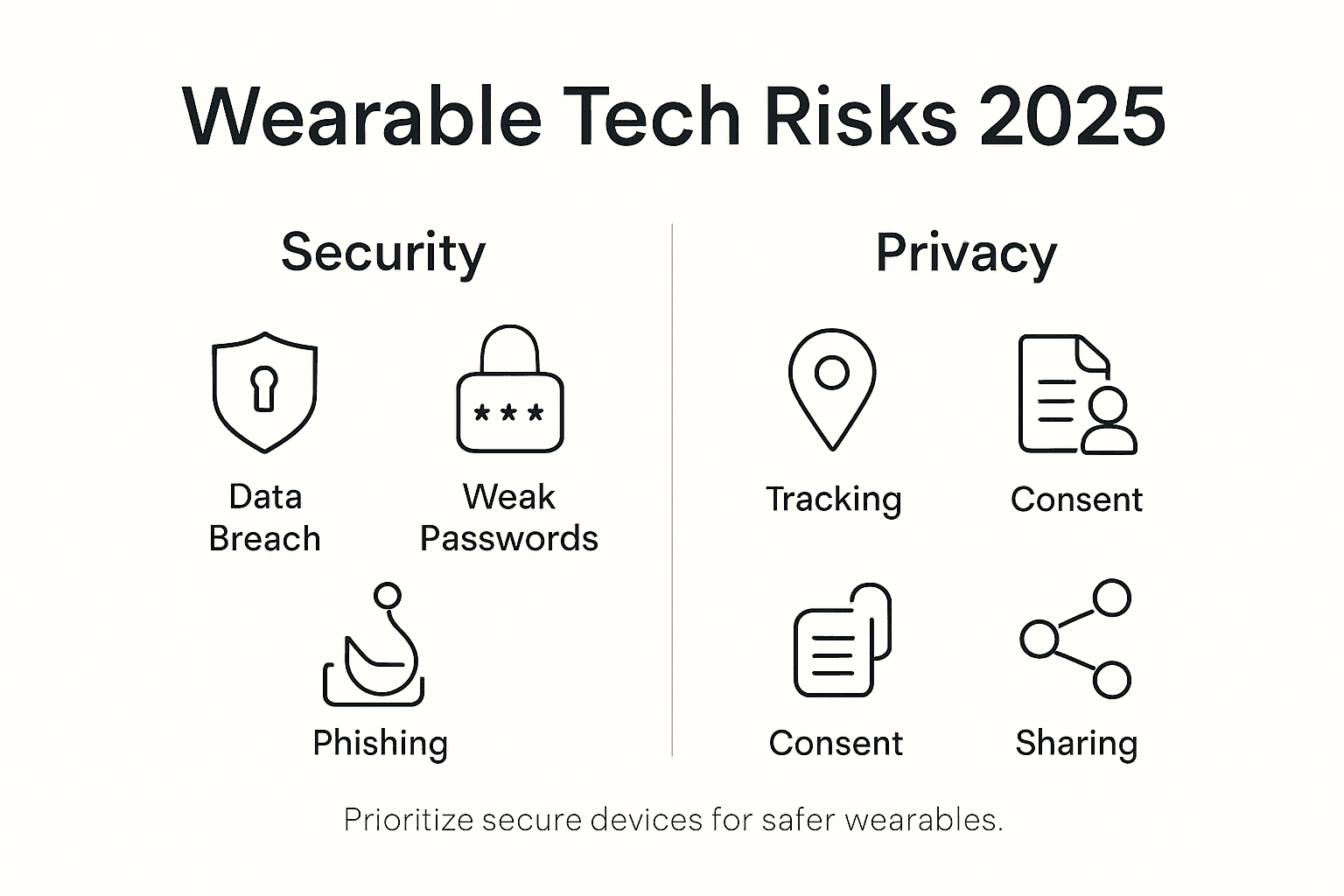
Cybersecurity risks in wearable technology have become increasingly complex, with sophisticated hackers exploiting multiple entry points including vulnerable Bluetooth connections, unpatched firmware, and cloud storage weaknesses. The potential consequences extend beyond simple data theft, potentially enabling advanced profiling, insurance discrimination, and unauthorized personal tracking. Manufacturers and users must now navigate an intricate landscape of technological innovation and privacy protection.
This table summarizes key privacy and security vulnerabilities facing wearable technology users in 2025:
| Risk Area | Typical Threat | Impact on User |
|---|---|---|
| Data Collection | Excessive personal info captured | Potential identity misuse |
| Connectivity | Unpatched wireless access | Device hacking, data theft |
| Biometric Storage | Insecure authentication | Compromised health info |
Key privacy and security risks include:
- Unauthorized third-party data sharing
- Potential biometric data exploitation
- Weak encryption mechanisms
- Location tracking vulnerabilities
- Potential AI-driven discriminatory profiling
Pro tip: Always review privacy settings, use two-factor authentication, and choose wearable technologies from manufacturers with transparent data protection policies.
Smart Accessories vs. Traditional Options
Wearable technology in 2025 represents a revolutionary shift from traditional accessories, transforming simple decorative items into intelligent, functional extensions of personal technology. Unlike traditional accessories that serve purely aesthetic purposes, smart accessories now integrate advanced capabilities like health monitoring, augmented reality interactions, and instant connectivity that fundamentally redefine user experience.
The core distinction between smart and traditional accessories lies in their adaptive intelligence. Traditional watches simply tell time, while modern smartwatches provide comprehensive health insights, track fitness metrics, enable contactless payments, and offer personalized notifications. Smart rings now replace traditional jewelry by embedding sophisticated sensors that monitor physiological parameters, while smart glasses transform from mere visual accessories into powerful computational interfaces that overlay real-time information onto the user’s visual field.
Key comparative features include:
- Intelligent data processing
- Adaptive functionality
- Real-time health monitoring
- Enhanced personal security
- Customizable user experiences
Pro tip: When comparing smart and traditional accessories, evaluate their technological capabilities beyond aesthetic appeal, focusing on how they can genuinely improve your daily life and personal productivity.
Elevate Your Fashion Security with InvisiTechWear
The article highlights the rising concerns around privacy, data security, and the need for adaptive fashion technology that protects personal information in 2025. If you share the goal of seamlessly blending style, security, and smart functionality, InvisiTechWear offers solutions that address these exact challenges. With products designed around biometric protection, encrypted data safety, and practical convenience, you no longer have to sacrifice fashion for security.
Discover our range of Accessories – Daon Tech designed to safeguard your personal data while complementing your daily style. From RFID-blocking wallets to Bluetooth earphone organizers, every item integrates cutting-edge security features. For those seeking tech-infused apparel, explore our high-tech Hoodies – Daon Tech that combine fashion-forward looks with smart materials and privacy-conscious design.
Protect your personal space with technology you can trust and wear with confidence. Visit InvisiTechWear today to experience fashion security elevated by innovation. Shop now and step into the future where your style and privacy go hand in hand.
Frequently Asked Questions
What are the key features of wearable technology in 2025?
Wearable technology in 2025 features advanced elements such as AI integration, personalized health monitoring, augmented reality interfaces, eco-friendly designs, and seamless human-machine interaction.
How do smart rings compare to traditional wearable devices?
Smart rings offer discreet health tracking and are less bulky than traditional wearable devices. They provide comprehensive metrics like sleep patterns and heart rate without the need for larger devices like smartwatches.
What security risks should users be aware of with wearable tech?
Users should be cautious of privacy risks, including unauthorized data sharing, insecure biometric storage, and vulnerabilities in data connectivity. These risks can expose sensitive personal information to potential threats.
How does adaptive intelligence in wearable tech improve user experience?
Adaptive intelligence allows wearable devices to provide real-time health monitoring, personalized recommendations, and enhanced user interactions, transforming them from mere accessories into vital tools for personal health and productivity.


