

Digital pickpockets scan wallets in crowded subways every day, stealing card data without physical contact. Connected fashion accessories now reduce these theft attempts by approximately 40% using secure access controls and proximity alerts. For urban professionals balancing style with security, understanding connectivity in fashion transforms how you protect assets while maintaining a polished appearance.
Table of Contents
- Introduction To Connectivity In Fashion
- Technologies Enabling Connectivity In Fashion
- Security Benefits And Challenges Of Connected Fashion
- Convenience And Functional Enhancements For Urban Lifestyles
- Common Misconceptions And Realities About Connected Fashion
- Tradeoffs Between Style, Functionality, And Sustainability
- Choosing And Maintaining Connected Fashion Accessories
- Future Trends And Market Outlook For Connected Fashion
- Explore Top Connected Fashion Accessories At InvisiTechWear
- FAQ
Key Takeaways
| Point | Details |
|---|---|
| Security Enhancement | Connectivity reduces digital theft risks by 40% through RFID blocking and proximity alerts. |
| Core Technologies | RFID, Bluetooth, NFC, and smart textiles power connected fashion functionality. |
| Style Integration | Over 70% of users find tech features aesthetically neutral or enhancing to their style. |
| Practical Benefits | Connected accessories provide loss prevention, notifications, and seamless urban convenience. |
| Maintenance Balance | Regular charging and updates maintain security while preserving daily usability. |
Introduction to Connectivity in Fashion
Connectivity in fashion means embedding wireless technologies directly into accessories and apparel you wear daily. RFID chips, Bluetooth modules, and NFC sensors transform traditional items into smart tools that communicate with your devices. For tech-savvy professionals navigating busy urban environments, these innovations address real security concerns while maintaining aesthetic standards.
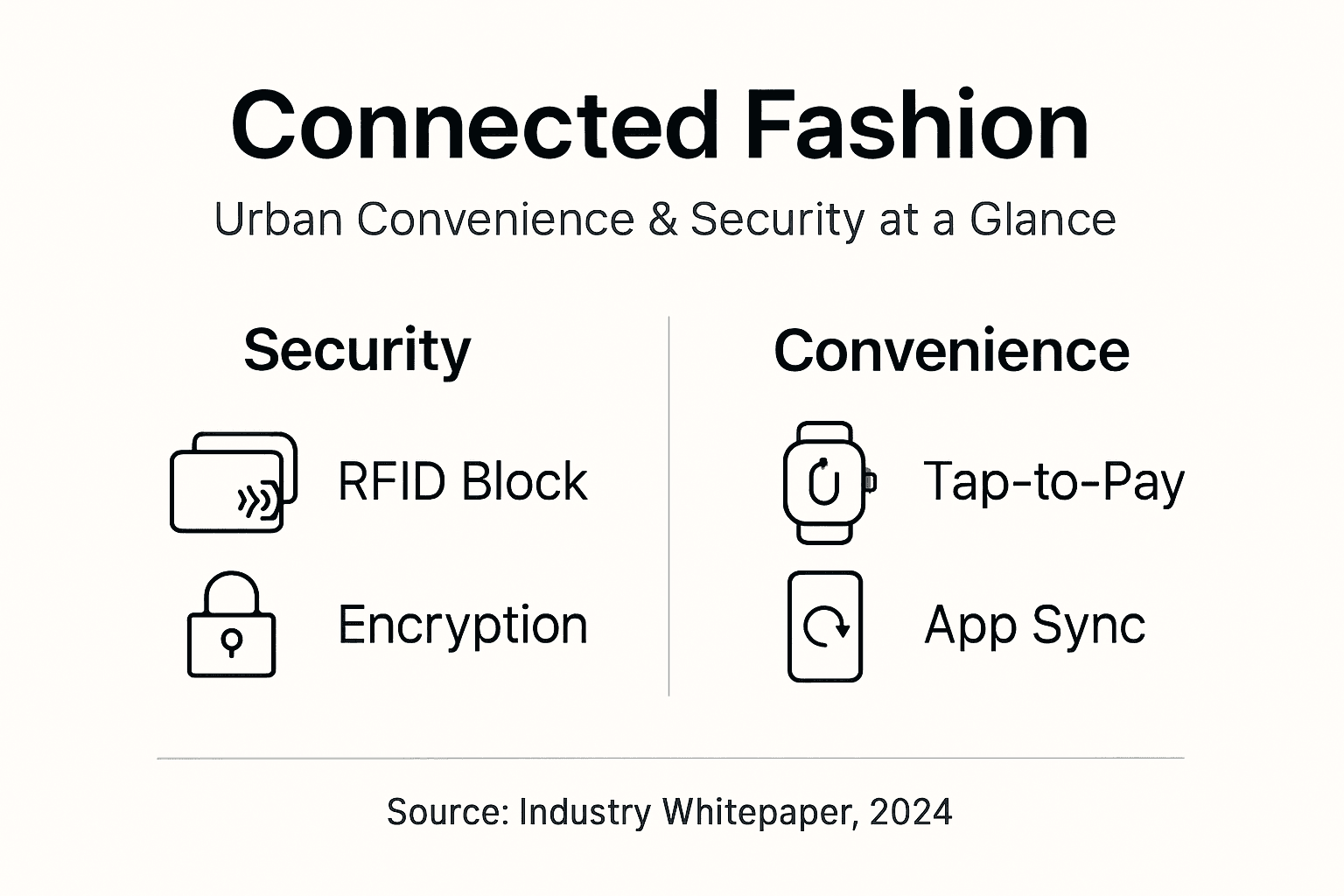
The technologies enabling this revolution include several key players. RFID provides passive security features that require no battery, blocking unauthorized scanners from reading your credit cards. Bluetooth creates active connections between your accessories and smartphone, enabling tracking and alerts. NFC facilitates quick interactions like contactless payments through simple taps. Smart textiles embed conductive fibers that sense environmental changes or monitor biometric data.
Urban professionals increasingly demand accessories that serve multiple purposes without compromising style. You need a wallet that protects against digital theft while fitting your minimalist aesthetic. You want a jacket that charges your phone but looks sharp in meetings. This convergence of fashion and technology reflects broader market trends where functionality enhances rather than detracts from personal style.
The connected fashion market responds directly to city living challenges. Crowded transit systems, frequent travel, and constant connectivity demands create unique needs. Connected accessories address these by:
- Securing sensitive data from wireless theft attempts
- Tracking valuable items in real time through apps
- Reducing bulk by integrating multiple functions
- Providing instant notifications for security events
- Maintaining professional appearance standards
This foundation explains why connectivity matters beyond novelty. It solves specific problems urban professionals face while respecting your style preferences and daily routines.
Technologies Enabling Connectivity in Fashion
RFID technology operates through radio frequency identification, using electromagnetic fields to automatically identify and track tags attached to objects. In fashion, RFID serves two primary functions: active chips that transmit product information and passive blocking materials that shield your cards from unauthorized scanners. The passive blocking requires no power source, making it ideal for wallets and cardholders you use throughout the day. RFID blocking effectiveness reaches approximately 90% prevention rates against skimming attempts.
Bluetooth connectivity creates two-way communication between your accessories and smartphone within a 30-foot range. Modern Bluetooth Low Energy protocols extend battery life significantly, allowing trackers embedded in wallets or bags to operate for months on coin batteries. Encryption standards like AES-128 secure data transmission, preventing interception. You receive proximity alerts when items move beyond set distances, helping prevent loss or theft in crowded spaces.
NFC technology enables close-range interactions, typically within four inches, for secure data exchange. Tap-to-pay functionality in smart wallets uses NFC to transmit encrypted payment credentials. This same technology allows you to share contact information, unlock doors, or authenticate identity through simple proximity gestures. NFC draws minimal power, often harvesting energy from the reader device itself.
Smart textiles represent the next evolution, weaving conductive threads directly into fabric structures. These tech-infused materials can sense pressure, temperature, or moisture while maintaining fabric flexibility and comfort. Some smart textiles generate electricity from body heat or movement, potentially charging small devices. Others change properties based on environmental conditions, like adjusting insulation levels.
Power management remains crucial for daily practicality. Consider these technology characteristics:
- RFID blocking needs zero power, functioning indefinitely
- Bluetooth trackers last 6-12 months on replaceable batteries
- NFC tags operate passively, drawing power from readers
- Smart textiles require periodic charging or battery replacement
- Solar integration extends battery life in outdoor applications
Balancing these power requirements with usability determines whether connected fashion enhances or complicates your routine. The most successful implementations minimize charging frequency while maximizing functional benefits.
Security Benefits and Challenges of Connected Fashion
RFID blocking wallets prevent digital pickpocketing by creating a Faraday cage that blocks radio frequencies used in contactless scanning. When you carry multiple credit cards, transit passes, and access badges, each becomes a potential vulnerability. Blocking materials eliminate this risk, reducing unauthorized scanning success rates by up to 90%. This protection works passively, requiring no action beyond carrying the protected item.
Bluetooth-enabled accessories provide active security through encryption and proximity monitoring. AES encryption scrambles data transmission between your accessory and phone, making interception essentially useless to attackers. Proximity alerts notify you immediately when items move beyond preset distances, typically 15-30 feet. This gives you seconds to respond before a thief disappears into crowds. Connected accessories combine these features to create layered security systems.
“Connected fashion accessories help reduce digital theft risks in crowded urban environments by leveraging proximity alerts and secure access controls, decreasing theft attempts by approximately 40%.”
Challenges exist alongside these benefits. Bluetooth connections create potential hacking vectors if encryption fails or users ignore security updates. Battery dependency means security features stop working when power depletes, creating windows of vulnerability. User trust issues arise from privacy concerns about location tracking and data collection. Manufacturers must balance functionality with transparent privacy practices.
Educating users improves security outcomes significantly. When you understand how to verify encryption standards, update firmware regularly, and recognize phishing attempts targeting connected devices, trust increases by approximately 25%. Key security practices include:
- Verifying manufacturer security certifications before purchase
- Enabling automatic security updates on companion apps
- Using strong unique passwords for device accounts
- Reviewing app permissions to limit data collection
- Disabling connectivity features when not needed
The security benefits substantially outweigh challenges when you choose quality products and follow basic digital hygiene. Connected fashion provides measurable protection improvements over traditional accessories while introducing manageable new considerations.
Convenience and Functional Enhancements for Urban Lifestyles
Connected accessories transform daily routines through practical convenience features that save time and reduce stress. Bluetooth trackers embedded in wallets or bags let you locate misplaced items through smartphone apps showing last-known locations on maps. When you’re rushing to catch a train and can’t find your wallet, a quick app check reveals it’s still on your kitchen counter. This prevents missed appointments and reduces the panic of potential loss.

Smart textiles enable customization beyond traditional garments. Temperature-regulating fabrics adjust insulation based on body heat, keeping you comfortable during variable weather. Moisture-wicking properties activate when sensors detect perspiration, improving comfort during commutes. Some smart jackets include heating elements controlled through smartphone apps, letting you warm up before stepping outside.
Notification systems integrate seamlessly with your digital life. Key convenience features include:
- Separation alerts that buzz your phone when you leave items behind
- Battery status notifications preventing unexpected power loss
- Weather-based recommendations for smart textile settings
- Calendar integration triggering outfit or accessory suggestions
- Transit card balance alerts preventing turnstile embarrassment
App integration centralizes control over multiple connected items. A single interface manages your wallet tracker, smart jacket settings, and RFID-protected bag status. You check everything at a glance rather than juggling multiple apps or physical checks. This consolidation reduces cognitive load during busy mornings.
Pro Tip: Pair Bluetooth trackers with RFID-blocking wallets for comprehensive security and convenience. The tracker helps recover lost items while blocking protects against digital theft, creating a complete safety system.
Battery life and ease of use determine whether convenience features actually improve your life. Connected accessories requiring daily charging quickly become burdens. Look for designs offering:
- Minimum 6-month battery life for passive trackers
- Quick charge capabilities under 2 hours
- Clear battery status indicators
- Replaceable rather than built-in batteries
- Low-power modes extending emergency operation
When connectivity enhances rather than complicates routines, adoption becomes natural and sustained.
Common Misconceptions and Realities about Connected Fashion
Many assume connected fashion sacrifices style for functionality, imagining bulky tech additions destroying aesthetic appeal. Reality tells a different story. Modern manufacturers integrate technology discreetly, with surveys showing approximately 70% of users find tech features either aesthetically neutral or actively enhancing their style preferences. Slim RFID-blocking card sleeves look identical to traditional leather holders. Bluetooth trackers fit flush within wallet linings. Smart fabrics appear indistinguishable from conventional textiles.
Wireless connectivity raises security concerns, with some believing any wireless feature creates hacking vulnerabilities. While connections do introduce potential risks, modern encryption protocols and security standards significantly reduce actual danger. AES-256 encryption, two-factor authentication, and regular security patches make intercepting meaningful data extremely difficult. Reputable manufacturers prioritize security certifications, with urban consumers benefiting from continuous security improvements.
Practicality doubts center on charging requirements, with critics claiming constant battery management outweighs benefits. Low-energy Bluetooth technology extends operation to 6-12 months on single coin batteries. RFID blocking requires zero power, functioning indefinitely. Smart textiles with more intensive power needs typically achieve full charges in under two hours, comparable to charging smartphones. Strategic power management makes connected fashion viable for daily use.
The luxury perception positions connected fashion as unnecessary extravagance rather than practical investment. Price premiums exist, but proven security and convenience benefits provide measurable value. Preventing a single instance of credit card fraud saves more than typical cost differences between standard and RFID-blocking wallets. Time saved locating tracked items adds up over months of use.
Key realities to remember:
- Technology integration enhances rather than compromises design
- Security protocols provide robust protection when properly implemented
- Battery life aligns with typical replacement cycles for fashion items
- Value derives from preventing losses and saving time
- Quality varies by manufacturer, requiring informed selection
Pro Tip: Verify security certifications like FCC compliance and read independent reviews before purchasing. Balance your style preferences with documented tech features rather than assuming inherent conflicts.
Understanding these realities helps you make informed decisions based on actual product capabilities rather than outdated assumptions about connected fashion limitations.
Tradeoffs Between Style, Functionality, and Sustainability
Wireless technology creates inherent battery life limitations affecting design choices. Slimmer profiles leave less space for batteries, reducing operational duration between charges. You face decisions between ultra-minimalist aesthetics and extended convenience. A tracker adding 2mm thickness might seem negligible until you’re accustomed to extremely slim wallets. Manufacturers balance these constraints differently, with some prioritizing form and others emphasizing function.
Security features introduce their own compromises. RFID blocking materials add slight bulk compared to unprotected alternatives. Metal-lined wallets weigh more than pure leather versions. Bluetooth modules require dedicated space within accessory structures. These additions remain minimal in quality designs, but perfectionist minimalists notice every millimeter and gram.
Sustainability emerges as connected fashion matures. Electronic components create disposal challenges when items reach end-of-life. Batteries contain materials requiring special recycling. However, sustainable practices are advancing rapidly, with brands deploying eco-friendly materials alongside technology to mitigate impact, reducing material waste by approximately 30%. Modular designs allow battery replacement without discarding entire accessories.
| Feature | RFID Blocking Wallets | Bluetooth Accessories | Smart Textiles |
|---|---|---|---|
| Power Needs | None (passive) | Low (6-12 months) | Moderate (daily-weekly) |
| Style Impact | Minimal bulk | Slight thickness | Invisible integration |
| Security Level | High (90% protection) | Very High (active alerts) | Variable by feature |
| Maintenance | None required | Battery replacement | Regular charging |
| Sustainability | High (no batteries) | Moderate (replaceable) | Improving (recycling) |
| Cost Premium | 20-40% over standard | 30-50% over standard | 40-60% over standard |
Consumers prioritizing different values reach different conclusions. Security-focused professionals accept minor bulk for maximum protection. Style purists choose minimal tech integration with passive features. Environmentally conscious buyers select brands with transparent sustainability commitments and modular designs.
The tradeoff spectrum shifts as technology improves. Thinner batteries, more efficient circuits, and better materials gradually reduce compromises. Solar charging integration eliminates some battery concerns. Biodegradable electronics research promises future sustainability improvements. Your current choices reflect today’s available balance points, with understanding helping match products to personal priorities.
Choosing and Maintaining Connected Fashion Accessories
Selecting the right connected fashion requires systematic evaluation matching your specific needs with available options. Start by identifying your primary concerns: security, convenience, style, or some combination. Security-focused individuals prioritize RFID blocking and encryption standards. Convenience seekers emphasize tracking features and app integration. Style-conscious buyers demand minimal aesthetic compromise.
Follow this decision framework:
- Define your specific security or convenience needs based on daily routines
- Research products meeting those needs from reputable manufacturers
- Assess style compatibility by examining photos, dimensions, and materials
- Understand maintenance requirements including charging frequency and updates
- Test products during return periods to verify real-world performance
Encryption standards matter significantly for Bluetooth-enabled accessories. Look for AES-128 minimum encryption, with AES-256 preferred for maximum security. Verify manufacturer security update policies, ensuring ongoing vulnerability patches. Read user reviews focusing on actual security performance rather than marketing claims.
Battery life specifications require realistic interpretation. Manufacturer claims reflect ideal conditions; real usage typically achieves 70-80% of stated duration. Consider your charging habits and whether monthly battery changes or weekly device charging fits your routine better. Replaceable batteries offer long-term flexibility compared to built-in options requiring eventual product replacement.
Pro Tip: Regularly update companion apps and firmware to maintain security and functionality. Set monthly reminders for manual checks if automatic updates aren’t available. Keep devices charged above 20% to prevent unexpected security feature failures.
Maintenance practices extend product lifespan and preserve functionality. Proper storage protects electronics from extreme temperatures and moisture. Leather care for connected accessories follows traditional methods, avoiding excessive moisture near electronic components. Smart textiles often require gentle washing cycles and air drying to protect embedded circuits.
Optimal charging habits prevent battery degradation:
- Charge before complete depletion when possible
- Avoid leaving devices plugged in continuously after full charge
- Use manufacturer-provided cables and adapters
- Store partially charged during extended non-use periods
- Replace batteries at first signs of reduced capacity
Trusted brands provide better long-term satisfaction through quality materials, reliable customer service, and ongoing security support. Research manufacturer reputations, warranty terms, and replacement part availability before purchasing. Premium prices from established brands often prove worthwhile through extended usability and reduced failure rates.
Future Trends and Market Outlook for Connected Fashion
IoT integration expands connected fashion capabilities beyond current standalone functions. Future accessories will communicate with smart home systems, adjusting lighting or climate control based on your arrival. Wallets might authenticate automatic payments when entering registered retailers. Jackets could interact with vehicle systems, preheating seats during cold weather. This ecosystem approach creates seamless experiences across your connected devices.
Market growth projections reflect increasing urban adoption and technological advancement. Analysts predict connected fashion markets will expand at compound annual rates exceeding 15% through 2030. Urban professionals drive this growth, demanding fashion innovations that enhance security and convenience without aesthetic sacrifice. Younger demographics show particularly strong adoption rates, normalizing technology integration in everyday accessories.
Battery technology advances promise transformative improvements. Solid-state batteries offer higher energy density in smaller packages, enabling slimmer designs with longer operation. Graphene-based power systems charge in minutes rather than hours. Energy harvesting from body heat or movement could eliminate charging requirements entirely for low-power accessories. These developments remove current convenience barriers.
Smart textile capabilities continue expanding beyond basic sensing. Future fabrics might:
- Monitor health metrics like heart rate and stress levels
- Detect environmental pollutants and alert wearers
- Change colors or patterns through electronic control
- Generate electricity sufficient for charging phones
- Automatically adjust properties for optimal comfort
Design innovations focus on invisibility, making technology completely imperceptible in fashion items. Flexible circuits printed directly onto fabrics eliminate bulky modules. Transparent conductors maintain textile appearance while enabling functionality. Biodegradable electronics address sustainability concerns while preserving performance. These advances satisfy style purists previously resistant to connected fashion.
The convergence of fashion and technology accelerates as both industries recognize mutual benefits. Fashion brands gain differentiation through innovative features. Technology companies access new markets through wearable integration. You benefit from rapidly improving options balancing style, security, and convenience more effectively each year.
Explore Top Connected Fashion Accessories at InvisiTechWear
After understanding connectivity’s role in modern fashion, discovering products that deliver these benefits becomes essential. InvisiTechWear specializes in RFID-blocking wallets and bags designed for urban professionals who refuse to compromise style for security. Each product integrates proven technology discreetly, maintaining the minimalist aesthetics you demand while providing measurable protection.

Our curated collections reflect the principles discussed throughout this guide. From slim wallets with passive RFID blocking to sophisticated bags with multiple security layers, we’ve selected items that balance form and function perfectly. Detailed guides help you understand exactly how technology enhances each product, making informed decisions straightforward.
Explore options like our RFID blocking slim wallet that combines credit card protection with elegant design. Every product ships with clear instructions for maximizing security features while maintaining the sophisticated appearance urban professionals require. Experience how connected fashion transforms daily convenience without sacrificing the style that defines your professional image.
FAQ
What technologies enable connectivity in fashion accessories?
RFID provides passive security blocking and active tracking through embedded chips. Bluetooth creates wireless connections for proximity alerts and app control. NFC enables contactless payments and quick data exchange through near-field communication. Smart textiles embed conductive fibers for sensing and interaction capabilities integrated directly into fabrics.
How does connected fashion improve security for urban professionals?
RFID blocking prevents unauthorized scanning of credit cards and access badges in crowded spaces, achieving approximately 90% protection rates. Bluetooth proximity alerts notify you immediately when valuable items move beyond set distances, helping prevent theft or loss. Connected accessories reduce digital theft attempts by approximately 40% through secure access controls and real-time monitoring.
Are connected fashion accessories difficult to maintain?
Most connected accessories require minimal maintenance comparable to charging smartphones. RFID-blocking items need no power and function indefinitely without upkeep. Bluetooth trackers operate 6-12 months on replaceable coin batteries. Smart textiles need periodic charging, typically achieving full charge in under two hours. Regular app updates maintain security and functionality with minimal user effort.
Does adding connectivity compromise fashion style?
Modern connected fashion integrates technology discreetly without visible bulk or aesthetic disruption. Approximately 70% of users report tech features either enhance or remain neutral to their style preferences. Manufacturers design RFID-blocking materials and Bluetooth modules to fit seamlessly within traditional fashion structures. Quality brands prioritize maintaining slim profiles and premium materials while adding functional benefits.


