

Walking through a busy city, keeping your devices organized and your data secure often feels like a daily challenge. For tech-savvy professionals, fashion accessories are no longer just about a sleek look—they have to work as hard as you do. In 2025, fashion tech merges style with intelligence, combining advanced digital infrastructure and smart materials to solve real problems in your routine. Digital transformation now drives strategic decisions across the global fashion ecosystem, blending security features, organizational systems, and responsive design that fit your modern lifestyle.
Table of Contents
- Defining Fashion Tech in 2025
- Emerging Smart Apparel and Accessories
- Key Security Features and Technologies
- Wearable Tech’s Impact on Daily Life
- Balancing Innovation With Privacy Concerns
Key Takeaways
| Point | Details |
|---|---|
| Fashion Tech Integration | Fashion tech in 2025 merges digital infrastructure, physical technology, and transparency to address real consumer needs in style and functionality. |
| Smart Apparel Development | New smart clothing seamlessly integrates high-tech features like physiological monitoring and adaptive fabrics for improved comfort and convenience. |
| Data Security Focus | Accessories equipped with technologies such as RFID-blocking materials and NFC authentication prioritize user data protection and authenticity verification. |
| Consumer Empowerment | As consumers, demanding transparency and ethical AI practices from brands influences product choices and drives industry standards toward better privacy safeguards. |
Defining Fashion Tech in 2025
Fashion tech in 2025 represents far more than just adding Bluetooth to a jacket or embedding an RFID chip into a wallet. It’s a fundamental shift in how the fashion industry operates, thinks, and delivers value to consumers. Based on research covering nearly 170 fashion organizations globally, digital transformation now drives strategic decision-making across the entire fashion ecosystem, from design studios to supply chains to the products you wear daily. For urban professionals like you, this means the accessories and apparel you choose increasingly incorporate technology designed to solve real problems: protecting your financial information, organizing your tech, offering convenience without compromise, and aligning with your values around sustainability and transparency.
At its core, fashion tech in 2025 combines three essential elements working together. First, there’s the digital infrastructure that fashion brands use behind the scenes to design, produce, and track products. This includes AI-powered design tools, 3D digital product creation, and data analytics that help companies understand consumer behavior and preferences. Second, there’s the physical technology embedded directly into garments and accessories themselves, like the RFID-blocking materials integrated into wallets and bags, moisture-wicking fabrics enhanced with smart properties, or organizational systems designed specifically for carrying tech devices. Third, there’s the bridge between the two: transparency and authentication, allowing you to verify product authenticity, understand materials and sustainability claims, and connect with brand values. What makes 2025 distinct is that these three elements no longer operate independently. They converge around solving specific consumer problems, particularly for tech-savvy urban dwellers concerned with data security, functional design, and making informed purchasing decisions.
The driving force behind this convergence is clear and practical. Fashion brands worldwide prioritize protecting profitability while responding to consumer expectations. You expect products that work as advertised, that protect your personal data, and that align with your lifestyle. Profitability pressures and consumer demand dictate technology use, meaning brands invest strategically in tools that deliver measurable results rather than technology for technology’s sake. This isn’t about gimmicks. Fashion tech addresses genuine friction points: losing track of wireless earbuds, compromised card information from RFID skimming, not knowing the true environmental impact of what you’re buying, or struggling to find accessories that function well and look minimal, sophisticated, and intentional. The products gaining traction are ones that solve these specific problems while maintaining clean design aesthetic.
For your life as an urban professional, this definition matters because it means you’re no longer forced to choose between style and function. Tech-enabled fashion accessories solve real operational challenges in your daily routine while maintaining the design standards you expect from modern urban wear. Whether it’s a wallet with RFID protection, a jacket designed for carrying multiple devices without bulk, or a bag engineered for both aesthetics and organizational capability, fashion tech in 2025 prioritizes delivering actual value rather than novelty.
Here’s how core technologies power smart fashion accessories in 2025:
| Core Technology | Functionality | Real-World Benefit |
|---|---|---|
| AI-powered design tools | Generate and customize designs | Faster development, trend response |
| Adaptive smart textiles | Self-regulate comfort and fit | Greater daily comfort, health data |
| RFID-blocking materials | Shield wireless payment/card info | Protects financial information |
| NFC/QR authentication | Verify product authenticity instantly | Prevents counterfeit purchases |
Pro tip: When evaluating fashion tech products, look beyond the marketing and ask what specific problem each technology solves for your lifestyle—this filters out unnecessary features and helps you invest in accessories that genuinely improve your daily experience.
Emerging Smart Apparel and Accessories
The smart apparel and accessories arriving in 2025 look nothing like the clunky prototypes from years past. Gone are the days of obvious tech bulges or uncomfortable fabric. Today’s emerging pieces blend seamlessly into your urban wardrobe while delivering genuine functionality. What makes this generation different is the integration of self-powered smart textiles that work without requiring constant charging or external power sources. Energy-harvesting technologies enable real-time monitoring by capturing energy from your body heat, movement, or even biochemical processes. This means a jacket can monitor your activity levels, regulate temperature, or communicate with your phone without the battery anxiety you might expect. For someone like you juggling work, commuting, and staying connected, this represents a fundamental shift. You’re no longer choosing between form and function, or between looking professional and being wired for data.

The specific applications emerging in 2025 address real problems urban professionals face. Consider physiological monitoring integrated directly into apparel. Smart clothing can track heart rate variability, breathing patterns, and stress levels throughout your day without any visible tech. Thermoregulation is another major category, with adaptive fabrics that respond to temperature changes by adjusting their insulation properties automatically. Some pieces now feature integrated sensing technology that monitors posture or movement patterns, helping you maintain better ergonomics during long workdays. Then there are the organizational accessories engineered specifically for tech integration, like bags with built-in cable management, charging compatibility, and RFID-blocking protection that work with your devices rather than against them. What ties these together is that adaptive apparel caters to personalized needs through artificial intelligence that learns your patterns and preferences. Over time, your clothing literally adapts to how you live.
The materials science behind this is genuinely innovative. Advanced fabrication methods now allow sensors, conductors, and even power-generating elements to be woven directly into textile fibers themselves rather than attached as bulky components. This means the technology becomes part of the fabric’s structure, creating pieces that remain washable, durable, and indistinguishable from conventional apparel by appearance. RFID-blocking materials provide security without visible evidence. Moisture-wicking fabrics enhanced with smart properties keep you comfortable while collecting data. Organizational systems are engineered into the garment’s design so pockets, compartments, and attachment points serve dual purposes: looking clean and minimal while maximizing functionality for your devices, cables, and daily carry items. The result feels like clothing that understands your life rather than gadgets you’re forced to wear.
For your practical needs as an urban professional, this means several immediate advantages. Your accessories and apparel now protect your personal data more effectively. They support better health awareness through continuous monitoring without dedicated wearables. They organize your tech in ways that maintain a sophisticated appearance. They adapt to your patterns and preferences rather than requiring manual adjustment. The barrier between wearing fashion and wearing technology dissolves completely. You’re simply wearing clothing that happens to be smarter, more protective, and more aligned with how you actually live.
Pro tip: Start by identifying one specific friction point in your daily routine, whether it’s data security, device organization, or comfort during commutes, then invest in a smart accessory that directly addresses that problem rather than buying technology for its own sake.
Key Security Features and Technologies
When you carry a wallet or bag in an urban environment, you’re constantly exposed to data theft threats most people never see coming. RFID skimming, NFC interception, and physical pickpocketing remain real concerns for professionals moving through crowded transit systems, coffee shops, and public spaces. This is where the security technologies embedded in modern fashion tech become genuinely protective rather than just marketing language. RFID-blocking materials form the foundation of this protection, creating a barrier that prevents unauthorized wireless readers from accessing the chip data in your credit cards, passports, or identification documents. These materials work passively, requiring no battery or activation. When engineered into wallet construction or bag lining, they become invisible layers of defense that sit between potential threats and your sensitive information. Beyond passive blocking, emerging accessories now integrate NFC-enabled authentication, allowing you to verify product authenticity simply by tapping your phone to a specially designed tag embedded in your garment or accessory.
The broader security ecosystem protecting your data extends into supply chain verification and authenticity confirmation. Blockchain technology alongside AI enables product authentication and counterfeit prevention across the fashion industry. This means when you purchase a high-value tech-enabled accessory, the brand can provide cryptographic proof that your product is genuine, manufactured under specified conditions, and exactly what you paid for. Digital product passports create a complete history attached to each item, documenting materials, manufacturing origin, environmental impact, and care instructions. Some brands now use QR codes and NFC chips embedded in packaging or directly into products themselves, allowing you to scan and verify authenticity in seconds. This technology protects you from counterfeit products while also providing transparency about what you actually own. You get proof of authenticity, material sourcing information, and warranty documentation all accessible through your phone.
For your specific situation as an urban professional, these authentication technologies matter because counterfeit accessories often fail exactly when you need them most. A fake RFID-blocking wallet provides zero actual protection. A counterfeit charging-enabled bag might damage your devices. Verifiable authenticity protects your investment while ensuring the security features actually work as designed. Beyond product-level security, fashion tech companies now prioritize advanced cybersecurity measures protecting data and secure digital platforms where you connect devices or manage accounts. If a bag or jacket connects to an app for organization or monitoring, that app uses encryption to ensure your personal data remains private. Industry professionals across the sector invest heavily in compliance technology that protects operational integrity and meets evolving legal standards around consumer data protection.
The practical takeaway is straightforward. Your accessories now defend against multiple threat vectors simultaneously. RFID blocking protects against wireless data theft. Authentication verification protects against counterfeit products. Secure digital platforms protect your connected data. These layers work together to create a security posture that traditional fashion simply cannot match. You’re not carrying gadgets that happen to be insecure. You’re carrying intelligently designed accessories that have security built into their foundation. When shopping for tech-enabled wallets, bags, or apparel, this is where your attention should focus. Look for verifiable authenticity features, visible RFID protection materials, and clear explanation of how any connected services protect your privacy. The best security technology is the kind you barely notice working.
Pro tip: Always verify a tech-enabled accessory’s authenticity using the brand’s official authentication method before making your purchase, and if the product connects to an app, check the privacy policy to understand exactly what data the company collects and how it’s protected.
Wearable Tech’s Impact on Daily Life
Your morning routine in 2025 looks fundamentally different than it did five years ago. You wake up, and your smart clothing has already been monitoring your sleep quality, tracking micro-movements, and adjusting to optimize your rest. Your jacket knows the weather and adjusts its thermal properties before you step outside. Your bag organizes itself based on your planned activities, with compartments illuminating to guide you toward items you actually need. This isn’t science fiction. AI, IoT, and augmented reality enable personalized experiences that transform how you interact with the world around you. Wearable tech no longer means clunky devices strapped to your wrist. It means your entire wardrobe working together as a coordinated system designed specifically for how you live. For urban professionals juggling complex schedules, this shift from isolated gadgets to integrated systems changes everything about daily efficiency and personal well-being.
The practical impact on your daily life breaks down into three major areas. First, health and wellness monitoring happens continuously without any effort on your part. Smart apparel tracks heart rate variability, stress levels, posture, and movement patterns throughout your day, not just during dedicated workout sessions. This means you get real insights into how your lifestyle affects your body. Second, productivity and organization improve dramatically when your accessories work as an integrated system. A bag with built-in cable management, device charging compatibility, and intelligent compartment organization reduces the friction of moving between work, meetings, and commutes. You spend less time searching for items and more time focused on actual work. Third, connectivity and communication streamline when your accessories handle the logistics of staying connected. Smart wearable devices offer productivity enhancements and seamless connectivity without requiring you to constantly manage connections or battery levels. Your phone, your accessories, and your clothing communicate automatically, reducing cognitive load and decision fatigue.
What makes this transformation genuinely powerful is the reduction in decision-making burden. Traditional fashion requires constant choices and manual management. Which items should I carry today? Where should I put my cables and chargers? Have I checked that my wallet is actually protecting my cards? Is my device battery going to last the day? Tech-enabled accessories eliminate these constant micro-decisions. Your clothing adapts to conditions automatically. Your accessories organize intelligently based on your patterns. Your data protection works passively without requiring activation. The system learns your preferences and patterns, becoming more aligned with your needs over time. For someone managing multiple projects, meetings, and commute challenges, this cognitive offloading translates directly into reduced stress and increased capacity for actual work.
Beyond the obvious benefits, there’s a subtle but profound shift in how technology relates to your physical space. Traditional wearables interrupt your life with notifications and battery management. Modern integrated wearable tech disappears into the background, working invisibly while you focus on what matters. Your jacket doesn’t buzz with notifications. Your bag doesn’t require charging. Your wallet doesn’t need manual activation. The technology becomes a supporting system rather than a demanding presence. This is the ultimate goal of mature wearable technology: enhancement so seamless that you forget it’s there until you notice how much smoother your day has become. As an urban professional, this means you can maintain your sophisticated aesthetic, your organized approach to work, and your focus on meaningful activities while benefiting from constant technological support you barely notice working.
Pro tip: Start by assessing which daily friction point causes you the most frustration, whether it’s device charging, cable management, data security, or health awareness, then invest in a tech-enabled accessory that addresses that specific area rather than trying to adopt an entirely integrated system at once.
Balancing Innovation With Privacy Concerns
Here’s the tension that defines fashion tech in 2025: the features that make your accessories truly useful require data. Your smart bag learns your patterns to organize intelligently. Your apparel monitors physiological data to improve fit and comfort. Your wallet authenticates using digital verification systems. These innovations genuinely enhance your life, but they also create digital footprints. The question isn’t whether to embrace or reject this technology. It’s how to demand and use it responsibly while protecting your personal information. For tech-savvy urban professionals, this balance matters because the brands you choose either respect your privacy or exploit it. There’s no middle ground.
The challenge is real and increasingly urgent. AI integration in fashion presents ethical concerns including privacy and transparency, creating legitimate worry about how companies collect, store, and use your data. When your jacket monitors heart rate, that’s health information. When your bag tracks your location through movement patterns, that’s behavioral data. When your wallet system records your spending habits, that’s financial information. Traditional privacy protections often don’t cover these emerging technologies because the regulatory framework hasn’t fully caught up with innovation speed. Responsible brands recognize this gap and implement voluntary safeguards that exceed legal minimums. They use encryption for all data transmission. They allow you to opt out of data collection entirely. They publish transparency reports explaining exactly what they collect and why. They never sell or share your personal data with third parties without explicit consent. These aren’t features marketed heavily because they’re baseline expectations. Yet you’ll notice many brands lack them entirely. This is where your attention should focus when choosing tech-enabled accessories.
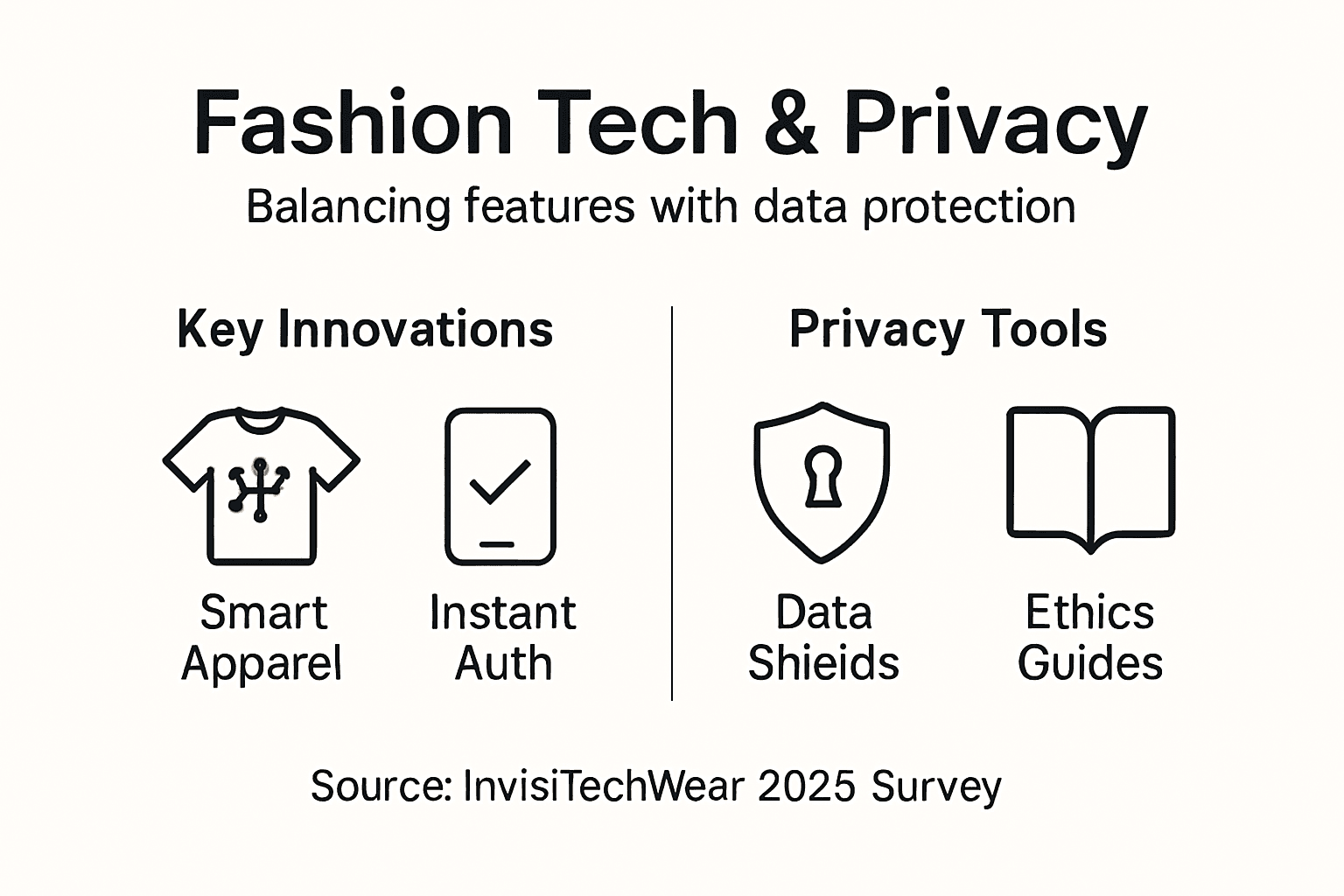
Addressing this tension requires what experts call ethical AI practices. Balancing innovation with privacy requires addressing regulatory demands and ethical challenges through frameworks emphasizing transparency, accountability, and fairness. For you as a consumer, this translates into specific things you should verify before purchasing. First, check if the brand publishes a clear privacy policy that explains what data they collect, how they use it, and how long they retain it. Second, verify whether you can access, modify, or delete your personal data. Third, confirm whether the brand uses encryption for all data transmission between devices and their servers. Fourth, understand whether any AI systems involved have been tested for bias, especially around health monitoring or personalization. Fifth, ask whether the company conducts regular security audits by third-party specialists. These aren’t paranoid questions. They’re baseline requirements for responsible fashion tech companies.
The practical path forward involves being an informed consumer who demands better. You have more power than you realize. Brands paying attention track which products sell and monitor customer feedback about specific features. When you choose accessories from companies that prioritize privacy, you vote with your wallet for that approach. When you avoid brands that don’t explain their data practices, you send a market signal. When you ask customer service direct questions about encryption, data retention, and third-party sharing, you demonstrate that privacy matters enough to influence purchasing decisions. Over time, this shifts industry standards. Companies recognize that transparency and ethical practices become competitive advantages. Brands that earn your trust through clear privacy policies and demonstrable protections attract customers who value both innovation and security. The brands that ignore privacy either lose market share or eventually face regulatory consequences. Your individual choices, multiplied across millions of consumers, shape which direction the industry moves. Don’t underestimate this leverage.
Compare major privacy safeguards offered by responsible fashion tech brands:
| Safeguard | How It Works | Value to Consumers |
|---|---|---|
| Data encryption | Secures info in transit | Prevents unauthorized access |
| Data deletion options | User can remove personal data | Maintains control over information |
| Transparency reports | Details on data practices | Builds brand trust and accountability |
| Opt-out of data sharing | No third-party data sharing | Preserves user privacy and choices |
Pro tip: Before purchasing any connected tech accessory, download and actually read the privacy policy, check whether the company offers a data deletion option, and contact customer service with a specific question about encryption methods to gauge how seriously they take privacy protection.
Experience Fashion Tech Designed for Your Urban Lifestyle
Navigating daily life as a tech-savvy urban professional means facing challenges like protecting your personal data, organizing your devices, and staying comfortable without sacrificing style. The article highlights how fashion tech in 2025 blends practical innovation with sleek design to solve these exact problems through features like RFID-blocking materials, smart organizational systems, and adaptive textiles. At InvisiTechWear, we understand your need for accessories that do more than look good — they must protect, adapt, and enhance your routine.
Discover our range of Hoodies and innovative Products that integrate cutting-edge technology without compromising aesthetics. Each piece is thoughtfully engineered to keep your data secure, manage your tech effortlessly, and provide comfort that adjusts to your day — allowing you to focus on what matters most.
Step into the future of functional fashion now by exploring our curated collections at InvisiTechWear. Protect your information, organize your essentials, and upgrade your urban lifestyle with tech-enabled accessories designed for you. Shop today and let your apparel work smarter so you can do the same.
Frequently Asked Questions
What is fashion tech and how does it enhance urban lifestyles in 2025?
Fashion tech in 2025 combines digital infrastructure, physical technology, and transparency to create smart apparel and accessories that address everyday challenges for urban professionals, offering both style and functionality.
How do smart textiles work in fashion tech?
Smart textiles use energy-harvesting technologies to monitor body metrics like activity levels and adjust to environmental changes, enhancing comfort without needing constant charging.
What security features should I look for in tech-enabled fashion accessories?
Look for RFID-blocking materials that protect against wireless data theft, NFC authentication to verify product authenticity, and robust cybersecurity measures that secure any connected data.
How can modern fashion tech improve my daily routine as an urban professional?
Modern fashion tech streamlines daily routines by organizing your accessories intelligently, continuously monitoring health metrics, and simplifying connectivity, allowing for greater focus on work and well-being.


