

Finding apparel that keeps up with your daily routine often feels impossible. A workday in Tokyo, New York, or London demands more than just good looks—it requires smart design that protects your data, organizes your devices, and fits seamlessly into city life. The meaning of next-gen fashion is shifting globally, blending invisible tech features and security with the kind of style you actually want to wear. Next-gen fashion merges style and smart technology to solve real problems for modern professionals.
Table of Contents
- What Next-Gen Fashion Really Means Today
- Key Types of Next-Gen Fashion Apparel
- Innovative Features and Tech Integrations
- Security, Privacy, and Sustainability Factors
- Choosing Smart Apparel: Practical Pitfalls
Key Takeaways
| Point | Details |
|---|---|
| Next-Gen Fashion | Merges style with functionality, enabling clothing that addresses daily challenges without sacrificing aesthetic appeal. |
| Core Categories | Focuses on security-oriented accessories, tech-integrated apparel, and digital/hybrid experiences to enhance convenience for professionals. |
| Innovative Features | Incorporates practical solutions like RFID-blocking and temperature-regulating materials to enhance user experience and overall comfort. |
| Considerations for Purchase | Emphasizes the importance of verifying brand reliability, maintenance needs, and understanding data privacy before investing in smart apparel. |
What Next-Gen Fashion Really Means Today
Next-gen fashion is not just about wearing clothes that look sleek or feel comfortable. It’s about clothes that work as hard as you do. Think of it this way: your smartphone evolved from a device you used occasionally to something that’s woven into your daily routine, handling communication, navigation, and security all at once. Fashion is undergoing that same transformation. Next-gen fashion merges functionality with style so seamlessly that the technology becomes invisible—you don’t think about it, you just benefit from it.
At its core, next-gen fashion represents three major shifts in how clothing functions. First, there’s the integration of smart technology directly into garments and accessories. RFID-blocking wallets protect your card data. Clothing embedded with temperature-regulating fibers adapts to your environment. Tech-infused organizers keep your devices charged and accessible. Second, there’s the shift toward multifunctional pieces that eliminate the need to carry multiple items. A jacket becomes both a fashion statement and a security tool. A bag protects what’s inside while looking polished for the office. Third, there’s the rise of gender-fluid and inclusive design, where clothing adapts to different bodies, styles, and needs rather than fitting rigid categories.
For professionals like you moving through crowded cities, working in coffee shops, or traveling frequently, this means fashion that actually solves real problems. You’re not just dressing for how you want to look—you’re dressing for how you actually live. Your wallet gets protection from digital theft without looking like it came from a spy gadget catalog. Your everyday hoodies and jackets include built-in organization that keeps electronics accessible and secure. Your accessories blend seamlessly into your wardrobe while handling the unglamorous work of keeping your information safe and your devices organized. This is digital fashion’s evolution from a design tool into consumer products that you actually wear and use every day.
What separates next-gen fashion from regular tech gadgets is that it looks like fashion. It doesn’t scream innovation or sacrifice style for function. A minimalist wallet still feels like a quality accessory you’d choose for its design alone. A tech-enabled jacket fits your body and matches your wardrobe. The technology serves your lifestyle, not the other way around. This is the real meaning of next-gen fashion: smart design that’s invisible until you need it, comfortable enough to forget about, and stylish enough that you actually want to wear it.
Pro tip: Start with one tech-infused piece that solves your biggest daily frustration—whether that’s protecting your cards from digital theft, organizing your tech accessories, or keeping your phone secure—then build from there as you discover how smart fashion actually improves your routine.
Key Types of Next-Gen Fashion Apparel
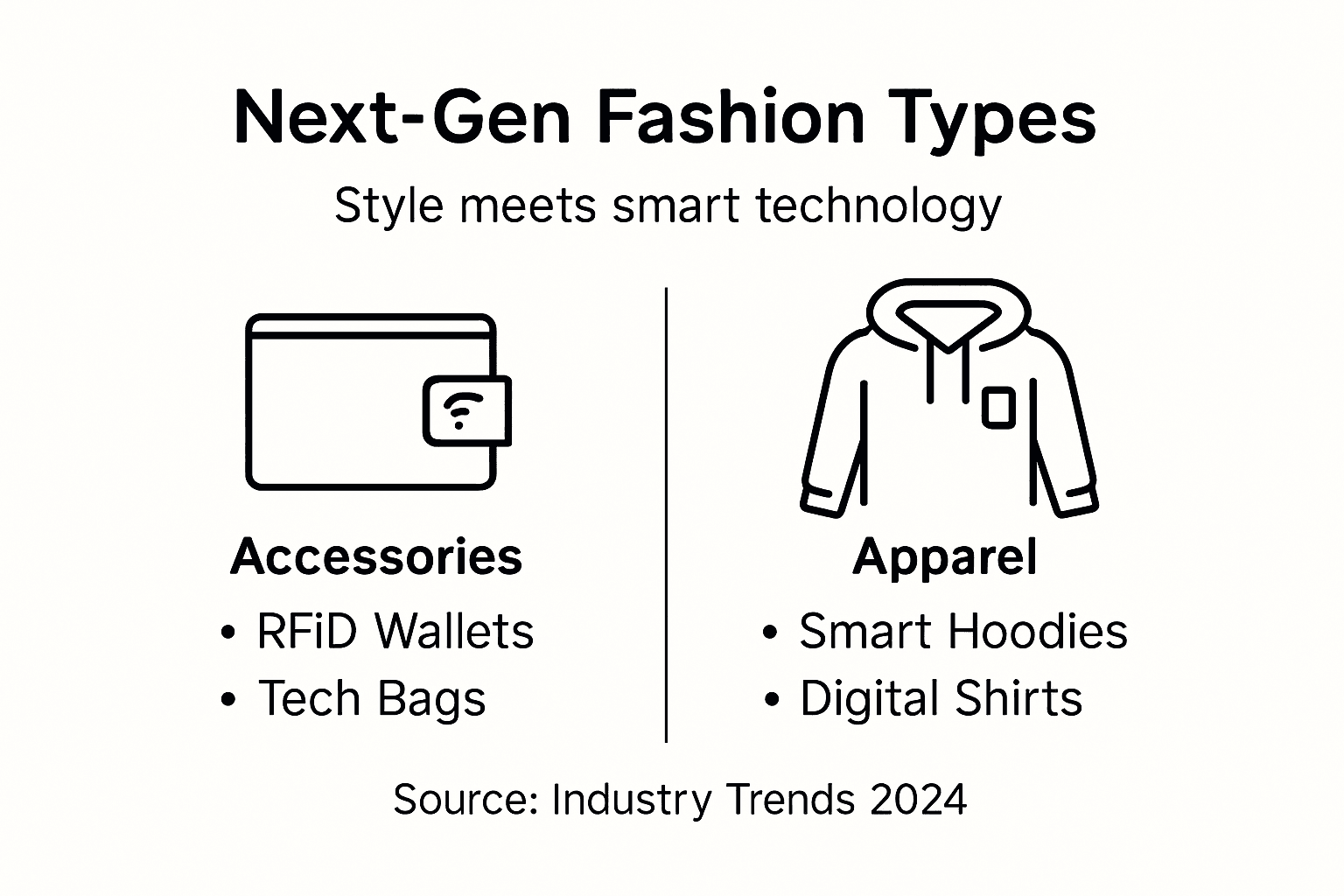
Next-gen fashion apparel breaks down into several distinct categories, each addressing different needs in your daily life. Understanding these types helps you recognize what you’re actually investing in and how each piece fits into your wardrobe. The categories range from security-focused accessories to tech-integrated clothing, and each serves a specific purpose for professionals who need style without sacrificing functionality.
The first major category is security-focused accessories, which includes RFID-blocking wallets, crossbody bags, and organizers designed to protect your personal information. These pieces look and feel like regular fashion items but include technology that shields your card data from digital skimming. They’re the foundation of next-gen fashion for most urban professionals because they solve an immediate, tangible problem. Your cards contain sensitive information, and these accessories create a physical barrier against theft. Beyond wallets, tech-infused bags combine organizational features with protective layers, keeping your devices organized while safeguarding them from physical and digital threats. The beauty here is that protection happens silently in the background.

The second category encompasses tech-integrated clothing, which includes hoodies, jackets, and t-shirts embedded with organizational features, charging capabilities, or temperature-regulating technology. Next-gen materials like nanotechnology-enhanced fibers improve durability and function while reducing environmental impact. Imagine a jacket with discreet pockets designed specifically for your phone, earbuds, and cables, all positioned so you can access them without digging through your bag. Some tech apparel includes built-in organizers for Bluetooth devices, eliminating cable tangles and keeping everything accessible. These pieces make your commute smoother by solving the practical headaches of carrying multiple devices. You’re not wearing technology that looks futuristic or out of place, you’re wearing normal clothing that happens to be smarter about organization.
The third category includes digital and hybrid fashion experiences, which represent multiple types of digital end-products ranging from augmented reality integrated apparel to purely virtual garments. While purely virtual fashion might seem disconnected from your everyday life, hybrid models blend physical quality with digital integration. Imagine owning a piece of physical clothing that connects to an app showing you outfit combinations, laundry reminders, or care instructions. These hybrid pieces bridge the gap between digital experience and physical wardrobe, creating a more connected approach to how you dress and manage your clothing.
For most professionals in your position, security-focused accessories and tech-integrated clothing represent the most practical starting point. These categories directly improve your daily experience without requiring lifestyle adjustments. Your RFID-blocking wallet doesn’t ask you to change how you carry your cards, it just protects them better. Your tech-infused jacket doesn’t change how you dress, it just organizes your devices more intelligently. The trend toward tech apparel combines style and security into pieces you’d choose for their design alone, even without the technology. Start with whichever category addresses your biggest daily frustration, then explore others as your comfort with tech fashion grows.
Below is a summary of key next-gen fashion categories and the main benefits they offer professionals:
| Apparel Category | Primary Function | Professional Benefit |
|---|---|---|
| Security Accessories | RFID-blocking, physical safety | Protects cards, prevents theft |
| Tech-Integrated Clothing | Device organization, charging | Eases commuting, reduces stress |
| Digital/Hybrid Fashion | App connectivity, AR features | Smart outfit planning |
Here’s a comparison of core innovation areas in next-gen fashion and what problems they solve:
| Innovation Area | Problem Solved | Typical Example |
|---|---|---|
| RFID-Blocking | Digital card theft | Secure wallets, bags |
| Device Organization | Cable/device clutter | Jackets with cable pockets |
| Temperature Regulation | Climate discomfort | Adaptive fiber garments |
| Digital Integration | Wardrobe management confusion | App-connected jackets |
Pro tip: Invest first in security accessories like RFID-blocking wallets and bags that match your existing style, then layer in tech-integrated clothing pieces that solve specific organizational challenges, building your tech-enhanced wardrobe gradually rather than all at once.
Innovative Features and Tech Integrations
The real innovation in next-gen fashion isn’t just about adding technology to clothing. It’s about integrating technology so thoughtfully that it becomes invisible to you until you need it. The features that define modern tech-infused apparel solve actual problems you face every day, from protecting your sensitive data to keeping your devices organized and accessible. These aren’t futuristic gimmicks, they’re practical solutions designed around how you actually live.
The core innovative features break down into several distinct areas. RFID-blocking technology represents one of the most straightforward yet effective integrations. Radio frequency identification cards and devices emit signals that thieves can intercept from across a room. RFID-blocking wallets and bags use specialized materials that prevent these signals from traveling outside the accessory. You put your cards in an RFID-blocking wallet, and your financial information stays protected without you thinking about it. Built-in cable and device organization addresses another real frustration. Instead of untangling cables from your bag or having earbuds wrapped around your phone, tech-infused jackets and hoodies include designed pockets and organizers specifically positioned for your devices. These pockets keep everything accessible and your cables from tangling into a mess. Temperature-regulating materials use advanced fabric technology to adapt to your body and environment, keeping you comfortable in changing conditions without requiring you to remove layers constantly. Smart and sustainable materials featuring embedded sensors represent the frontier of tech integration, enabling garments to monitor conditions, track usage patterns, or even provide feedback about your clothing care and storage.
Beyond physical features embedded in garments, digital integration creates a bridge between your physical wardrobe and your digital life. Digital simulation of garments through augmented reality allows you to visualize how pieces fit and look before purchasing. Virtual try-ons eliminate the guesswork of online shopping. Some tech-infused apparel connects to apps that help you organize outfits, track laundry, or receive care recommendations for specific pieces. Connected functionalities mean your jacket can sync with your phone to display notifications or control music without pulling your device out of your pocket. These integrations happen quietly, enhancing your experience without demanding attention. The technology stays in the background until you actually need it.
What separates legitimate tech integration from novelty features is whether the technology solves a real problem in your daily routine. An RFID-blocking wallet solves financial security. A tech-infused jacket with cable organizers solves the frustration of tangled devices. Temperature-regulating fabric solves comfort and practicality. Digital integration through apps solves organization and decision-making. Compare this to technology added simply to say a product is tech-enabled. Real innovation in next-gen fashion means the technology disappears into functionality. You don’t think about RFID-blocking as you use your wallet, you just stay protected. You don’t think about cable organization as you reach for your earbuds, you just grab them instantly. The best tech-infused apparel feels like normal fashion that happens to be smarter and more protective than what you wore before.
Pro tip: Prioritize one or two tech features that directly address your biggest daily frustrations rather than collecting apparel with every possible feature, since simpler products with focused functionality tend to integrate more seamlessly into your actual routine.
Security, Privacy, and Sustainability Factors
When you invest in next-gen fashion, you’re not just buying better organization or sleeker design. You’re making a choice about your personal security, your digital privacy, and the environmental impact of what you wear. These three factors intertwine in ways that most traditional fashion never addresses. Understanding them helps you make informed choices about which pieces align with your values and protect what actually matters to you.
Security and Privacy Concerns
The security aspect of next-gen fashion starts with physical protection. RFID-blocking wallets and bags shield your cards from digital skimming attacks. Crossbody bags with lockable compartments prevent pickpocketing in crowded urban spaces. But security extends beyond the physical. When you use tech-infused apparel connected to apps or digital platforms, data protection in digital fashion platforms becomes critical. Your customization preferences, outfit choices, and usage patterns represent personal information that companies collect and store. Every time your connected jacket syncs with your phone or your smart fabric sends data about environmental conditions, that information travels to servers somewhere. The question becomes: who has access to this data, and how is it protected? Legitimate next-gen fashion brands implement encryption, secure servers, and transparent privacy policies that explain exactly what data they collect and why. Some companies allow you to use their products without any digital connection, letting you enjoy the physical features without sharing information. Others integrate app connectivity as the core feature. Understanding which approach matches your comfort level matters.
Another privacy consideration involves user tracking through customization. When fashion platforms learn about your style preferences, body measurements, and purchasing habits, they build detailed profiles of who you are. This data becomes valuable to marketers and advertisers. Reputable brands give you control over this information, allowing you to opt out of tracking or request data deletion. When evaluating next-gen fashion products, check their privacy policies and see whether they give you real choices about your information rather than simply taking it from you.
Sustainability in Next-Gen Manufacturing
Sustainability represents the environmental side of next-gen fashion responsibility. Sustainability in next-gen textiles involves nanotechnology, 3D printing, recycling, and bioengineering to minimize environmental footprints. Instead of manufacturing hundreds of thousands of pieces hoping some will sell, companies use 3D design and virtual try-ons to produce exactly what customers want. Recycled textiles replace virgin materials. Bioengineered fabrics grow from sustainable sources rather than petroleum-based synthetics. Nanotechnology creates durable fibers that last longer, reducing how often you replace items. These innovations address real environmental problems. Traditional fashion production consumes enormous amounts of water, generates massive chemical waste, and creates mountains of unsold inventory that ends up in landfills. Next-gen manufacturing tackles these issues directly.
But sustainable production also means ethical manufacturing practices. Circular economy principles ensure that when your clothing reaches the end of its life, it doesn’t simply become waste. Some brands offer take-back programs where you return worn items for recycling or refurbishment. Fair labor practices ensure that workers making your clothes earn living wages and work in safe conditions. Legislative frameworks increasingly require transparency, forcing companies to document their supply chains and prove they’re not exploiting workers. When you choose next-gen fashion from companies committed to these practices, your purchase supports environmental restoration and worker dignity.
The tradeoff worth understanding: sustainable and ethically produced next-gen fashion typically costs more than mass-produced alternatives. The higher price reflects real costs. Recycled materials, fair wages, secure data practices, and environmental responsibility don’t come cheap. Cheaper options often hide exploited labor or environmental damage you don’t see. Investing in fewer pieces from responsible brands creates less waste than buying numerous cheap items you’ll discard quickly.
Pro tip: Before purchasing next-gen fashion, check the brand’s privacy policy and sustainability claims, prioritize products from companies offering data transparency and ethical manufacturing practices, and invest in fewer versatile pieces rather than collecting items from multiple brands with unclear practices.
Choosing Smart Apparel: Practical Pitfalls
Investing in next-gen fashion comes with real risks if you don’t know what to watch for. The technology sounds impressive, the designs look polished, and the promises sound perfect. But buying smart apparel without understanding the practical pitfalls means you could end up with expensive pieces that stop working, fail to deliver on their claims, or create new problems instead of solving them. Knowing what to avoid separates smart purchases from costly mistakes.
One of the biggest pitfalls is technological obsolescence. Your smartphone becomes outdated, your software stops receiving updates, and eventually the device feels slow compared to newer models. Tech-infused apparel faces similar challenges. A jacket with a connected app works great today, but what happens when the company stops supporting the app? What if the technology becomes incompatible with future phone operating systems? What if the brand goes out of business? You’re left with a jacket that still functions as a jacket, but the smart features become useless. Before buying app-connected apparel, research the company’s track record with long-term support and ask direct questions about how long they commit to maintaining their technology. Some brands build products designed to last decades. Others launch products and abandon them within two years. Another aspect of obsolescence involves physical wear. How long do the RFID-blocking materials actually work? Do the cable organizers hold up after hundreds of uses? Can the temperature-regulating fibers survive repeated washing? Check for durability testing and customer reviews covering products after one year, two years, and beyond.
Data privacy and security concerns represent another critical pitfall. Technological reliability and data privacy are challenges in choosing smart apparel, and many consumers struggle to trust wearable data security. Every time your connected clothing syncs with an app, your personal information travels across the internet. Most people don’t realize what data is being collected, stored, or sold. Some brands transparently explain their practices. Others bury privacy policies in dense legal language hoping you won’t read them. If a company can’t clearly explain what data they collect and why, that’s a red flag. Avoid app-connected apparel from brands without transparent privacy policies or companies with histories of selling customer data.
The cost barrier separates next-gen fashion from accessible everyday wear. Quality tech-infused apparel costs significantly more than conventional alternatives. An RFID-blocking wallet might cost two to three times more than a regular wallet. A tech-integrated jacket could run hundreds of dollars. This creates a temptation to buy cheaper knockoffs that claim similar features but lack the actual technology or durability. Cheaper versions often fail quickly or don’t deliver the promised protection. The real pitfall isn’t the price itself, it’s paying premium prices for inferior products. When evaluating cost, ask whether you’re actually paying for quality technology and construction or just paying a markup for marketing hype.
Maintenance and care challenges also catch people off guard. Smart fabrics and embedded technology often require special handling. You can’t simply throw your tech-infused jacket in the washing machine the way you would normal clothing. Some pieces require hand washing. Others need dry cleaning. Temperature sensors and embedded devices might get damaged by water. Cable organizers might need careful drying. How to maintain tech apparel for lasting performance involves understanding specific care requirements before you purchase. If the maintenance demands don’t fit your lifestyle, the product won’t work for you no matter how innovative it is. Read the care instructions before buying and honestly assess whether you’ll follow them consistently.
Finally, there’s the pitfall of buying features you don’t actually need. Every new feature adds complexity, cost, and potential points of failure. A minimalist RFID-blocking wallet solves a real problem simply. Adding Bluetooth connectivity, charging capabilities, and app integration creates more things that can break and more data you’re sharing. The best smart apparel solves one or two specific problems really well. Watch out for products loaded with gimmicky features designed to justify premium pricing rather than designed to improve your actual daily experience.
Pro tip: Before purchasing any tech apparel, research the brand’s support history, read privacy policies carefully, verify durability claims through customer reviews spanning multiple years, and ask yourself honestly whether the specific features directly solve problems in your current routine before committing to the purchase.
Discover How Style Meets Smart Tech with InvisiTechWear
Are you ready to upgrade your wardrobe with next-gen fashion that truly solves your daily challenges? Whether it’s protecting your personal data with RFID-blocking accessories or keeping your devices perfectly organized within stylish hoodies and tee shirts, InvisiTechWear offers cutting-edge solutions designed around your real-life needs. Experience the seamless blend of security, convenience, and style that defines modern tech-infused apparel.
Explore our curated collections starting with our innovative Hoodies – Daon Tech and Tee shirts – Daon Tech that combine smart features with everyday fashion. Don’t wait to embrace the future of functional fashion. Visit InvisiTechWear now to shop products that empower you to stay secure and organized while looking your best.
Frequently Asked Questions
What are the main features of next-gen fashion?
Next-gen fashion incorporates smart technology seamlessly into clothing and accessories, focusing on functionalities such as RFID-blocking for data security, temperature-regulating materials, and built-in organization for devices.
How does next-gen fashion improve daily life for professionals?
Next-gen fashion addresses real-life challenges faced by professionals, such as protecting sensitive data, organizing tech accessories, and adapting to various environments, allowing them to dress stylishly while also enhancing functionality.
What kind of problems do RFID-blocking accessories solve?
RFID-blocking accessories, such as wallets and bags, protect your financial information from digital theft by preventing unauthorized scanning of your cards, allowing for peace of mind when carrying sensitive data.
Are tech-integrated garments easy to maintain?
While tech-integrated garments can offer advanced features, they often require special care, such as hand washing or dry cleaning. It’s important to review care instructions before purchasing to ensure they fit your maintenance routine.


