

Your wardrobe doesn’t have to be fixed. Modular clothing transforms how you dress by letting you mix, detach, and reconfigure garments to match your lifestyle. This innovative approach replaces static outfits with adaptable pieces that adjust to different occasions, climates, and personal preferences. Tech-savvy professionals now embrace modular designs for their practicality and style versatility. This article explains how modular clothing works, its benefits for modern wardrobes, and practical strategies to integrate these pieces into your daily rotation.
Table of Contents
- Key takeaways
- Understanding modular clothing: definition and design principles
- Benefits and challenges: why modular clothing matters for modern lifestyles
- Design strategies and style tips for adopting modular clothing
- Discover innovative modular designs at Invisitechwear
- Frequently asked questions
Key Takeaways
| Point | Details |
|---|---|
| Modular definition | Modular clothing consists of independent modules connected through standardized interfaces that allow disassembly and reconfiguration to create different looks from the same base garment. |
| Design methods | Design methods include standardization, component based design, geometric modularity, and compounded systems that enable easy swapping of parts across base garments. |
| Benefits and impact | Versatility reduces luggage and storage needs, improves ergonomic comfort, and enables wardrobe updates by swapping modules rather than buying new outfits. |
| Practical guidance | When shopping look for clear connection guides, familiar closure types like magnetic or snap systems, and use 3D simulations to preview fit and configuration. |
Understanding modular clothing: definition and design principles
Modular clothing consists of independent modules connected through standardized interfaces that allow disassembly and reconfiguration. Unlike traditional garments sewn as single units, modular pieces separate into distinct components. You can detach sleeves, swap collars, or reconfigure panels to create entirely different looks from the same base items.
This design philosophy mirrors tech-enabled apparel trends where functionality meets innovation. The core principle involves creating garment modules that maintain individual integrity while connecting seamlessly to other compatible pieces. Each module serves a specific function, whether aesthetic, practical, or both.
Design methodologies emphasize standardized modules and advanced simulation tools. Designers use several approaches:
- Standardization approach: Creates uniform connection points across different garments, ensuring any module fits with any compatible base piece
- Component-based design: Develops libraries of interchangeable parts like collars, cuffs, pockets, and panels that attach to core garments
- Geometric modularity: Uses repeating shapes and patterns that tessellate or connect in multiple configurations
- Compounded systems: Combines multiple attachment methods within single garments for maximum flexibility
Tools like Refashion software enable designers to test module combinations virtually before production. 3D simulation validates fit, movement, and assembly sequences, reducing prototype costs while improving final product quality. This technological integration explains why tech apparel is trending among professionals who value both innovation and practicality.
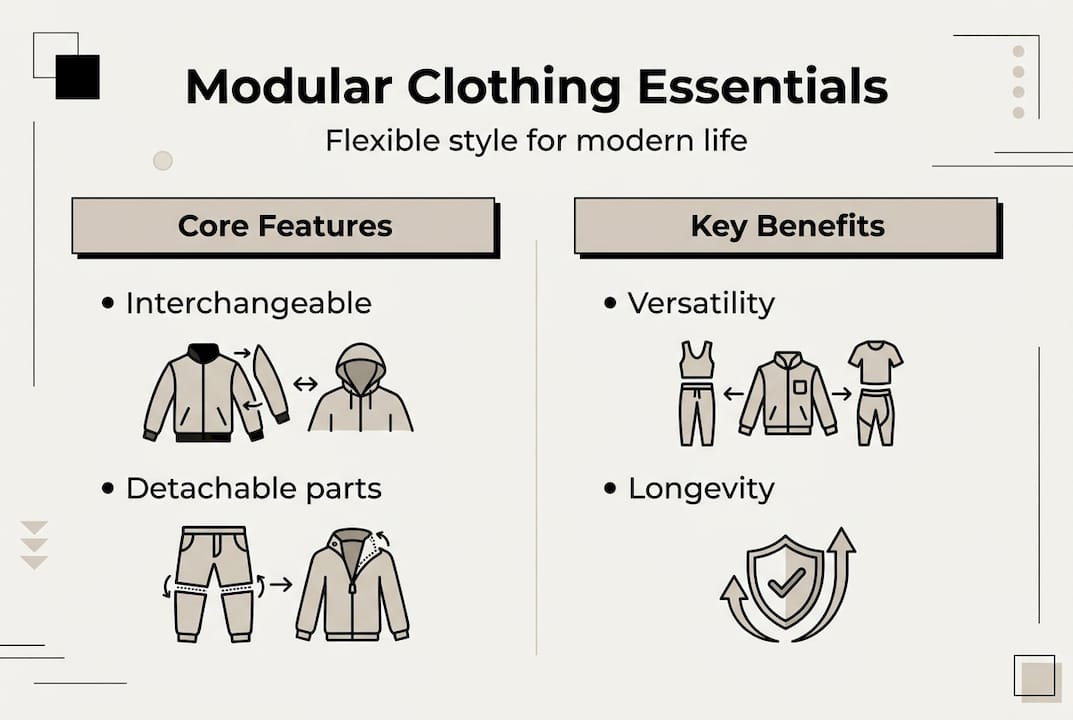
The innovation extends beyond simple zippers or buttons. Modern modular systems incorporate magnetic closures, snap systems, hook-and-loop fasteners, and proprietary connection mechanisms. Each method balances security with ease of reconfiguration. Designers must ensure connections withstand daily wear while remaining simple enough for users to manipulate without tools or special knowledge.
Pro Tip: Look for modular garments that explain their connection systems clearly and provide visual guides for different configurations to maximize your investment.
Benefits and challenges: why modular clothing matters for modern lifestyles
Modular clothing delivers tangible advantages for tech-savvy wardrobes. The primary benefit is versatility. One modular jacket with detachable sleeves, collar options, and panel configurations replaces multiple traditional garments. You carry less when traveling, store fewer items at home, and still maintain outfit variety for different contexts.

Modular systems boost accessory attach rates and demonstrate measurable retail conversion uplift. Data shows these systems improve ergonomic comfort by allowing users to adjust garments to specific activities or temperatures. A modular jacket might transform from professional office wear to casual weekend attire by swapping a single panel or removing formal elements.
Financial benefits emerge from extended garment lifespan. When one module wears out or damages, you replace that component rather than the entire garment. This approach reduces long-term clothing costs despite potentially higher initial purchase prices. The ability to update style elements without buying completely new pieces also appeals to budget-conscious professionals.
However, connectors present durability challenges. Attachment points experience stress with repeated use. Zippers fail, magnets weaken, and mechanical fasteners wear down faster than traditional sewn seams. Repair rates run higher in modular systems compared to conventional garments. This reality means maintenance becomes more frequent and potentially more complex.
Another concern involves consumption patterns. Modular designs might encourage purchasing additional modules to expand configuration options. This behavior contradicts sustainability claims if users accumulate excessive components they rarely use. The environmental benefit of longer garment life diminishes when offset by increased module acquisition.
Practical considerations for adopting modular clothing:
- Assess connector quality: Examine attachment mechanisms closely before purchase, prioritizing robust systems with proven durability
- Evaluate repair options: Confirm whether manufacturers offer replacement connectors or module repair services
- Consider actual usage: Honestly evaluate how many configurations you’ll realistically use to avoid unnecessary module purchases
- Check compatibility: Verify which modules work together, especially when buying from different product lines or seasons
Understanding how to choose tech apparel helps identify quality modular pieces. Look for brands that provide detailed specifications about connection systems, material durability ratings, and realistic guidance about module lifespan. Learning how to spot genuine tech apparel protects against low-quality modular designs that promise versatility but deliver poor performance.
Pro Tip: Test connection points thoroughly when first receiving modular garments, attaching and detaching modules multiple times to identify any immediate quality issues before the return window closes.
Design strategies and style tips for adopting modular clothing
Practitioners prioritize neutral palettes and compact module libraries when creating modular systems. This strategy ensures maximum compatibility across modules while maintaining cost efficiency. Black, gray, navy, and earth tones dominate successful modular collections because these colors coordinate effortlessly regardless of combination.
Rapid prototyping accelerates design iteration. Digital tools simulate how modules interact before physical production begins. Designers test hundreds of configurations virtually, identifying optimal attachment points and ensuring modules maintain aesthetic coherence across different arrangements. This process reduces development costs while improving final product quality.
Commercial success in pop-ups and rental services validates the modular approach. Temporary retail environments showcase how customers interact with modular systems, providing valuable feedback for refinement. Rental models prove particularly effective because they let users experience modularity without full purchase commitment.
Styling modular clothing requires strategic thinking:
- Start with versatile base garments: Choose core pieces in neutral colors that accept multiple module types, establishing a foundation for various configurations
- Add accent modules strategically: Purchase colorful or patterned modules that transform neutral bases for different occasions or personal expression
- Plan configurations by context: Map out specific module combinations for work, casual, athletic, and formal settings to ensure you utilize all pieces effectively
- Rotate modules regularly: Distribute wear across all components to prevent uneven aging and maintain consistent appearance across your wardrobe
- Document successful combinations: Photograph or note configurations that work well to streamline daily dressing decisions and maximize outfit variety
| Feature | Modular Clothing | Traditional Clothing |
|---|---|---|
| Versatility | High - multiple configurations from single base | Low - fixed design limits styling options |
| Repair | Component replacement extends life | Full garment replacement typically required |
| Storage | Compact - fewer total pieces needed | Requires more space for outfit variety |
| Initial cost | Higher per piece | Lower per garment |
| Long-term value | Better through extended use and reconfiguration | Diminishes as styles age or pieces wear |
| Maintenance | More frequent connector checks | Standard garment care sufficient |
Understanding how to style tech clothing enhances modular wardrobe effectiveness. The principles of layering, proportion, and color coordination apply equally to modular pieces. However, modular systems add complexity through connection points that must remain visually appealing whether modules attach or not.
Consider how exposed attachment points appear when modules detach. Quality modular designs ensure base garments look complete and intentional even without attached modules. Poor designs leave visible fasteners or awkward gaps that limit wearing options.
Reviewing best tech-infused clothing comparisons helps identify which modular systems deliver genuine value versus marketing hype. Look for detailed user reviews that discuss actual reconfiguration frequency, connector durability over time, and whether promised versatility translates to real-world use.
Pro Tip: Photograph yourself wearing different module configurations to objectively assess which combinations actually work for your body type and style preferences before investing in additional modules.
Discover innovative modular designs at Invisitechwear
Invisitechwear specializes in tech-enabled fashion that complements modular wardrobe strategies. While exploring modular clothing options, consider how RFID-blocking accessories integrate with versatile apparel systems. The RFID blocking slim wallet exemplifies minimalist design that pairs perfectly with streamlined modular outfits.
Tech-infused accessories enhance modular clothing’s practical benefits. When your wardrobe adapts to different contexts, your accessories should follow the same principle. Compact, multi-functional items that provide security features align with the modular philosophy of doing more with less. Explore the full range of innovative products at Invisitechwear to complete your adaptable wardrobe system with pieces designed for modern, mobile lifestyles.
Frequently asked questions
What exactly is modular clothing and how does it work?
Modular clothing consists of garment pieces with standardized connection points that allow you to attach, detach, and reconfigure components. You might remove jacket sleeves for warmer weather, swap a formal collar for a casual hood, or combine different colored panels to create new looks from the same base garment.
Is modular clothing durable enough for daily wear?
Quality modular clothing withstands daily use, but connection points require more maintenance than traditional seams. Check fasteners regularly and address any loosening immediately. Choose brands that offer replacement connectors and prioritize robust attachment systems like reinforced zippers or industrial-grade magnets over basic snap buttons.
Does modular clothing actually support sustainability goals?
Modular clothing extends garment lifespan by allowing component replacement instead of full garment disposal. However, sustainability depends on actual usage patterns. Buying excessive modules undermines environmental benefits. Focus on versatile base pieces and carefully selected modules you’ll genuinely use to maximize sustainability impact.
How do I style modular clothing without looking disjointed?
Stick to cohesive color palettes within your module collection, typically neutrals with one or two accent colors. Ensure modules share similar fabric weights and textures for visual consistency. Plan complete outfit configurations rather than randomly mixing modules, and photograph successful combinations for future reference.
Can I mix modular pieces from different brands?
Most modular systems use proprietary connection mechanisms, limiting cross-brand compatibility. Some standardization efforts exist, but widespread interoperability remains rare. When building a modular wardrobe, commit to one brand’s system initially or verify compatibility explicitly before purchasing modules from different manufacturers.


