

You’ve probably heard warnings about digital pickpockets stealing your credit card data with a simple swipe of a scanner in a crowded subway. While RFID skimming risks are often overhyped, the technology behind RFID blocking is real and increasingly integrated into fashionable accessories. This guide cuts through the confusion to explain what RFID blocking actually is, how it works, and how you can protect your personal information without sacrificing style. We’ll explore the science, evaluate effectiveness, and help you choose accessories that blend security with aesthetics.
Table of Contents
- Key takeaways
- What is RFID blocking and how does it work?
- How effective is RFID blocking and what affects it?
- Understanding RFID skimming risks and realistic protection needs
- Stylish RFID blocking accessories for fashion-conscious consumers
- Explore stylish RFID blocking accessories at Invisitech Wear
- Frequently asked questions
Key Takeaways
| Point | Details |
|---|---|
| RFID blocking principle | RFID blocking shields contactless cards by disrupting radio frequency communication using conductive materials and creates a Faraday cage effect to prevent reader access. |
| Material quality matters | Effectiveness depends on material selection such as copper, aluminum, metallic fabrics, or carbon fiber and on how well the product covers and shields the card. |
| Real world risk | The risk of RFID skimming exists mainly in crowded environments but is relatively low compared to other theft methods. |
| Choose and test products | To select a product check coverage across frequencies and look for credible certifications, then test by attempting a payment with a card inside the holder. |
What is RFID blocking and how does it work?
RFID blocking technology shields your contactless cards from unauthorized scanning by disrupting the radio frequency communication between RFID chips and readers. RFID blocking uses conductive materials like aluminum, copper, or metallic fabrics to create a Faraday cage effect that prevents electromagnetic fields from penetrating the protected space. When you place your credit cards, passport, or access badges inside an RFID-blocking wallet or pouch, the conductive layer intercepts radio waves before they can reach the embedded chips.
The science behind this protection relies on electromagnetic shielding principles. Conductive materials redirect radio frequency energy around the exterior surface rather than allowing it to pass through to the interior. High-quality RFID blocking products achieve 80-90dB signal reduction across 10MHz-3GHz frequencies, meaning a 60dB shield reduces signal strength by a factor of one million. This level of attenuation effectively renders RFID readers useless at any practical distance.
Most RFID-blocking accessories target specific frequency ranges where contactless payment cards and identification documents operate. The most common frequencies include high-frequency (HF) 13.56MHz used by credit cards and passports, and low-frequency (LF) 125-134kHz used by some access control systems. Premium products block across multiple frequency bands to provide comprehensive protection for all your RFID-enabled items.
Materials used in RFID blocking vary in effectiveness and durability:
- Aluminum foil or film provides basic blocking but can tear or develop gaps over time
- Copper mesh offers superior conductivity and durability for long-term protection
- Metallic fabric blends integrate shielding into flexible, fashionable materials
- Carbon fiber combines structural strength with electromagnetic interference properties
- Solid metal enclosures deliver maximum protection but add bulk and weight
Passive RFID blocking simply creates a physical barrier using conductive materials, while active jamming devices (illegal in many jurisdictions) emit interfering signals to disrupt RFID readers. For everyday consumer use, passive blocking in wallets and cardholders provides sufficient protection without legal complications. Understanding RFID protection basics helps you evaluate product claims and choose accessories that genuinely safeguard your data.
Pro Tip: Test your RFID blocking wallet or pouch by placing a contactless credit card inside and attempting to make a payment at a terminal or use your phone’s NFC reader app. If the card cannot be detected, your protection is working effectively.
How effective is RFID blocking and what affects it?
Shielding effectiveness measured in decibels (dB) determines how well an RFID blocking product actually protects your cards. A 60dB attenuation reduces signal strength by 99.9999%, while 90dB provides even more robust protection by reducing signals to virtually undetectable levels. However, effectiveness depends on material quality, coverage, and thickness, with cheap products often failing to deliver advertised protection due to manufacturing shortcuts.
Material selection significantly impacts real-world performance. Copper provides superior conductivity compared to aluminum, resulting in better signal attenuation across a wider frequency spectrum. Metal wallets block 100% of RFID signals when properly constructed, while fabric-based solutions may degrade over time as metallic threads break down from repeated folding, washing, or abrasion. Carbon fiber offers an attractive middle ground with excellent shielding properties and structural durability.
Common product flaws that compromise RFID blocking include:
- Unsealed seams where radio waves can penetrate gaps in the shielding
- Thin or sparse metallic threading in fabric that creates weak spots
- Poor quality control allowing inconsistent coverage across the product
- Degradation of conductive materials from moisture, wear, or cleaning
- Design compromises that prioritize aesthetics over complete signal blocking
The following table compares attenuation levels across different materials and product types:
| Material/Product Type | Typical Attenuation | Frequency Coverage | Durability | Style Flexibility |
|---|---|---|---|---|
| Solid aluminum shell | 80-90dB+ | 10MHz-3GHz | Excellent | Limited |
| Copper mesh lining | 70-85dB | 10MHz-2GHz | Very good | Moderate |
| Metallic fabric blend | 40-70dB | 100MHz-1GHz | Good | High |
| Carbon fiber composite | 60-80dB | 10MHz-3GHz | Excellent | Moderate |
| Budget aluminum film | 20-40dB | 13.56MHz only | Poor | High |
Cheap RFID blocking products frequently fail because manufacturers use minimal conductive material to reduce costs while making bold protection claims. These inferior products may block signals when new but quickly develop vulnerabilities as materials degrade. Testing revealed that budget wallets often achieve only 20-40dB attenuation with significant signal leakage around card slots and edges, providing false security to unsuspecting consumers.
Premium RFID blocking accessories from reputable brands invest in quality materials, rigorous testing, and proper construction techniques. Look for products certified to ISO 14443 standards, which verify that the shielding effectively blocks contactless smart card frequencies. Checking reviews from independent testing labs rather than relying solely on manufacturer claims helps you identify RFID blocking accessories that deliver genuine protection.
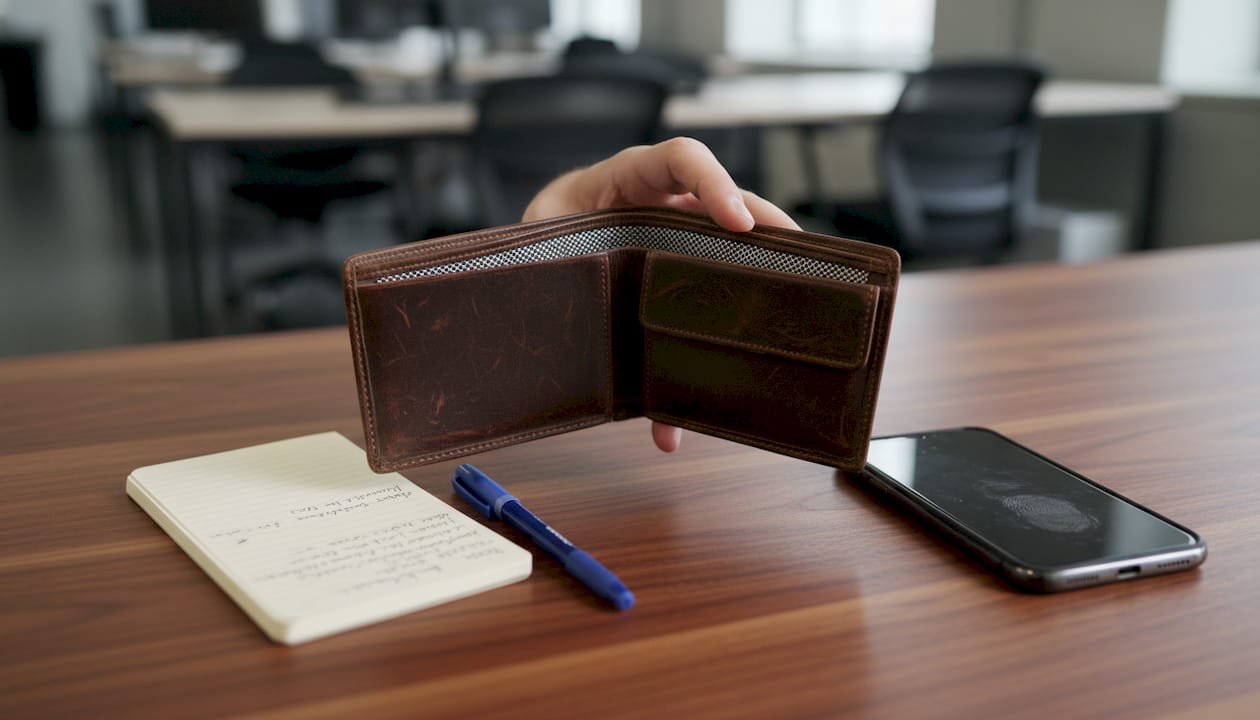
Pro Tip: Examine RFID blocking products for ISO 14443 certification marks or independent lab test results. This certification confirms the product blocks the 13.56MHz frequency used by most contactless payment cards and electronic passports.
Understanding RFID skimming risks and realistic protection needs
RFID skimming involves using a portable reader to wirelessly capture data from contactless cards without physical contact, but RFID skimming risk is low in practice because it requires extremely close proximity and modern cards implement multiple security layers. Thieves would need to position a reader within a few centimeters or inches of your wallet, making covert scanning difficult in most everyday situations. The electromagnetic field strength drops rapidly with distance, rendering RFID readers ineffective beyond arm’s length.
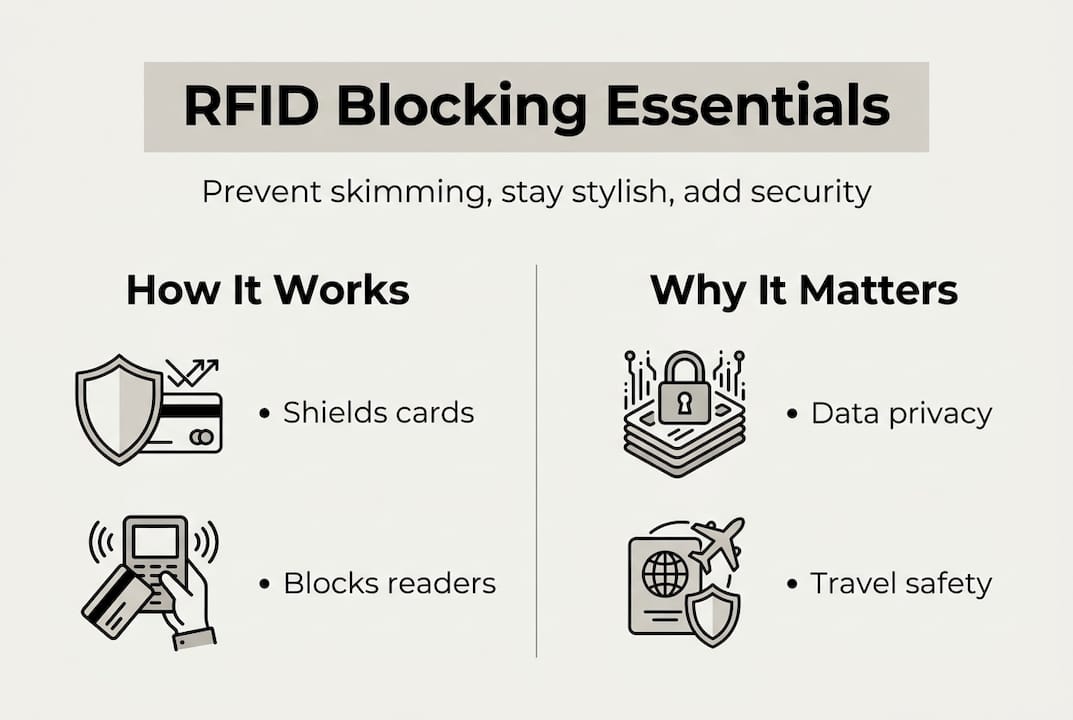
Modern contactless payment cards incorporate encryption, tokenization, and transaction limits that minimize the value of stolen RFID data. Even if a criminal successfully skims your card number, the encrypted data typically cannot be replayed to make fraudulent purchases. Most contactless transactions require additional authentication for amounts above $50-100, and card issuers monitor for suspicious activity patterns that indicate compromised credentials.
Comparing RFID skimming to other fraud types reveals its relatively minor role in financial crime. Card-present fraud represents 18% of losses, with most incidents involving physical skimmers attached to ATMs or payment terminals rather than wireless RFID theft. NFC fraud success rates hover between 3-8% in controlled experiments, and documented cases of real-world RFID pickpocketing remain exceptionally rare despite widespread contactless card adoption.
Scenarios where RFID blocking provides meaningful additional security include:
- International travel through crowded airports, train stations, or tourist attractions
- Daily commutes on packed subway cars or buses where strangers press close
- Large public events, concerts, or festivals with dense crowds
- Hotel stays where housekeeping or other staff may access your room
- High-risk urban environments with sophisticated criminal networks
“While the mechanics of RFID blocking are scientifically sound, documented cases of RFID skimming theft remain remarkably rare. The technology works, but the threat it addresses is far less common than phishing emails, data breaches, or traditional pickpocketing.”
RFID blocking should complement rather than replace comprehensive security practices. Monitoring your account statements, enabling transaction alerts, using strong passwords, and protecting against phishing attacks provide far more protection against the most common fraud vectors. Understanding why RFID security matters helps you make informed decisions about which protective measures deserve your attention and investment.
Think of RFID blocking as affordable insurance against a low-probability but easily preventable risk. For frequent travelers or those who regularly navigate crowded urban environments, the peace of mind and minimal cost make RFID-blocking accessories a sensible precaution. For others living in low-density areas with minimal public transit use, the protection may be unnecessary given the minimal real-world threat level.
Stylish RFID blocking accessories for fashion-conscious consumers
Modern RFID blocking accessories seamlessly integrate security technology into fashionable designs that complement your personal style. Stylish RFID wallets integrate shielding without adding bulk, offering protection in crowded environments while prioritizing aesthetics. Manufacturers now offer everything from minimalist metal cardholders to premium leather bifolds with invisible metallic lining, ensuring you never have to choose between security and appearance.
Popular styles among fashion-conscious consumers include slim metal frame wallets with pop-up card mechanisms, genuine leather wallets with embedded copper mesh, and carbon fiber composite designs that combine modern materials with classic silhouettes. These accessories maintain the sleek profiles and refined finishes expected from premium fashion accessories while incorporating electromagnetic shielding that remains completely invisible during everyday use.
Key style and function factors to evaluate when selecting RFID blocking accessories:
- Material aesthetics including leather grain, metal finish, or fabric texture
- Profile thickness and how it fits in pockets or bags without creating bulk
- Card capacity balanced against maintaining a slim, organized form factor
- Closure mechanisms like magnetic clasps, elastic bands, or snap buttons
- Color options and hardware finishes that match your existing accessories
- Build quality including stitching, edge finishing, and overall craftsmanship
The following comparison highlights how different RFID blocking styles balance protection with fashion:
| Style Category | Material | Thickness | Capacity | RFID Efficiency | Best For |
|---|---|---|---|---|---|
| Metal pop-up wallet | Aluminum/carbon fiber | 10-12mm | 6-8 cards | 85-90dB | Minimalists seeking modern aesthetics |
| Leather bifold | Genuine leather + copper | 15-18mm | 10-14 cards | 70-80dB | Traditional style with hidden protection |
| Slim cardholder | Metallic fabric | 8-10mm | 4-6 cards | 60-70dB | Ultra-minimalists prioritizing portability |
| Metal frame wallet | Solid aluminum | 11-13mm | 8-10 cards | 90dB+ | Tech-forward consumers wanting maximum security |
Tradeoffs between bulk and coverage require careful consideration based on your specific needs. Wallets offering complete RFID protection for all card slots necessarily incorporate more shielding material than those protecting only a single RFID-safe compartment. However, advances in material science and design engineering have minimized these compromises, with many premium wallets adding less than 2-3mm compared to non-protected equivalents.
Verifying full RFID protection coverage involves checking that the shielding extends across all card slots without gaps or weak points. Some budget products only shield one or two compartments, requiring you to remember which slots offer protection. Premium designs incorporate shielding throughout the entire wallet structure, eliminating guesswork and ensuring comprehensive security regardless of where you store your contactless cards.
Expert consensus acknowledges that while marketing hype exists around RFID threats, the blocking mechanics are scientifically proven. Prioritizing products with full coverage from trusted brands ensures you receive genuine protection rather than security theater. Comparing top RFID blocking accessories helps you identify options that meet both your security requirements and style preferences.
Choosing the right RFID blocking accessory means evaluating your typical environments, card carrying needs, and aesthetic preferences. Understanding how to choose RFID blocking accessories empowers you to make informed decisions that enhance both your security posture and your daily style.
Explore stylish RFID blocking accessories at Invisitech Wear
Invisitech Wear specializes in fashion accessories that seamlessly blend cutting-edge security technology with contemporary design aesthetics. Our curated collection of RFID-blocking wallets, pouches, and cardholders delivers genuine electromagnetic shielding without compromising the slim profiles and refined finishes you expect from premium accessories. Each product undergoes rigorous testing to verify protection effectiveness while maintaining the style standards that fashion-conscious consumers demand.

Our RFID shielding blocking pouch provides comprehensive protection for phones, cards, and key fobs in a versatile case that fits easily in bags or pockets. For minimalist style, explore our metal wallet for men featuring carbon fiber construction and an integrated money clip. Those seeking maximum capacity will appreciate our minimalist multi-functional wallet that holds up to 12 cards while maintaining an ultra-thin profile.
Every Invisitech Wear product combines verified RFID blocking effectiveness with thoughtful design details that enhance your daily experience. Browse our detailed product pages to compare features, read customer testimonials, and find the perfect accessory that matches your security needs and personal style.
Frequently asked questions
What is RFID blocking?
RFID blocking refers to technology that prevents unauthorized wireless scanning of contactless cards and documents by creating an electromagnetic shield. Conductive materials like aluminum, copper, or metallic fabrics form a Faraday cage effect that blocks radio frequency signals from reaching RFID chips embedded in credit cards, passports, and access badges. This protection operates passively without batteries or active components, simply intercepting electromagnetic waves before they can communicate with your cards.
How can I tell if an RFID blocker really works?
Test your RFID blocking product by placing a contactless credit card inside and attempting to tap it at a payment terminal or scan it with your smartphone’s NFC reader app. If the card cannot be detected while enclosed in the blocker, the shielding is functioning correctly. Additionally, look for products certified to ISO 14443 standards, which verify blocking effectiveness at the 13.56MHz frequency used by most contactless payment cards and electronic passports.
Is RFID skimming a common threat I should worry about?
RFID skimming remains relatively rare compared to other fraud types like phishing, data breaches, or traditional card theft. Successful skimming requires extremely close proximity (within a few centimeters) and modern cards incorporate encryption that limits the usefulness of stolen data. While the threat exists, particularly in crowded environments like public transit or international travel, it represents a small fraction of overall payment fraud incidents.
Do stylish RFID-blocking wallets sacrifice fashion for function?
Contemporary RFID blocking wallets successfully integrate electromagnetic shielding into fashionable designs without noticeable bulk or aesthetic compromise. Manufacturers embed thin copper mesh or metallic fabrics within premium leather, carbon fiber, and metal constructions that maintain sleek profiles and refined finishes. The latest designs prove that security and style coexist seamlessly in modern accessories, eliminating any need to choose between protection and appearance.
How should I maintain RFID blocking effectiveness over time?
Avoid excessive washing or harsh cleaning of fabric-based RFID blocking products, as this can degrade the metallic threads that provide electromagnetic shielding. Regularly inspect wallets and pouches for damage to seams, tears in the lining, or separation of shielding layers that could create gaps in coverage. For leather products with embedded shielding, condition the exterior as normal but avoid soaking or submerging the wallet, which could compromise the internal protective layer.


