

Electronic pickpocketing is a growing threat as contactless payment cards become ubiquitous. Thieves equipped with portable RFID readers can steal your credit card data from several feet away without ever touching your wallet. The solution lies in combining cutting-edge RFID-blocking technology with fashion-forward accessories that complement your daily style. This guide walks you through selecting RFID-blocking gear that delivers both protection and aesthetic appeal.
Table of Contents
- Understanding Rfid-Blocking Technology And Materials
- Assessing Design Quality And Security Features
- Matching Rfid-Blocking Accessories To Your Lifestyle And Fashion Sense
- Maintaining And Verifying Your Rfid-Blocking Protection
- Discover Stylish Rfid-Blocking Accessories At Invisitech Wear
- How To Choose Rfid-Blocking Accessories: Frequently Asked Questions
Key takeaways
| Point | Details |
|---|---|
| RFID-blocking materials work by reducing signal strength using conductive layers | Metallic threads, aluminum foils, and carbon composites create electromagnetic barriers |
| Quality and design directly impact RFID protection effectiveness | Multi-layered shielding with full coverage prevents unauthorized data extraction |
| Consider the types of cards and frequencies your accessories need to block | Credit cards operate at 13.56MHz while other devices use different frequencies |
| Stylish RFID accessories balance aesthetics with security | Modern designs integrate protection into sleek wallets, pouches, and fashion items |
| Regularly test RFID blocking to ensure ongoing protection | Normal wear can degrade shielding, requiring periodic verification and replacement |
Understanding RFID-blocking technology and materials
Radio Frequency Identification operates through electromagnetic fields that transmit data between a card’s chip and a reader. RFID-blocking technology primarily interferes with these fields to prevent unauthorized extraction. When you place a contactless card inside a properly designed RFID-blocking accessory, the protective materials create a barrier that attenuates or completely blocks radio signals attempting to reach your cards.
The science behind effective blocking relies on the Faraday cage principle. This concept describes how conductive materials redistribute electromagnetic charges to cancel incoming signals. Effective RFID-blocking materials include specialized fabrics woven with metallic threads, aluminum foils, and carbon-based composites. Each material offers different levels of attenuation, measured in decibels, which indicates how much signal strength gets reduced.
Your credit cards and contactless IDs typically operate at 13.56MHz, the standard frequency for high-frequency RFID systems. Some access badges and transit cards use 125kHz low-frequency systems. Understanding these frequencies helps you select accessories designed to block the specific signals your cards emit. Nickel-copper alloys provide excellent blocking across multiple frequency ranges, making them ideal for comprehensive protection.
Material thickness and construction quality determine real-world effectiveness. A single thin layer might reduce signal strength but not eliminate it entirely. Premium RFID-blocking accessories use multiple conductive layers with proper sealing at edges and openings. The rfid blocking accessories comparison reveals significant performance variations between budget and quality options.
Pro Tip: Download a free NFC reader app on your smartphone and test your RFID-blocking accessory by placing a contactless card inside and attempting to read it through the material. If the app detects the card, your blocking isn’t working properly.
Assessing design quality and security features
Material selection means nothing without proper construction that maintains consistent protection. Multi-layered shielding delivers superior results compared to single-layer designs because each additional layer exponentially reduces signal penetration. Full coverage without gaps ensures radio waves cannot reach your cards through vulnerable points like seams, zippers, or folded corners.

Quality RFID blocking card products maintain effectiveness for 5-7 years under normal use, but only if manufactured correctly. Micro-gap vulnerabilities emerge when folds create separation between shielding layers, when zipper teeth fail to align properly, or when moisture compromises conductive lining integrity. These seemingly minor flaws can render your expensive RFID wallet completely ineffective.
Accessory design creates trade-offs between convenience and security. Tactical wallets with quick-access slots may sacrifice complete shielding for faster card retrieval. Money belts worn under clothing provide maximum concealment and protection but require more effort to access. Slim cardholders offer minimalist style yet might expose cards during removal if shielding only covers the storage area.
Before purchasing, inspect these quality indicators:
- No visible card outlines through the material when loaded
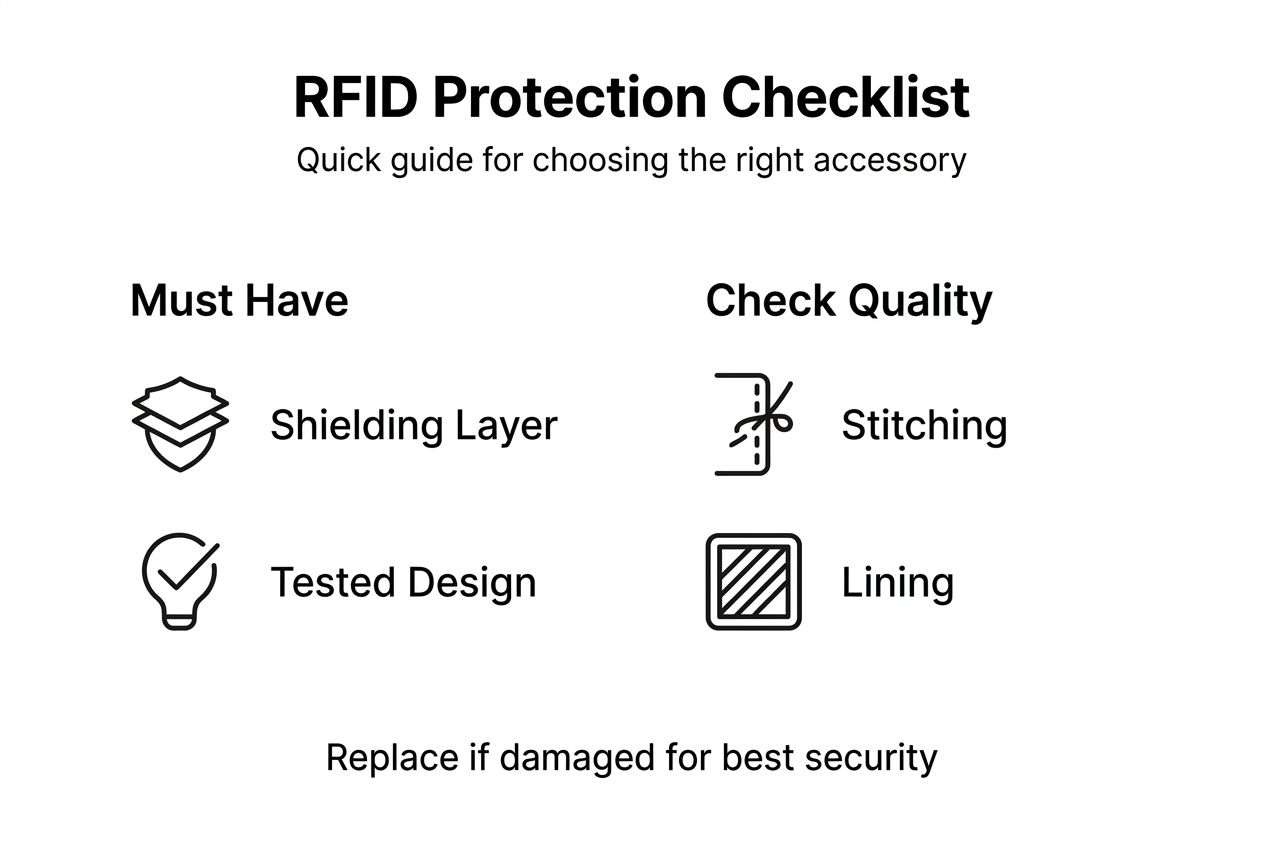
- Stitching that maintains shielding continuity at seams
- Rigid or semi-rigid construction preventing accidental gaps
- Reinforced corners and edges where wear occurs first
- Smooth card insertion and removal without catching
Effectiveness of RFID blocking accessories varies significantly based on materials and product design. Follow these inspection steps:
- Check manufacturer specifications for frequency ranges blocked
- Examine the interior lining for continuous conductive material
- Flex and fold the accessory to identify potential gap formation
- Verify all openings have proper shielding overlap
- Research independent testing results rather than relying solely on marketing claims
Your rfid protection checklist should prioritize construction quality over aesthetic features when security is paramount.
Matching RFID-blocking accessories to your lifestyle and fashion sense
Your daily routine and personal style dictate which RFID-blocking accessory type serves you best. Wallets remain the most popular choice, available in bifold, trifold, minimalist cardholder, and money clip designs. Card sleeves provide targeted protection for individual cards you can slip into any existing wallet. Pouches offer versatile storage for phones, passports, and multiple cards. Money belts and neck wallets deliver concealed security for international travel.
Slim, flexible designs offer concealment benefits that deter theft before electronic skimming even becomes relevant. A bulky wallet advertises valuable contents, while a sleek profile integrated into your pocket goes unnoticed. Fashion and Functionality integration involves balancing security with aesthetics and user experience, ensuring you actually use the protection rather than leaving it at home because it clashes with your outfit.
| Accessory Type | Common Materials | Style Options | Protection Level |
|---|---|---|---|
| Bifold Wallet | Leather with aluminum lining | Classic, vintage, modern | High |
| Cardholder | Carbon fiber, metal | Minimalist, tech-forward | Medium to High |
| Pouch | Nylon with nickel-copper | Tactical, casual, travel | Very High |
| Money Belt | Ripstop fabric with metallic threads | Concealed, athletic | High |
| Crossbody Bag | Canvas with RFID-blocking pockets | Fashion-forward, urban | Medium |
Align your RFID accessory with your carrying habits and wardrobe:
- Business professionals benefit from leather bifolds that match formal attire
- Minimalists prefer slim cardholders that disappear in front pockets
- Active individuals need secure zippered pouches for gym and outdoor activities
- Frequent travelers require passport-sized pouches with organizational compartments
- Fashion enthusiasts can select accessories in trending colors and textures
The why choose rfid wallets discussion emphasizes that modern options no longer require choosing between security and style.
Pro Tip: Select accessories offering tested multi-frequency blocking spanning 10MHz to 3GHz for comprehensive protection against both current RFID threats and emerging wireless payment technologies.
Maintaining and verifying your RFID-blocking protection
Protective materials degrade over time through normal wear, exposure to elements, and repeated flexing. Even premium RFID-blocking accessories eventually lose effectiveness as conductive layers separate, protective coatings wear thin, or structural damage creates signal pathways. Recognizing degradation signs prevents false security confidence that leaves you vulnerable.
Some RFID readers may still penetrate if the wallet’s shielding is compromised through damage or poor construction. Regular testing confirms your accessory continues blocking signals effectively. Download NFC reader apps compatible with your smartphone to perform quick verification checks.
Follow these testing steps monthly:
- Place a contactless credit or transit card inside your RFID-blocking accessory
- Close all zippers, snaps, or magnetic closures completely
- Open your NFC reader app and hold it against the accessory exterior
- Move the phone around all surfaces, edges, and closure points
- If the app reads your card through the accessory, your blocking has failed
- Repeat with cards in different slot positions to test all shielded areas
Preserve your RFID-blocking materials with proper care:
- Keep accessories dry and avoid prolonged moisture exposure
- Store flat or in natural position rather than tightly folded
- Clean exterior surfaces without harsh chemicals that might penetrate lining
- Inspect regularly for tears, separated stitching, or visible wear
- Avoid overstuffing that stresses seams and creates gaps
Shielding fails when folds create micro-gaps, zippers misalign, or moisture compromises conductive lining. Replace your RFID-blocking accessory immediately if you detect any damage affecting the protective layers, even if the exterior appears fine. The cost of replacement pales compared to fraudulent charges from compromised card data.
Environmental factors accelerate degradation. Humidity causes corrosion in metallic shielding elements. Extreme temperatures make materials brittle or cause adhesives to fail. Regular folding in the same spot creates weak points where conductive layers separate. Your rfid fashion blocks identity theft strategy requires treating these accessories as consumable security items rather than permanent solutions.
Discover stylish RFID-blocking accessories at Invisitech Wear
Protecting your financial information shouldn’t mean sacrificing your personal style. Invisitech Wear specializes in fashion-forward RFID-blocking accessories that combine cutting-edge security technology with contemporary design aesthetics. Our curated collection addresses the needs of tech-savvy professionals who refuse to compromise on either protection or appearance.

Our rfid-blocking wallets & bags collection features rigorously tested materials delivering verified protection across multiple frequency ranges. The mens slim pop-up wallet stands as a customer favorite, combining minimalist elegance with practical card organization. For comprehensive device protection, explore our rfid shielding blocking pouch case designed to safeguard phones, key fobs, and multiple cards simultaneously.
Every Invisitech Wear product delivers:
- Laboratory-tested RFID-blocking materials with verified attenuation rates
- Sleek, modern designs that complement professional and casual wardrobes
- Durable construction ensuring years of reliable protection
- Thoughtful organization features for everyday usability
Browse our collections today and experience the confidence that comes from stylish, effective RFID protection tailored for modern life.
How to choose RFID-blocking accessories: frequently asked questions
What materials are best for RFID blocking?
Metallic materials including aluminum, nickel-copper alloys, and carbon fiber composites provide the most effective RFID blocking. Multiple conductive layers outperform single-layer designs by creating stronger electromagnetic barriers. Look for accessories specifying the materials used and their tested attenuation levels.
How often should I replace RFID-blocking accessories?
Quality RFID-blocking accessories typically maintain effectiveness for 5-7 years with proper care. Replace yours immediately if you notice physical damage, separated seams, or failed testing with an NFC reader app. Heavy daily use may require more frequent replacement than occasional use.
Can RFID-blocking accessories protect all my contactless cards?
Most quality RFID-blocking accessories protect standard credit cards, debit cards, and IDs operating at 13.56MHz. Verify your accessory blocks the specific frequencies your cards use, as some access badges and transit cards operate at different ranges. Multi-frequency blocking accessories offer the broadest protection.
Are RFID-blocking cards and wallets equally effective?
RFID-blocking wallets provide superior protection by completely enclosing your cards within shielded material. RFID-blocking cards placed in regular wallets only protect cards directly adjacent to them, leaving others exposed. Wallets also prevent signal leakage through gaps that blocking cards cannot address.
How do I test if my RFID-blocking accessory works?
Download a free NFC reader app on your smartphone and place a contactless card inside your closed RFID accessory. Attempt to read the card by holding your phone against all surfaces and edges. If the app cannot detect your card, the blocking is working. Repeat this test monthly to verify ongoing effectiveness.


