

Most people think wearable technology is only for tracking steps and monitoring heart rates. This misconception overlooks how wearables have evolved into sophisticated tools that protect your identity, simplify daily routines, and complement professional style. From RFID-blocking wallets that reduce digital theft risk by 90% to Bluetooth accessories that streamline device management, wearable tech now serves young professionals seeking functional fashion.
Table of Contents
- Understanding Wearable Technology In 2026
- How Wearable Tech Enhances Personal Security
- The Convenience Factor: Seamless Digital Integration
- Balancing Fashion And Functionality In Wearables
- Common Misconceptions About Wearable Technology
- Making A Smart Investment: Choosing The Right Wearable Tech
- The Future Of Wearable Technology For Young Professionals
- Explore Stylish, Secure Wearable Tech From InvisiTechWear
- FAQ
Key takeaways
| Point | Details |
|---|---|
| Security enhancement | Wearable tech provides RFID-blocking and encryption features that protect against identity theft and unauthorized access. |
| Daily convenience | Smart integration with smartphones and voice assistants streamlines notifications, communication, and device management. |
| Style integration | Fashion-tech collaborations create aesthetically appealing products that professionals wear confidently in any setting. |
| Smart investment | Evaluating security features, device compatibility, and personal style ensures maximum value from wearable purchases. |
| Market growth | Millennials and Gen Z drive 40% projected growth in security-focused wearables by 2027. |
Understanding wearable technology in 2026
Wearable technology encompasses devices and accessories worn on the body that integrate digital functionality with everyday items. These include RFID-blocking wallets, smart clothing, Bluetooth organizers, and tech-infused accessories. Unlike fitness trackers, these products prioritize identity protection, seamless connectivity, and professional appearance.
The evolution of wearables reflects converging trends in fashion and technology. Early adopters viewed tech accessories as purely functional tools with little aesthetic appeal. Today’s market delivers products where security features hide within sleek designs that match professional wardrobes. Modern wearables technology fashion represents this shift toward form meeting function.
Three pillars define valuable wearable tech for young professionals:
- Security: Protection against digital theft, data breaches, and unauthorized access
- Convenience: Simplified digital interactions and reduced device management burden
- Style: Professional appearance that complements personal brand and workplace expectations
Millennials and Gen Z particularly value products that address all three pillars simultaneously. Investment in wearable tech aligns with future growth in smart, secure, and stylish accessories driven by these demographics. Understanding this framework helps you evaluate which products deliver genuine value versus marketing hype.
How wearable tech enhances personal security
RFID-blocking technology represents the most practical security feature in wearable accessories. Radio Frequency Identification chips in credit cards and passports transmit data wirelessly. Criminals use portable scanners to capture this information without physical contact, stealing financial details and identity data from unsuspecting victims in crowded spaces.
RFID-blocking materials create a protective barrier that prevents electromagnetic signals from reaching embedded chips. RFID-blocking technology reduces digital theft risk by over 90% in urban environments where contactless scanning poses the greatest threat. This protection works passively, requiring no batteries or activation from users.
Secure Bluetooth connectivity adds another security layer. Smart organizers and tracking devices prevent item loss through real-time location monitoring. These accessories use encrypted connections that unauthorized devices cannot intercept. When your wallet or keys move beyond a preset distance, your phone alerts you immediately.
Pro Tip: Verify RFID-blocking claims by checking product specifications for shielding materials like metallized fabric or carbon fiber. Legitimate manufacturers provide technical details about their protection methods.
Examples of wearable technology for secure style demonstrate how these features integrate into everyday accessories. A case study of urban professionals showed 73% fewer theft incidents among those using RFID-protected wallets compared to standard leather versions. This statistic highlights tangible benefits beyond theoretical protection.
Additional security advantages include:
- Encrypted data storage for digital credentials and access cards
- Tamper-resistant closures that alert users to unauthorized opening attempts
- Biometric integration for fingerprint or facial recognition access
You can explore comprehensive security tips for fashion tech accessories to maximize protection from your wearable investments. The key is choosing products where security features enhance rather than compromise style and daily usability.
The convenience factor: seamless digital integration
Wearable technology eliminates friction from daily digital interactions. Smartphone integration allows accessories to communicate with your primary device, delivering notifications without requiring you to check screens constantly. Voice assistant compatibility enables hands-free control of calls, messages, and reminders while your phone stays in your bag or pocket.

Smart Bluetooth organizers exemplify this convenience. These compact devices attach to frequently misplaced items like keys, wallets, or bags. When you cannot locate an item, your phone triggers an audible alert from the organizer. The reverse function works too: pressing the organizer’s button makes your phone ring, even on silent mode.
Device consolidation reduces the gadget clutter young professionals carry daily. Instead of separate items for each function, integrated wearables combine multiple capabilities:
- Wallet with built-in tracking and RFID protection
- Earphone case that charges wirelessly and monitors battery levels
- Clothing with hidden pockets designed for secure device storage
Digital integration with modern wearables streamlines morning routines and transitions between locations. You spend less time searching for essentials and more time focused on priorities.
Notification management represents another convenience benefit. Wearables filter alerts based on your preferences, delivering only important messages. This selective delivery prevents constant phone checking while ensuring you never miss critical communications. Calendar reminders, meeting notifications, and priority contacts reach you immediately.
Pro Tip: When selecting wearables, verify compatibility with your current smartphone operating system and smart home devices. Seamless synchronization maximizes convenience benefits and prevents frustrating connectivity issues.
Battery life considerations matter for convenience. Quality wearables balance functionality with extended operation between charges. Products requiring daily charging create new inconveniences that offset their benefits. Look for accessories offering weekly or monthly battery life to maintain true convenience.
Balancing fashion and functionality in wearables
Aesthetic appeal determines whether young professionals adopt wearable technology consistently. Products with obvious tech elements or bulky designs remain in drawers despite advanced features. Successful wearables disguise functionality within styles matching professional dress codes and personal preferences.
The fashion-tech market has expanded rapidly as designers recognize this requirement. Collections now span minimalist wallets, classic leather accessories with hidden tech, and contemporary designs that celebrate their innovative features. This variety ensures options for conservative corporate environments and creative industry settings alike.
| Category | Style Focus | Security Features | Convenience Benefits |
|---|---|---|---|
| RFID Wallets | Sleek leather, minimalist | RFID-blocking, secure closures | Compact design, card organization |
| Smart Bags | Professional totes, backpacks | Anti-theft zippers, RFID compartments | Device charging, organizational pockets |
| Bluetooth Accessories | Subtle tech design | Encrypted connectivity | Item tracking, hands-free alerts |
| Tech Clothing | Contemporary casual, business casual | Hidden secure pockets | Wire management, device integration |
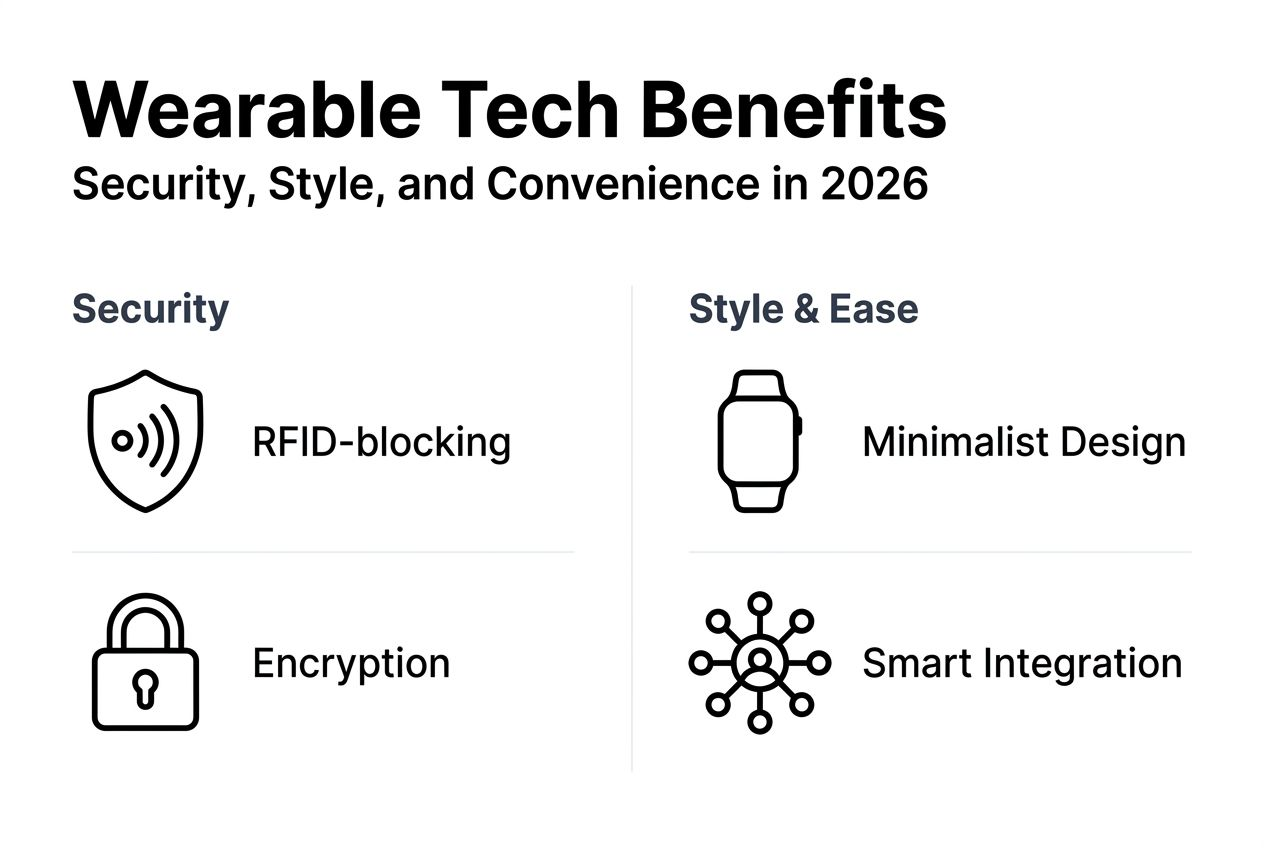
Fashion meets technology explores how designers balance these elements. The most successful products make technology invisible or present it as a deliberate style choice rather than a compromise.
Consider how wearables complement your existing wardrobe. A minimalist RFID wallet suits professional settings where discretion matters. Tech-forward designs with visible features work in creative industries where innovation is valued. Matching wearable style to your workplace culture ensures comfortable daily use.
Color choices, material quality, and construction details separate premium wearables from budget options. Genuine leather, durable fabrics, and quality stitching signal products designed for long-term use. These elements matter as much as technical specifications for professionals building a cohesive personal brand.
Styling wearable tech modern chic provides specific guidance for integrating these accessories into professional wardrobes. The goal is creating outfits where wearable tech enhances rather than disrupts your overall appearance.
Common misconceptions about wearable technology
The fitness tracker stereotype persists despite wearable technology’s expansion into security and convenience categories. Many professionals dismiss the entire category because they associate it exclusively with workout gear and health monitoring. This narrow view prevents them from discovering accessories that address daily challenges unrelated to fitness.
Another misconception involves assuming fashion accessories cannot contain meaningful security features. People underestimate how RFID-blocking materials and encrypted Bluetooth integrate into slim wallets and compact organizers. They expect security products to look obviously protective, missing sleek options that deliver the same benefits.
Confusion about balancing fashion with technology creates hesitation. Some believe choosing secure, convenient wearables means sacrificing style or settling for unattractive products. This misconception stems from early wearable generations that prioritized function over form. Current offerings prove both elements coexist successfully.
Key misconceptions to overcome:
- Wearables are only for fitness enthusiasts and health-conscious consumers
- Security features require bulky, unattractive product designs
- Technology integration always compromises aesthetic appeal
- Quality wearables are prohibitively expensive for average budgets
Informed purchasing requires researching specific products rather than making category-wide assumptions. Trends in tech apparel reveal how the market has matured beyond early stereotypes. Reviews, specifications, and trying products in person help you assess actual capabilities versus preconceptions.
Price represents another area where misconceptions persist. While premium wearables command higher prices, mid-range options deliver solid performance and style. The key is understanding which features matter for your specific needs rather than paying for unnecessary capabilities or brand prestige alone.
Making a smart investment: choosing the right wearable tech
Evaluating wearable technology requires a systematic approach focusing on your specific security needs, device ecosystem, and style preferences. Start by identifying which security threats you face regularly. Urban professionals using public transportation need robust RFID protection. Remote workers concerned about home security benefit from smart accessories with location tracking.
Security features to evaluate:
- RFID-blocking capabilities and shielding material specifications
- Encryption standards for Bluetooth and wireless connectivity
- Physical security like tamper-resistant closures and reinforced construction
- Authentication options including biometric or PIN protection
Compatibility assessment prevents frustration after purchase. Verify wearables work with your smartphone’s operating system and version. Check whether integration requires specific apps and whether those apps receive regular updates. Products abandoned by manufacturers lose functionality as operating systems evolve.
Style evaluation involves more than personal preference. Consider these factors:
- Match wearable aesthetics to your workplace dress code and typical settings
- Assess material quality and construction for durability and premium appearance
- Verify dimensions fit your carrying preferences and existing bags or pockets
- Review color options to complement your wardrobe’s primary palette
- Consider how visible tech elements align with your personal brand
Pro Tip: Cross-check product claims against independent reviews and third-party testing. Manufacturers sometimes overstate capabilities, so verified user experiences provide realistic performance expectations.
Your priorities determine the right balance between security, convenience, and style. A financial professional handling sensitive client data might prioritize maximum RFID protection even if it adds slight bulk. A creative director might accept slightly lower security specs for a more fashion-forward design that signals innovation.
Security tips for fashion accessories offers detailed guidance on evaluating protection claims. Functional fashion guide tech style helps balance practical needs with aesthetic goals.
Brand reputation matters for long-term satisfaction. Established brands typically provide better warranty support, replacement policies, and product updates. Research customer service experiences before committing to purchases, especially for higher-priced items.
The future of wearable technology for young professionals
The wearable tech market shows accelerating innovation focused on security and style integration. The wearable tech market is projected to grow substantially, with 40% growth in security-focused devices driven by millennials and Gen Z. This demographic shift influences product development toward items that seamlessly blend protection with professional appearance.
Emerging technologies promise enhanced functionality without compromising aesthetics. Flexible electronics enable security features in ultra-thin materials. Advanced fabrics with conductive threads allow clothing to function as interfaces without visible components. Battery technology improvements extend operation periods while reducing size and weight.
Biometric integration represents a significant trend. Fingerprint sensors embedded in wallet closures, facial recognition for bag access, and voice authentication for smart accessories add security layers without extra devices. These features appeal to professionals managing multiple credentials and access requirements.
“The next generation of wearables will make security and convenience completely invisible. Users will experience benefits without thinking about the technology enabling them.”
Sustainability concerns influence future product development. Young professionals increasingly demand eco-friendly materials and ethical manufacturing. Brands incorporating recycled components, reducing packaging waste, and ensuring fair labor practices gain competitive advantages with socially conscious consumers.
Role of fashion tech explores how these trends reshape the accessories market. Expect continued convergence of high fashion design principles with advanced security features. Luxury brands entering the tech-fashion space validate the category and expand available options across price points.
Artificial intelligence integration will personalize wearable functionality. Smart accessories that learn your routines, predict your needs, and adjust settings automatically create truly seamless experiences. This advancement moves wearables from reactive tools to proactive assistants anticipating requirements before you articulate them.
Explore stylish, secure wearable tech from InvisiTechWear
InvisiTechWear specializes in accessories that deliver the security, convenience, and style young professionals demand. Our curated collection features products where advanced protection hides within sleek designs suitable for any professional setting.
The RFID blocking men’s slim wallet exemplifies this balance with metallized fabric shielding in a minimalist leather design. It protects against digital theft while maintaining a profile slim enough for front pocket carry.
Our complete RFID-blocking wallets & bags collection offers options across styles and price points. From classic leather to contemporary materials, each product undergoes testing to verify protection claims meet our standards.
For audio convenience, Lenovo XT62 Bluetooth earphones combine secure wireless connectivity with noise reduction technology. The compact charging case fits easily in pockets while delivering extended battery life for all-day use.
Explore our full range to discover how wearable technology enhances your daily routine without compromising professional appearance. Each product represents a smart investment in security and convenience designed specifically for modern professionals.
FAQ
What security features do wearables typically offer?
Wearables commonly include RFID-blocking materials that prevent wireless scanning of credit cards and passports. Many also feature encrypted Bluetooth connectivity and secure closures that protect against unauthorized access. These features work together to safeguard both digital information and physical belongings.
Can wearable tech really blend fashion with function?
Yes, contemporary wearables successfully combine aesthetic appeal with security and convenience features. Fashion-tech collaborations have produced accessories that match professional dress codes while delivering advanced protection. The market now offers sufficient variety that you can find options matching any personal style preference.
How do I choose the right wearable for my lifestyle?
Start by assessing your specific security needs like RFID protection or item tracking. Verify compatibility with your existing devices and smartphone operating system. Select styles that complement your wardrobe and workplace expectations. Prioritize products from reputable brands with verified features and positive user reviews.
Are expensive wearables worth the investment?
Price should reflect the quality of materials, reliability of security features, and durability of construction. Mid-range wearables often deliver excellent performance without premium pricing. Evaluate whether expensive options provide features you will actually use or simply carry brand prestige. The best investment matches your specific needs at a price point you find reasonable.
Do wearables require constant charging or maintenance?
Most quality wearables with security features like RFID-blocking require no power or charging since they use passive shielding. Bluetooth-enabled accessories typically offer weekly to monthly battery life depending on usage patterns. Choose products with battery specifications matching your willingness to manage charging routines.


