

Your wallet contains more than cash and cards. It holds digital keys to your identity, and someone standing a few feet away could be scanning them right now without you noticing. RFID technology powers the contactless convenience you enjoy daily, but it also creates invisible vulnerabilities that tech-savvy professionals often overlook. This guide reveals how RFID security threats actually work, why they matter for your personal privacy, and how you can protect yourself with accessories that blend cutting-edge protection with modern style. You’ll discover practical ways to secure your data without sacrificing the sleek, minimalist aesthetic that defines contemporary urban fashion.
Table of Contents
- Key takeaways
- What is RFID and how does it affect your privacy?
- The real risks: How RFID security breaches happen and their consequences
- Choosing stylish RFID-blocking accessories and clothing: What to look for
- Integrating RFID security in your daily life: Practical tips and maintenance
- Protect your privacy with invisitechwear RFID products
- Frequently asked questions
Key Takeaways
| Point | Details |
|---|---|
| RFID privacy risk | RFID enables wireless data exchange over short range, creating potential unauthorized access to your personal information. |
| Blocking reduces scans | RFID blocking accessories and clothing limit data exposure by preventing nearby readers from eliciting a readable signal. |
| Stylish privacy products | Modern RFID shields are designed to blend privacy protection with fashion forward aesthetics for everyday use. |
| Know the threats | Understanding the common skim attacks and where they occur helps you make informed security choices and protect your data. |
What is RFID and how does it affect your privacy?
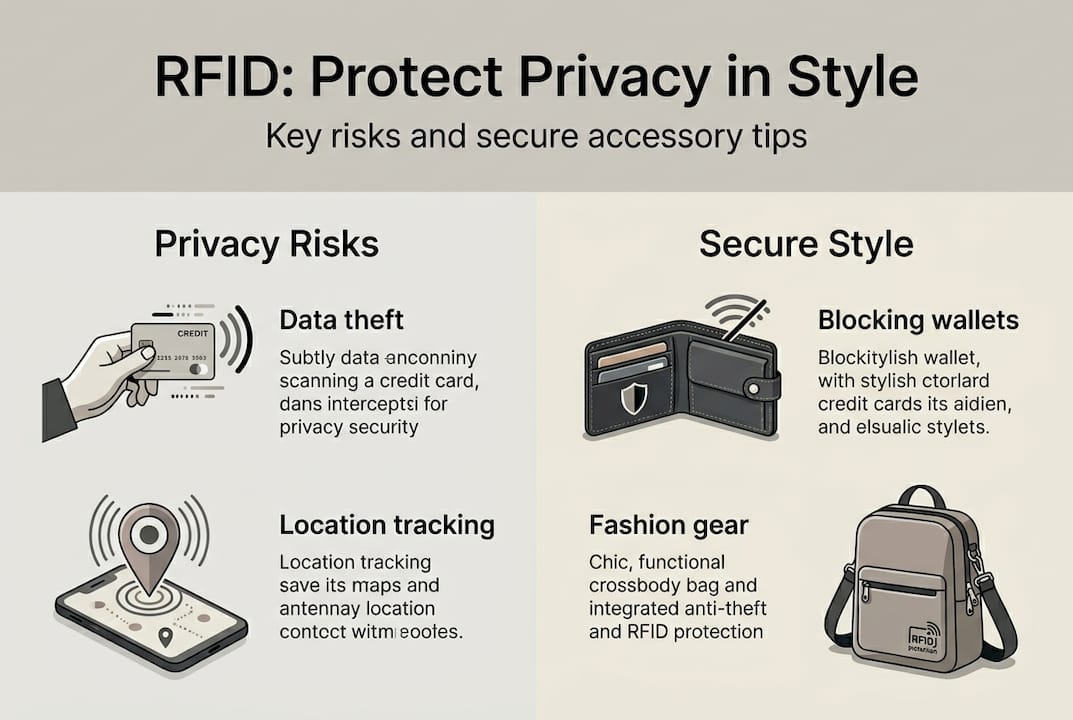
RFID stands for radio-frequency identification, a technology that uses electromagnetic fields to automatically identify and track tags attached to objects. These tiny chips embed themselves in credit cards, passports, employee badges, and even some modern clothing labels. When an RFID reader sends out radio waves, the chip responds by transmitting its stored data back, enabling contactless payments, keyless entry, and instant identification.
The convenience factor makes RFID incredibly popular. You tap your card at checkout, wave your badge at the office door, or scan your passport at customs without fumbling for physical contact. However, this wireless transmission creates a fundamental privacy problem. RFID technology enables wireless data exchange but can expose personal information to unauthorized scanners operating nearby.
Here’s how RFID affects your daily privacy:
- Passive RFID chips don’t require batteries and activate whenever a reader signal reaches them
- Standard RFID cards transmit data up to 10 feet away, though most work within 4 inches
- Criminals use portable scanners disguised as backpacks or briefcases to collect data in public
- Your card number, expiration date, and sometimes your name transmit in plain text
- Multiple cards in one wallet can all respond simultaneously to scanning attempts
The risk intensifies in urban environments where you’re constantly surrounded by strangers in elevators, subway cars, and coffee shop lines. Someone standing close enough to brush against you could be running a scanner. Unlike traditional pickpocketing, RFID skimming leaves no physical evidence and you won’t realize anything happened until fraudulent charges appear on your statement.
For tech-savvy professionals who pride themselves on staying ahead of security threats, understanding RFID technology represents a crucial knowledge gap. The same contactless convenience that streamlines your daily routine also broadcasts your sensitive information to anyone with basic scanning equipment. This vulnerability affects not just your financial security but your overall digital privacy footprint.
The real risks: How RFID security breaches happen and their consequences
RFID skimming isn’t theoretical. It happens daily in cities worldwide, and the attack method is surprisingly simple. Criminals purchase RFID readers online for as little as $50, hide them in bags or clothing, and position themselves in crowded areas where close proximity seems natural. The entire data capture takes milliseconds, and victims never feel a thing.
Consider your typical morning commute. You’re pressed against other passengers in a subway car, standing in line at your favorite coffee shop, or waiting for an elevator in your office building. Each scenario puts you within scanning range of dozens of people. A skilled thief can collect data from multiple victims during a single commute, then sell that information on dark web marketplaces or use it directly for fraudulent purchases.
The attack sequence follows these steps:
- Criminal positions themselves near targets in crowded public spaces
- Hidden RFID reader activates and sends signal pulses to nearby cards
- RFID chips in wallets and bags respond by transmitting stored data
- Reader captures and stores credit card numbers, expiration dates, and names
- Thief either makes immediate fraudulent purchases or sells data in bulk
- Victims discover the breach only when reviewing bank statements weeks later
The financial and personal consequences extend far beyond immediate theft. RFID skimming leads to identity theft in urban environments and can cost victims thousands in fraudulent charges, damaged credit scores, and countless hours resolving disputes with banks and credit agencies. Some victims face years of credit monitoring and ongoing fraud attempts as their stolen information circulates through criminal networks.
“The average RFID skimming victim loses $2,400 before detecting the breach, and 67% report ongoing fraud attempts for at least two years after the initial theft. Urban professionals face the highest risk due to daily exposure in crowded transit and commercial areas.”
Beyond financial loss, RFID breaches compromise your sense of security and privacy. Your passport contains biometric data and travel history. Your work badge might grant access to secure facilities or sensitive information systems. Even loyalty cards and gym memberships create data trails that reveal your habits, locations, and personal preferences. When criminals capture this information, they don’t just steal money. They steal pieces of your identity and daily life.
The sophistication of these attacks continues evolving. Some criminals now use modified smartphones with custom apps that function as RFID scanners, making their activities virtually undetectable. Others work in teams, with one person creating distractions while another positions their scanner. The technology barrier keeps dropping, making RFID skimming accessible to increasingly amateur criminals.
Choosing stylish RFID-blocking accessories and clothing: What to look for
Protecting yourself from RFID threats doesn’t mean carrying bulky, unattractive security gear. Modern RFID-blocking accessories combine effective shielding technology with sleek, minimalist designs that complement contemporary fashion sensibilities. The key is knowing which features actually matter and which are just marketing hype.
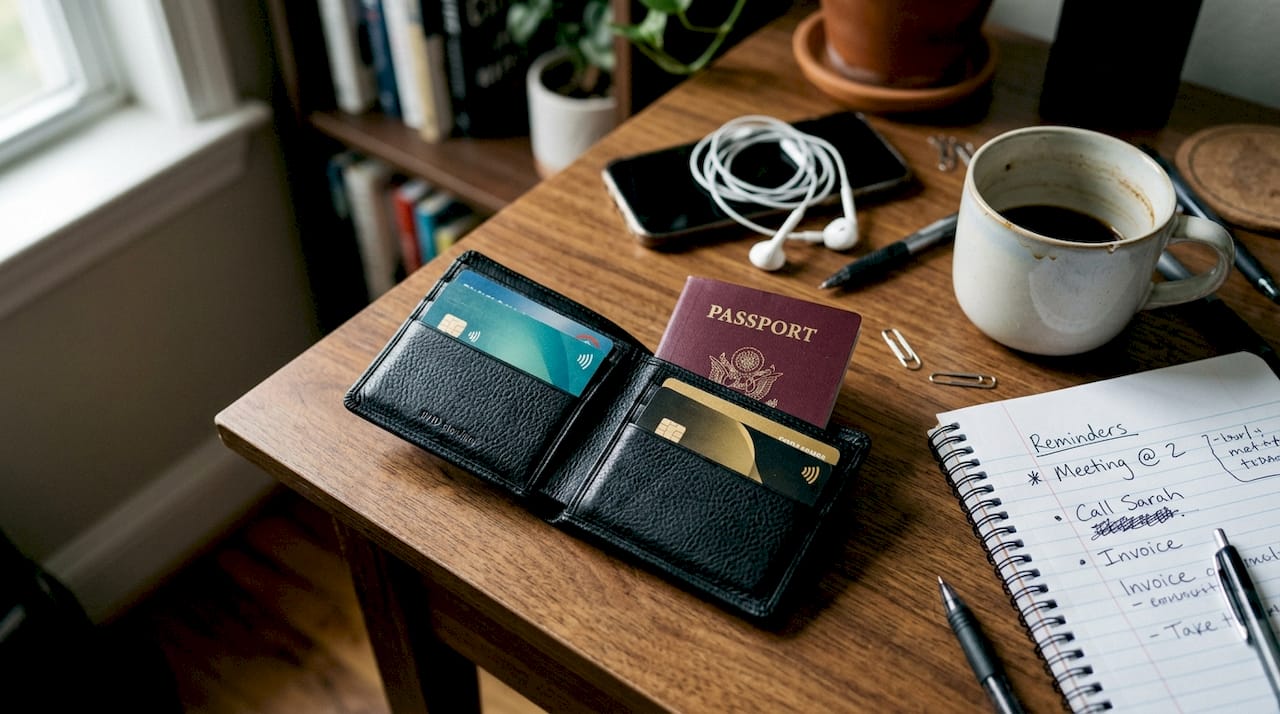
Start by verifying genuine RFID-blocking capability. Quality products specify the frequency ranges they block, typically 13.56 MHz for credit cards and passports. Look for materials like carbon fiber, metal mesh, or specialized metallic fabrics that create a Faraday cage effect, preventing radio waves from reaching your cards. Cheap alternatives might use thin metallic paint that wears off quickly or provides incomplete coverage.
Pro Tip: Test RFID-blocking products before relying on them. Try scanning your contactless card through the wallet or bag. If the transaction fails, the blocking works. If it succeeds, return the product immediately.
Style considerations matter just as much as security for fashion-conscious individuals. RFID-blocking accessories often combine fashion with technology to meet urban lifestyle demands. Here’s what to evaluate:
- Slim profile wallets that fit comfortably in front pockets without creating bulk
- Minimalist designs with clean lines and neutral colors that match various outfits
- Premium materials like genuine leather, carbon fiber, or aircraft-grade aluminum
- Multiple compartment options for organizing cards, cash, and IDs efficiently
- Durability features including reinforced stitching and scratch-resistant finishes
The market offers diverse options across price points and styles. Compare features carefully to find products that balance protection, aesthetics, and budget.
| Product Type | Protection Level | Style Factor | Price Range | Best For |
|---|---|---|---|---|
| Slim RFID wallets | High | Modern minimalist | $30-80 | Daily carry, front pocket |
| RFID-blocking bags | Very High | Urban professional | $60-150 | Commuters, travelers |
| Faraday pouches | Maximum | Utilitarian tech | $15-40 | Multi-device protection |
| RFID card sleeves | Moderate | Discreet basic | $10-25 | Budget-conscious users |
| Tech-integrated apparel | High | Fashion-forward | $80-200 | Style-focused professionals |
When choosing RFID-blocking accessories, prioritize verified brands with transparent testing data and positive user reviews. Avoid products making exaggerated claims without specific technical details. The best options clearly state which frequencies they block, the materials used for shielding, and provide independent test results or certifications.
Consider your daily routine and personal style when selecting products. A sleek cardholder works perfectly for minimalists who carry few cards, while professionals juggling multiple IDs, transit passes, and business cards need wallets with organized compartments. Travelers benefit from passport holders and larger pouches that protect multiple documents simultaneously. The goal is finding solutions that integrate seamlessly into your existing lifestyle rather than forcing awkward compromises.
Color and finish options have expanded significantly. Beyond basic black and brown leather, you’ll find carbon fiber textures, metallic finishes, bold colors, and even custom designs. Many brands now offer gender-neutral designs that appeal to diverse aesthetic preferences. Why choose RFID wallets becomes obvious when you see how modern options eliminate the traditional security versus style tradeoff.
Integrating RFID security in your daily life: Practical tips and maintenance
Owning RFID-blocking accessories is just the first step. Consistent habits and proper maintenance ensure your protection remains effective over time. The goal is making security practices so automatic they require zero conscious effort while you go about your daily routine.
Start by establishing a card management system. Keep only essential cards in your RFID-protected wallet and store backup cards at home in a shielded container. This minimizes your exposure if something goes wrong and reduces the number of vulnerable items you carry daily. Designate specific compartments for different card types, making it easy to access what you need quickly without exposing everything.
Regular inspection prevents security gaps from developing unnoticed. Check your RFID-blocking gear monthly for signs of wear, particularly along seams and corners where shielding material might separate. Test the blocking effectiveness every few months using the contactless payment method. If scanning suddenly works through your wallet, the shielding has failed and needs replacement.
Pro Tip: Pair RFID protection with smartphone privacy controls. Enable NFC only when actively using contactless payments, then disable it immediately after. This prevents your phone from becoming another skimmable target in your pocket.
A checklist approach helps ensure comprehensive RFID protection in everyday urban life. Follow these sequential actions to build robust security habits:
- Morning routine: Verify all cards are in RFID-shielded compartments before leaving home
- Transit awareness: Keep your wallet in front pockets or secure inner jacket pockets in crowded spaces
- Payment practices: Remove only the specific card needed for transactions, never your entire wallet
- Evening check: Confirm cards return to protected compartments after use
- Weekly review: Scan bank statements for unauthorized charges and report immediately
- Monthly maintenance: Inspect RFID gear for damage and test blocking effectiveness
- Quarterly updates: Research new threats and upgrade protection as technology evolves
Adopt situational awareness in high-risk environments. Crowded festivals, busy airports, packed trains, and popular tourist attractions create ideal conditions for skimmers. Stay alert to people positioning themselves unusually close or carrying bags that seem deliberately pressed against you. Trust your instincts and create distance when something feels off.
Combine physical RFID protection with digital security measures. Enable transaction alerts on all credit cards so you receive instant notifications of any charges. Set up fraud monitoring through your bank and credit card companies. Use virtual card numbers for online purchases to limit your real card’s exposure. These layers work together to create comprehensive protection that addresses both physical and digital vulnerabilities.
Maintain your RFID-blocking accessories properly to extend their lifespan and effectiveness. Clean leather wallets with appropriate conditioners that won’t damage internal shielding. Avoid exposing products to extreme temperatures or moisture that might degrade protective materials. Store backup items in cool, dry places away from direct sunlight.
Update your protection strategy as technology advances. RFID standards evolve, and so do criminal techniques. Stay informed about new threats by following security blogs and manufacturer updates. When replacing worn accessories, choose products with the latest shielding technology rather than simply repurchasing the same model. This ensures your protection keeps pace with emerging risks.
Protect your privacy with invisitechwear RFID products
Your privacy deserves protection that doesn’t compromise your personal style. The threats we’ve explored throughout this guide are real, but so are the solutions that let you move through your daily life with confidence and security.

Invisitechwear specializes in RFID-blocking accessories that merge cutting-edge security technology with contemporary design aesthetics. Our RFID-blocking wallets and bags collection features rigorously tested products that shield your sensitive information while complementing your urban professional lifestyle. From sleek men’s slim wallets perfect for minimalist carry to comprehensive Faraday pouches that protect multiple devices simultaneously, we offer solutions tailored to diverse needs and preferences. Every product combines verified RFID-blocking capability with the modern, functional design that defines tech-integrated fashion. Explore our collection and discover how effortlessly security and style can coexist in your everyday accessories.
Frequently asked questions
What is RFID security and why should I care?
RFID security prevents unauthorized wireless access to personal data embedded in your credit cards, passports, and identification badges. It matters because criminals can scan and steal this information from several feet away without physical contact, leading to identity theft and financial fraud. Urban professionals face particularly high exposure due to daily time spent in crowded public spaces where skimming attacks commonly occur.
Can RFID blocking accessories really prevent identity theft?
Yes, high-quality RFID-blocking accessories significantly reduce your risk by creating electromagnetic shields that prevent scanners from reading your cards. Effectiveness depends on proper material quality, complete coverage design, and consistent use. Products using carbon fiber, metal mesh, or specialized metallic fabrics provide reliable protection when manufactured to proper specifications and maintained correctly.
How do I know if a wallet or bag offers true RFID protection?
Look for products that specify blocked frequency ranges, typically 13.56 MHz for credit cards and passports, along with details about shielding materials used. Reputable brands provide independent testing results or certifications verifying their protection claims. You can also test products yourself by attempting to scan a contactless card through the wallet; genuine RFID blocking will prevent the transaction from completing.
Is RFID security only important in big cities?
RFID threats exist anywhere people gather in crowded spaces, including suburban shopping centers, airports, tourist destinations, and public events. While urban professionals face higher daily exposure due to packed transit and dense commercial areas, anyone using contactless payment cards or RFID-enabled documents benefits from protection. The portable nature of scanning devices means criminals can operate effectively in any environment where they can get close to targets unnoticed.


