

Losing track of your essentials or feeling vulnerable to digital theft is a growing concern in fast-paced urban life. As style and security become inseparable, young professionals are turning to fashion accessories built with intelligent textiles that offer both smart functionality and sleek design. Recent fabric innovations bring together sustainability, nanotechnology, and digital customization, giving you advanced accessories that do more than complete your look—they actively protect and adapt to your everyday needs.
Table of Contents
- What Is Fabric Innovation Today?
- Major Types of Innovative Textiles
- Smart Features and Performance Enhancements
- Real-World Uses: Fashion, Safety, Security
- Risks, Limitations, and Common Myths
Key Takeaways
| Point | Details |
|---|---|
| Focus on Three Domains | Modern fabric innovation centers on Smart Performance Materials, Sustainable Manufacturing, and Digital Customization to enhance functionality and reduce environmental impact. |
| Smart Textiles Revolution | Technologies embedded in fabrics transform them into responsive systems that monitor health, adapt to environments, and generate energy. |
| Real-World Applications | Innovative textiles play crucial roles in fashion, safety, and security by providing intelligent solutions that meet diverse user needs. |
| Understanding Limitations | Despite their potential, challenges such as high manufacturing costs and integration complexities must be addressed in the innovation ecosystem. |
What Is Fabric Innovation Today?
Fabric innovation has transformed from simple textile production into a sophisticated intersection of technology, sustainability, and human-centered design. Modern fabric technologies are now pushing boundaries far beyond traditional manufacturing, creating intelligent textiles that respond dynamically to user needs and environmental conditions.
Today’s fabric innovation primarily focuses on three critical domains:
- Smart Performance Materials: Textiles embedded with sensors and responsive capabilities
- Sustainable Manufacturing: Eco-friendly production techniques reducing environmental impact
- Digital Customization: Advanced textile printing technologies enabling personalized fabric design
The emerging landscape of fabric innovation represents a profound technological shift. Researchers are developing textiles that can monitor health metrics, adapt to temperature changes, and even generate electrical power. These multifunctional fabrics integrate microelectronics, nanotechnology, and advanced material sciences to create garments that are no longer passive coverings but active technological interfaces.
Here’s a summary comparing the key domains of modern fabric innovation:
| Innovation Domain | Core Technology | Major Benefit | Example Application |
|---|---|---|---|
| Smart Performance Materials | Sensor-embedded textiles | Real-time user feedback | Health-monitoring garments |
| Sustainable Manufacturing | Eco-friendly processes | Reduced environmental impact | Low-waste fiber production |
| Digital Customization | Advanced textile printing | Personalized style choices | Custom apparel design |
Contemporary fabric innovation is not just about creating clothing, but designing intelligent systems that interact with the human body and environment.
Key technological breakthroughs include 3D and 4D printing techniques that allow unprecedented precision in textile manufacturing. These methods enable designers to create complex, customized fabric structures with minimal waste, significantly reducing the environmental footprint of textile production.
Pro tip: Stay informed about emerging fabric technologies by following research publications and tech fashion blogs to understand the next wave of wearable innovations.
Major Types of Innovative Textiles
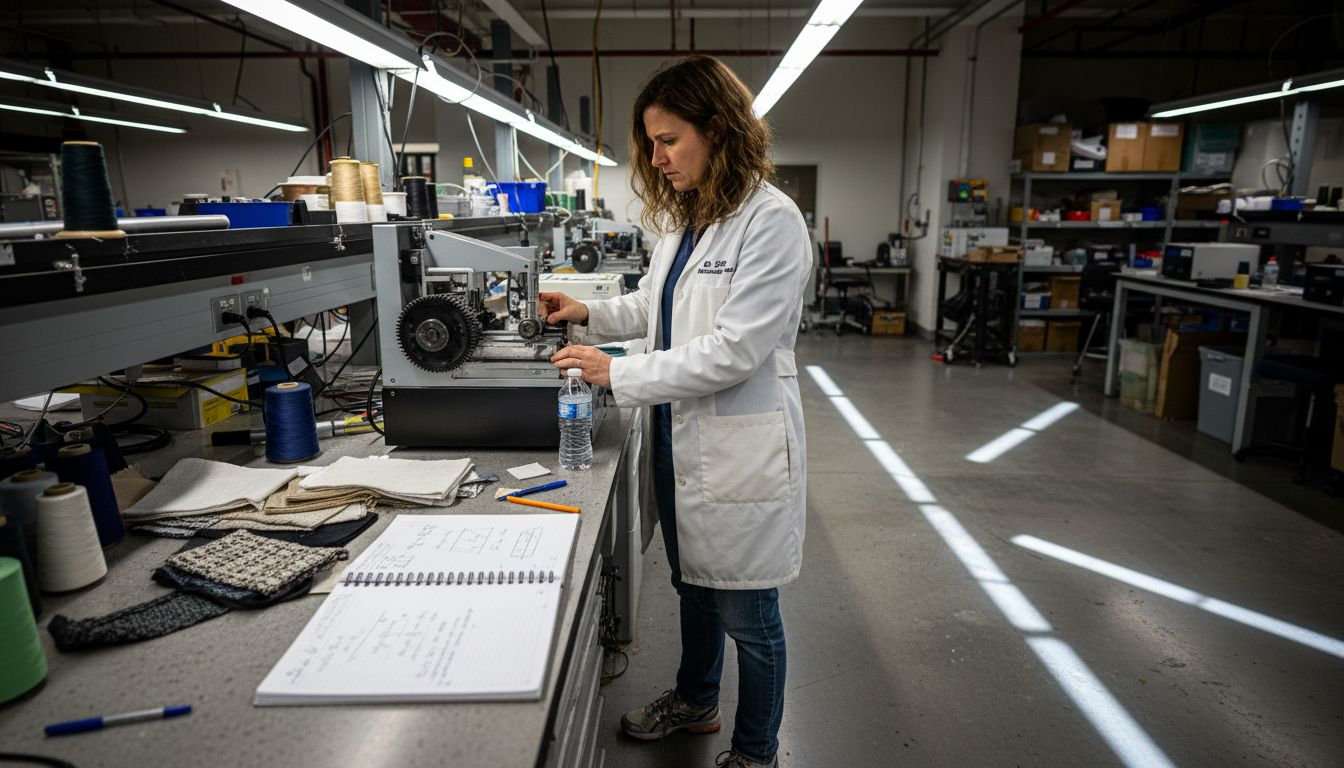
Innovative textiles represent a groundbreaking frontier in material science, transforming traditional fabric production through cutting-edge technological interventions. Advanced textile composites now encompass a diverse range of materials that go far beyond conventional fabric manufacturing, integrating sophisticated performance characteristics and sustainability principles.
The major categories of innovative textiles can be classified into several key domains:
- Functional Performance Textiles: Materials engineered with enhanced durability, resistance, and specific performance attributes
- Smart Responsive Textiles: Fabrics embedded with sensors and adaptive technologies
- Sustainable Composite Materials: Eco-friendly fabric compositions using recycled or bio-based fibers
- Nanotechnology-Enhanced Textiles: Materials modified at molecular levels to improve inherent fabric properties
Natural fibers like cotton, silk, and wool are now being revolutionized through advanced bio- and nanomaterial coatings. These innovative textile composites create hybrid materials with unprecedented capabilities, ranging from self-cleaning surfaces to temperature-regulating properties. Researchers are developing organic, inorganic, and hybrid textile structures that dramatically expand the functional potential of clothing and technical fabrics.
Innovative textiles are not just about creating new materials, but reimagining the entire interaction between human bodies and their textile environments.
The technological landscape of innovative textiles encompasses multiple strategic approaches, including advanced material redesign, integration of smart technologies, and sustainable manufacturing processes. These developments are fundamentally reshaping how we conceptualize fabric performance, moving beyond traditional aesthetic and protective functions toward intelligent, responsive systems.
Pro tip: Follow emerging materials research journals and tech fashion publications to stay ahead of the latest innovative textile developments.
Smart Features and Performance Enhancements
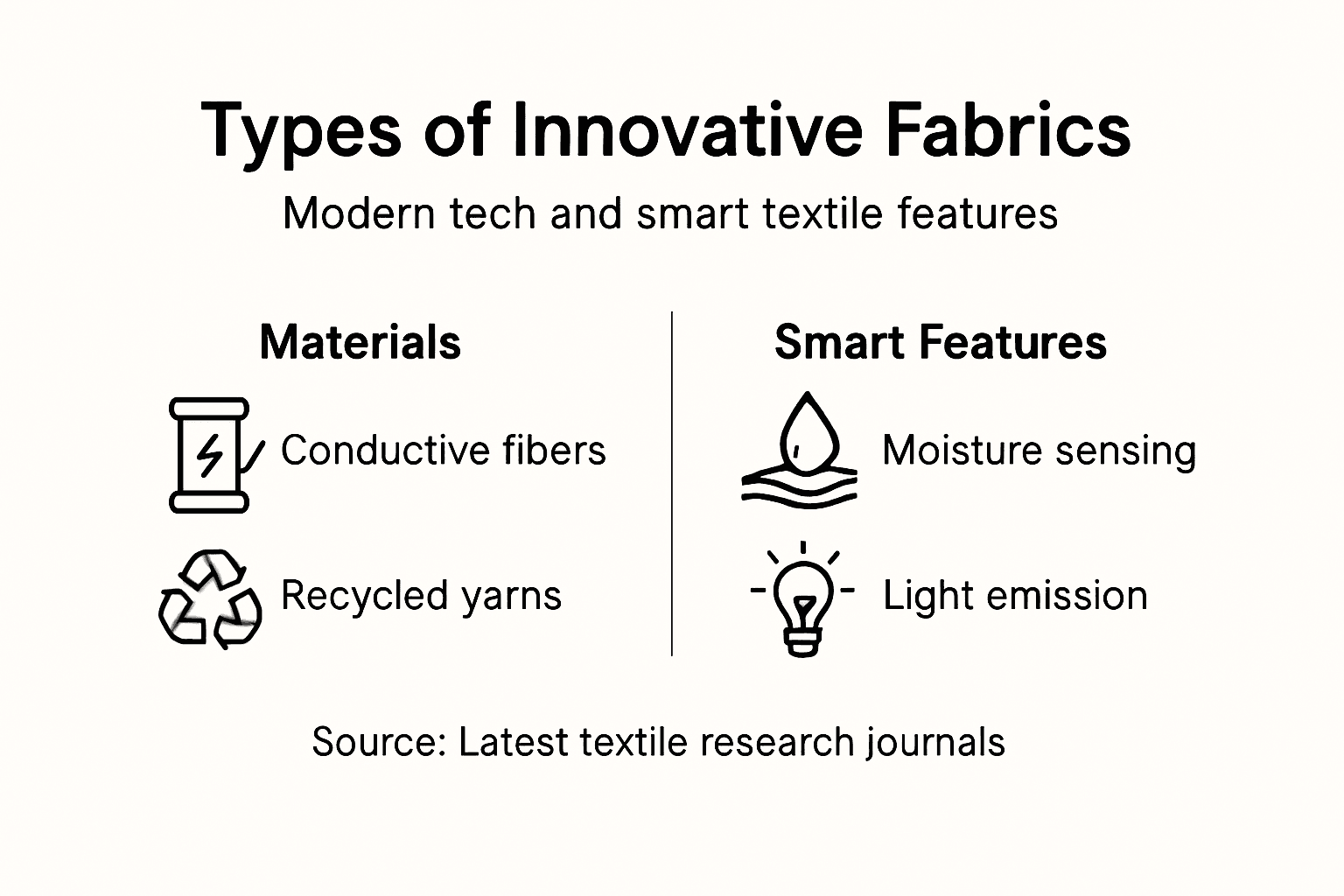
Smart textiles are revolutionizing how we interact with clothing, transforming fabrics from passive coverings into active, intelligent systems. Electrically conductive fibers now enable unprecedented functionality, bridging the gap between technology and personal apparel in ways previously unimaginable.
The most groundbreaking smart features in modern textiles include:
- Health Monitoring Capabilities: Embedded sensors tracking vital signs and physiological data
- Temperature-Adaptive Materials: Fabrics that dynamically adjust to body and environmental conditions
- Energy-Generating Textiles: Materials that can convert mechanical movement into electrical energy
- Self-Cleaning Technologies: Nanotechnology-enhanced surfaces that repel dirt and bacteria
- Interactive Design Elements: Programmable fibers with color-changing or LED-integrated properties
These innovative textile technologies are not just incremental improvements but represent a fundamental reimagining of fabric functionality. Performance-enhanced textiles now offer sophisticated capabilities that extend far beyond traditional clothing, integrating advanced sensory technologies, adaptive mechanisms, and sustainable design principles.
Smart textiles are transforming clothing from a passive protective layer into an active, responsive technological interface.
Advanced smart features are particularly transformative in sectors like healthcare, athletic performance, and personal safety. Imagine clothing that can monitor heart rate, regulate body temperature, generate electrical power, and adapt to environmental changes - all while maintaining comfort and style.
Below is a quick reference table outlining impacts of smart textile features:
| Smart Feature | User Benefit | Industry Impact |
|---|---|---|
| Temperature-Adaptive Fabric | Improved comfort in varied climates | Advanced sportswear design |
| Energy-Generating Textile | Charge devices on-the-go | Wearable tech advancements |
| Self-Cleaning Technology | Less frequent laundering | Eco-friendly, cost savings |
| Interactive Design Elements | Dynamic fashion expression | Increased market appeal |
Pro tip: Research emerging textile technology conferences and follow materials science journals to stay ahead of the latest smart fabric innovations.
Real-World Uses: Fashion, Safety, Security
Technological fabric innovations are transforming multiple sectors by creating intelligent materials that serve far more than traditional protective or aesthetic purposes. Fabric technologies now integrate complex functionalities across fashion, safety, and security domains, fundamentally reimagining how we interact with textiles in everyday life.
The practical applications of innovative textiles span several critical areas:
-
Fashion Applications:
- Adaptive clothing with temperature-responsive materials
- Customizable garments with programmable design elements
- Style-driven smart textiles that change color or pattern
-
Safety Applications:
- Protective gear with embedded hazard detection sensors
- Performance fabrics for high-risk occupational environments
- Bio-sensing materials that monitor physiological stress indicators
-
Security Applications:
- Identity verification through textile-integrated technologies
- Anti-theft clothing with embedded tracking capabilities
- Personal privacy fabrics with signal-blocking properties
These multifunctional textile innovations represent more than technological curiosities - they are practical solutions addressing real-world challenges across industries. From healthcare professionals requiring advanced protective gear to urban professionals seeking stylish yet secure clothing, smart textiles are bridging functionality and design in unprecedented ways.
Innovative textiles are transforming passive materials into active, intelligent systems that protect, adapt, and respond to user needs.
The convergence of fashion, safety, and security through textile technology demonstrates how material science can create truly transformative solutions. Imagine clothing that not only looks good but actively protects your personal data, monitors your health, and adapts to environmental conditions - all while maintaining individual style and comfort.
Pro tip: Explore interdisciplinary research at the intersection of textile engineering, computer science, and design to understand emerging technological possibilities.
Risks, Limitations, and Common Myths
Innovative fabric technologies, despite their immense potential, are not without significant challenges and misconceptions. Technological scalability and integration barriers remain critical considerations that temper the enthusiasm surrounding smart textile developments.
Common myths and critical limitations include:
-
Technological Myths:
- Assumption that all smart textiles are automatically sustainable
- Belief that electronic integration is simple and cost-effective
- Misconception that durability equals long-term performance
-
Practical Limitations:
- High manufacturing costs for advanced textile technologies
- Complex regulatory compliance requirements
- Uncertain environmental lifecycle impacts
- Challenging skills and workforce training needs
-
Performance Misconceptions:
- Overestimating reliability of embedded electronic systems
- Underestimating complexity of maintaining smart textile functionality
- Assuming universal compatibility across different technological platforms
The innovation ecosystem surrounding fabric technologies requires nuanced understanding. While breakthrough developments promise transformative potential, practical implementation demands careful navigation of technological, economic, and regulatory landscapes.
Smart textile innovation is not about perfect solutions, but continuous adaptive evolution addressing real-world challenges.
Cross-disciplinary collaboration remains essential for addressing these complex challenges. Researchers, manufacturers, policymakers, and designers must work together to develop sustainable, practical, and truly innovative textile solutions that balance technological potential with real-world constraints.
Pro tip: Approach fabric innovation with critical perspective, understanding that technological potential must be balanced with practical implementation challenges.
Experience the Future of Fashion with Tech-Enabled Fabrics
The article highlights the exciting challenges and opportunities in fabric innovation today. Modern consumers want more than just style—they demand performance, security, and adaptability in their clothing and accessories. Whether it is smart textiles that respond to your environment or integrated technology that protects your personal information, these innovations solve real problems like vulnerability to theft and lack of convenience in everyday tech use.
At InvisiTechWear, we bring this vision to life with our curated range of Products designed for the modern lifestyle. From RFID-blocking wallets to tech-infused jackets, each piece blends cutting-edge fabric technology with sleek design to keep you secure and comfortable.

Discover how smart performance and sustainable innovation can enhance your wardrobe today. Explore our selection and step confidently into the world of tech-enabled fashion. Shop now at InvisiTechWear and transform your everyday essentials with intelligent fabrics that make a difference. Don’t wait to upgrade your style and functionality with Jackets and more that perfectly balance innovation and practicality.
Frequently Asked Questions
What are smart textiles and how do they work?
Smart textiles are fabrics embedded with sensors and advanced technologies that enable them to interact with the environment or monitor user metrics. They can track health data, adapt to temperature changes, generate energy, and even self-clean.
How are innovative textiles made sustainably?
Sustainable textiles are created using eco-friendly manufacturing processes, such as low-waste fiber production and utilizing recycled or bio-based materials. These methods aim to reduce the environmental impact of traditional textile production.
What are the main applications for smart textiles in everyday life?
Smart textiles can be used in various fields, including fashion for customizable garments, healthcare for health-monitoring wearables, safety gear that detects hazards, and security clothing with built-in tracking capabilities.
What are some common misconceptions about smart textiles?
Common misconceptions include the belief that all smart textiles are sustainable, that integrating electronics is easy and cost-effective, and that higher durability translates to better long-term functionality. In reality, challenges such as high manufacturing costs and complex maintenance are significant factors.


