

Wearable technology has evolved far beyond fitness trackers and smartwatches. In 2026, stylish wearable tech seamlessly integrates advanced security features into everyday fashion accessories, transforming how urban professionals protect their identity while maintaining impeccable style. These innovations address the growing need for discreet protection against digital threats without compromising aesthetic appeal. From RFID-blocking wallets that slip into tailored jackets to biometric-secured jewelry that complements evening wear, today’s wearables prove that security and sophistication can coexist beautifully in the accessories you wear daily.
Table of Contents
- Understanding The Evolution And Impact Of Wearable Technology
- Core Roles Of Wearable Technology In Enhancing Security And Convenience
- Balancing Style, Technology, And Security: Choosing The Right Wearable
- Future Trends And Innovations Shaping Wearable Technology In 2026 And Beyond
- Explore Stylish Rfid-Blocking Wearables At Invisitech Wear
- Frequently Asked Questions
Key takeaways
| Point | Details |
|---|---|
| Fashion meets function | Wearables now blend cutting-edge security technology with runway-worthy designs for daily urban wear. |
| Identity protection | RFID blocking and biometric features safeguard personal data while maintaining sleek, minimalist aesthetics. |
| Real-time convenience | Integrated payment systems and health monitoring streamline daily activities without extra devices. |
| Style versatility | Modern wearables adapt seamlessly across professional, casual, and formal settings. |
| Future-ready design | Upgradable software and modular hardware ensure long-term value and evolving capabilities. |
Understanding the evolution and impact of wearable technology
Wearable technology began as clunky fitness bands and notification devices that screamed “gadget” rather than “accessory.” Early adopters tolerated bulky designs for basic step counting and message alerts, but fashion-conscious consumers demanded better. The market responded by transforming wearables from obvious tech add-ons into sophisticated accessories that enhance rather than detract from personal style.
The shift accelerated as urban professionals faced increasing digital security threats. Credit card skimming, contactless payment theft, and identity fraud created urgent demand for protective solutions that fit seamlessly into daily wardrobes. Modern wearables now blend technology and everyday style to address these concerns without sacrificing visual appeal.
Today’s tech-integrated accessories serve dual purposes. A sleek wallet protects against RFID skimming while complementing a tailored suit. Smart jewelry monitors health metrics discreetly during business meetings. Minimalist bags shield devices from electromagnetic interference while matching contemporary fashion sensibilities. This evolution reflects a fundamental understanding that security technology must adapt to lifestyle requirements rather than forcing users to compromise their aesthetic preferences.
Young professionals particularly value this integration. They navigate environments where both digital threats and appearance matter equally. A clunky security device undermines professional credibility, while inadequate protection risks financial loss. The solution lies in wearables that deliver robust security features through designs indistinguishable from high-end fashion accessories.
“The best security technology is the kind you forget you’re wearing because it integrates so naturally into your daily style that protection becomes second nature.”
Key developments driving this transformation include:
- Miniaturization of RFID-blocking materials into ultra-thin layers
- Integration of biometric sensors into jewelry and watch bands
- Development of conductive fabrics for electromagnetic shielding in bags
- Creation of modular designs allowing style customization without losing function
- Advanced encryption chips small enough for minimalist wallet designs
These innovations demonstrate how wearable technology has matured from novelty items into essential components of modern urban living, where security and style complement rather than compete with each other.
Core roles of wearable technology in enhancing security and convenience
Wearable technology in 2026 serves distinct security and convenience functions that address specific urban lifestyle challenges. RFID fashion blocks 90% of identity theft by creating electromagnetic barriers in everyday accessories. This protection operates passively, requiring no user action beyond carrying properly shielded items.
Security features have become increasingly sophisticated. Biometric locks on wallets and bags verify user identity through fingerprint recognition before allowing access. Encrypted communication modules in smart jewelry enable secure message transmission without pulling out phones in public spaces. GPS tracking embedded in accessories helps locate lost items while alerting owners to unauthorized movement.

Convenience functions streamline daily activities remarkably. Contactless payment chips in bracelets and rings eliminate fumbling for wallets during transactions. Health monitoring sensors track vital signs continuously, alerting users to concerning changes before they become serious. Notification systems filter important messages to discreet displays, reducing phone dependency during professional interactions.
Pro Tip: Prioritize wearables offering both passive and active security features, ensuring protection continues even when you forget to engage manual locks or authentication systems.
Top 5 wearable security and convenience features in 2026:
- Multi-layer RFID blocking protecting against frequencies from 10 MHz to 3 GHz
- Biometric authentication with backup PIN codes for reliable access control
- Real-time transaction notifications alerting to unauthorized payment attempts
- Encrypted data storage for secure credential backup and recovery
- Integration with smart city infrastructure for seamless building access and transit payments
| Wearable Category | Primary Security Function | Key Convenience Feature | Typical Price Range |
|---|---|---|---|
| RFID-blocking wallets | Electromagnetic shielding | Minimalist card organization | $30-$80 |
| Smart jewelry | Biometric authentication | Health monitoring | $150-$400 |
| Tech-integrated bags | Device protection | Wireless charging | $80-$200 |
| Secure phone cases | Signal blocking | Multi-device compatibility | $40-$100 |
| Wearable payment devices | Encrypted transactions | Instant payment processing | $60-$150 |
These features work synergistically rather than independently. An RFID-blocking wallet with biometric access provides layered protection, while integrated payment capabilities add convenience without creating new vulnerabilities. The best wearables balance these elements, ensuring security measures enhance rather than hinder daily activities.
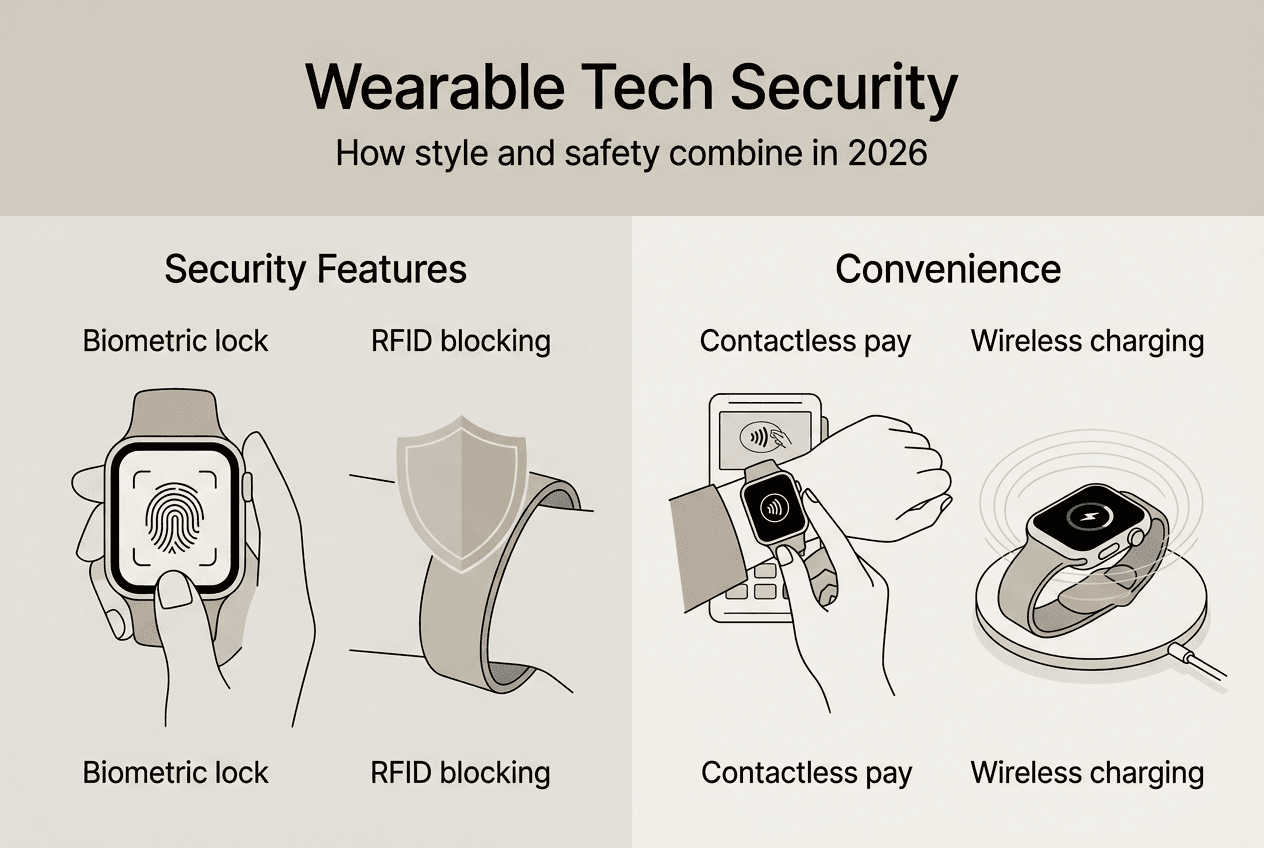
The effectiveness of these technologies depends on proper implementation. Cheap RFID-blocking materials may leave gaps in protection, while poorly designed biometric sensors frustrate users with frequent failures. Quality wearables from reputable manufacturers undergo rigorous testing to verify both security effectiveness and user experience reliability.
Balancing style, technology, and security: Choosing the right wearable
Selecting wearables that satisfy both aesthetic and functional requirements demands careful evaluation of multiple factors. Device form must align with personal style preferences while accommodating necessary technology. A minimalist who favors clean lines needs different solutions than someone embracing bold statement pieces. Security technology should integrate invisibly, maintaining design integrity while delivering robust protection.
Brand reputation matters significantly in this market. Established manufacturers invest in research, testing, and quality control that cheaper alternatives skip. Verified security certifications confirm that RFID blocking actually works at advertised frequencies, while durability testing ensures wearables withstand daily wear without degrading protection. Stylish wearable tech examples demonstrate how premium brands achieve this balance successfully.
Design compatibility extends beyond matching outfits. Consider how wearables function across different contexts throughout your day. A wallet perfect for business meetings should transition smoothly to evening social events. Bags must accommodate both laptop commutes and weekend errands. Jewelry should complement professional attire without appearing too casual or overly formal.
Key features fashion-conscious users should prioritize:
- Material quality ensuring longevity without visible wear or fading
- Color options matching diverse wardrobe palettes and seasonal trends
- Size proportions appropriate for body type and carrying preferences
- Modular components allowing style updates without replacing entire devices
- Subtle branding that enhances rather than dominates design aesthetics
| Feature | RFID Wallets | Smart Jewelry | Secure Earwear |
|---|---|---|---|
| Style versatility | High (matches most outfits) | Medium (statement pieces) | High (discreet designs) |
| Security strength | Excellent (full blocking) | Good (biometric locks) | Moderate (device protection) |
| Daily convenience | Excellent (constant use) | Good (occasional checking) | Excellent (hands-free) |
| Maintenance needs | Low (wipe clean) | Medium (charging required) | Low (minimal care) |
| Price-to-value ratio | Excellent | Good | Very good |
Pro Tip: Choose wearables with replaceable batteries or wireless charging capabilities to avoid disposal when power sources degrade, extending product lifespan and improving long-term value.
Future-proofing purchases requires attention to upgrade paths. Software-updatable devices gain new features and security patches over time, maintaining relevance as threats evolve. Hardware modularity allows component replacement without buying entirely new products. This approach reduces waste while ensuring continued protection against emerging vulnerabilities.
Styling wearables for urban professional wardrobes involves treating them as intentional accessories rather than afterthoughts. Match metal finishes on wallets and jewelry to watch and belt hardware for cohesive looks. Select bag colors that coordinate with shoe preferences for polished appearances. Choose proportions that balance rather than overwhelm your frame, ensuring wearables enhance rather than dominate your presentation.
The investment in quality wearables pays dividends through reduced replacement frequency, superior protection, and maintained aesthetic appeal. Cheap alternatives often fail within months, requiring repeated purchases that ultimately cost more while providing inconsistent security. Premium options deliver years of reliable service, justifying higher initial costs through sustained performance and style retention.
Future trends and innovations shaping wearable technology in 2026 and beyond
Artificial intelligence integration represents the next frontier in wearable security. Predictive algorithms analyze user behavior patterns to detect anomalies suggesting unauthorized access attempts. Machine learning models adapt to individual preferences, customizing security responses while minimizing false alerts. These systems learn which locations, times, and transaction types are normal, flagging deviations for user verification before allowing suspicious activities.
Modular wearables are gaining traction among fashion-forward consumers. Interchangeable components allow style updates without replacing core technology. Swap decorative covers on RFID wallets to match seasonal trends while maintaining protection. Replace jewelry bezels to transition from professional to casual aesthetics. This flexibility reduces waste while keeping wearables current with evolving fashion preferences.
Smart city infrastructure integration promises seamless convenience improvements. Wearable tech trends 2025 indicate growing compatibility between personal devices and urban systems. Wearables will communicate with building access controls, public transit payment systems, and parking facilities automatically. This integration eliminates fumbling for credentials while maintaining security through encrypted authentication protocols.
Sustainability concerns are driving material innovation. Manufacturers explore recycled metals, plant-based leathers, and biodegradable components without compromising durability or protection. Eco-friendly wearables appeal to environmentally conscious consumers who refuse to sacrifice values for security. This trend reflects broader market shifts toward responsible production and circular economy principles.
Five innovations poised to transform wearables post-2026:
- Neural interface controls allowing thought-based authentication and device operation
- Self-healing materials that repair minor damage automatically, extending product lifespan
- Energy harvesting technology powering devices through body heat and movement
- Holographic displays projecting information without physical screens
- Quantum encryption providing theoretically unbreakable security for sensitive data
These developments will further blur lines between fashion and technology. Wearables will become even more invisible as protective features, delivering security and convenience through accessories indistinguishable from purely aesthetic items. The challenge for manufacturers involves maintaining this invisibility while incorporating increasingly sophisticated capabilities.
Biometric advancement continues accelerating. Beyond fingerprints, emerging systems recognize users through vein patterns, gait analysis, and even heartbeat signatures. These methods offer superior security while remaining unobtrusive. A ring that authenticates through pulse characteristics requires no conscious user action, operating transparently during normal wear.
The convergence of these trends suggests a future where security becomes an inherent property of everyday accessories rather than a separate consideration. Wearables will protect automatically, adapt continuously, and integrate seamlessly into both personal style and urban infrastructure. This vision drives current development efforts, shaping products launching throughout 2026 and beyond.
Explore stylish RFID-blocking wearables at Invisitech Wear
Transitioning from understanding wearable technology to experiencing its benefits starts with exploring products that embody these principles. Invisitech Wear specializes in fashion accessories integrating advanced security features without compromising style. The collection demonstrates how protection and aesthetics coexist beautifully in practical items designed for modern urban living.
The RFID shielding pouch case provides comprehensive electromagnetic protection for phones, cards, and keys in a sleek black design suitable for professional and casual contexts. This Faraday bag blocks tracking signals while maintaining a minimalist profile that fits easily into briefcases or backpacks. For wallet solutions, the RFID blocking men’s slim pop-up wallet combines card protection with innovative organization features in a design thin enough for front-pocket carry. Browse the complete RFID-blocking wallets and bags collection to discover options matching your specific style preferences and security requirements. Each product balances form and function, proving that protecting your identity never requires sacrificing your aesthetic standards.
Frequently asked questions
What types of security features do wearables offer in 2026?
Wearables in 2026 incorporate multiple security layers including RFID blocking that shields credit cards and passports from unauthorized scanning, biometric authentication using fingerprints or pulse recognition for access control, and encrypted communication channels protecting data transmission. Advanced models include GPS tracking for lost item recovery and real-time transaction alerts notifying users of payment attempts. These features work together to create comprehensive protection against identity theft, financial fraud, and unauthorized access while remaining invisible during normal use.
How can wearable technology fit into everyday urban fashion?
Modern wearables adapt seamlessly across professional, casual, and formal settings through thoughtful design that prioritizes aesthetics alongside functionality. Minimalist RFID wallets complement tailored business attire with clean lines and premium materials, while modular bags offer interchangeable components matching different outfit styles. Smart jewelry comes in designs ranging from understated professional pieces to bold statement accessories for evening wear. The key lies in treating wearables as intentional fashion choices rather than purely functional items, selecting pieces that enhance your existing wardrobe through coordinated colors, proportions, and finishes.
Are RFID-blocking wearables effective against identity theft?
Yes, RFID-blocking technology reduces identity theft risk by up to 90% according to 2026 studies examining electromagnetic shielding effectiveness. Quality RFID-blocking materials create Faraday cages that prevent radio frequency signals from reaching cards and passports, stopping skimmers from capturing data remotely. The protection operates passively without requiring user action, making it ideal for busy urban environments where constant vigilance proves impractical. Incorporating this technology into everyday fashion accessories adds security without lifestyle disruption, explaining its growing popularity among professionals facing elevated digital threat exposure.
What should I consider when buying a wearable for security and style?
Assess how devices integrate with your existing wardrobe and daily routines, ensuring compatibility across different contexts from office meetings to weekend activities. Verify security certifications confirming protection claims rather than relying on marketing language alone. Check whether manufacturers provide software updates addressing emerging threats and hardware upgrade paths extending product lifespan. Consider material quality and construction durability, as wearables endure constant handling that quickly reveals poor craftsmanship. Finally, evaluate whether designs complement your aesthetic preferences genuinely rather than forcing style compromises for security benefits.


