

You rush from meetings to workouts, your phone buzzing with notifications as you navigate busy city life. Staying effortlessly connected while keeping health and security top of mind can feel demanding. With the rise of connected clothing, your wardrobe transforms into a discreet partner, blending cutting edge technology with everyday style. This guide breaks down exactly what connected apparel offers, highlighting the essentials for professionals who value privacy, performance, and convenience in equal measure.
Table of Contents
- What Connected Clothing Really Means
- Types of Connected Clothing and Key Features
- How Connected Clothing Enhances Daily Life
- Security, Privacy, and Cost Concerns
- Choosing and Caring for Connected Apparel
Key Takeaways
| Point | Details |
|---|---|
| Connected Clothing Types | Connected clothing includes biometric monitoring, pressure-sensitive, adaptive, and notification-enabled garments that enhance health tracking and comfort. |
| Health Management | Proactive wellness management is made possible through continuous health monitoring, enabling users to address concerns before they escalate. |
| Security and Privacy | Understanding data privacy and security policies is essential, as these garments collect sensitive personal information. |
| Maintenance Importance | Proper care and maintenance of connected apparel are crucial for longevity and performance; neglecting guidelines can lead to damage and loss of functionality. |
What Connected Clothing Really Means
…
Types of Connected Clothing and Key Features
Connected clothing comes in several distinct categories, each designed to solve specific problems in your daily life. The most common type features biometric monitoring sensors embedded directly into fabrics, tracking everything from heart rate and body temperature to breathing patterns and movement. These garments use conductive fibers and yarns woven seamlessly into the textile itself, eliminating the need for bulky wearables strapped to your wrist. For urban professionals juggling fitness goals with work commitments, this means you can monitor your health without sacrificing style or comfort. Another growing category includes pressure sensitive fabrics that track posture and movement patterns, helping you catch yourself slouching during long desk hours before back pain becomes a real problem.
Beyond basic health monitoring, adaptive and responsive clothing represents the cutting edge of connected wear. These garments adjust to environmental conditions, regulate temperature automatically, or provide haptic feedback that alerts you to notifications without requiring you to check your phone. Real-time biometric monitoring and environmental adaptivity enable personalized experiences that traditional clothing simply cannot deliver. Think of it like having a personal health assistant integrated into your wardrobe. Some connected pieces focus on data communication, syncing wirelessly with your smartphone or cloud systems to store health information, track trends over time, and provide actionable insights about your wellness patterns.
Here’s a comparison of connected clothing types and their main advantages:
| Clothing Type | Technology Used | Main Benefit |
|---|---|---|
| Biometric monitoring shirts | Conductive fibers | Continuous health tracking |
| Pressure-sensitive fabrics | Flexible sensors | Real-time posture correction |
| Adaptive apparel | Environmental sensors | Automatic temperature control |
| Notification-enabled garments | Haptic actuators | Discreet alerts and feedback |
Key Features That Matter
When evaluating connected clothing options, focus on these essential characteristics:
- Durability and washability - The electronics must survive regular washing and wear without degrading
- Seamless integration - Smart components should feel invisible to the wearer, not bulky or uncomfortable
- Battery life - Look for garments that last multiple days between charges, not hours
- Data security - Your biometric information needs encryption and privacy protection
- Smartphone compatibility - Ensure the garment works with your existing devices and operating system
For tech savvy professionals, app-connected apparel offers additional control over data collection, notification settings, and how your clothing interacts with your digital ecosystem. The best connected clothing pieces balance functionality with fashion, meaning you actually want to wear them beyond the novelty period.
Pro tip: Start with a single connected garment that addresses your most pressing need, whether that’s health monitoring during workouts or posture tracking at your desk, rather than overhauling your entire wardrobe at once.
How Connected Clothing Enhances Daily Life
Connected clothing fundamentally changes how you relate to your own body and environment. Instead of waiting until something goes wrong to address your health, these garments enable proactive wellness management by continuously monitoring vital indicators like heart rate, stress levels, and breathing patterns. Imagine knowing your stress levels are climbing before you feel overwhelmed, or catching irregular heart rhythms during your morning commute rather than discovering them in a hospital. Real-time insights and alerts delivered directly to your smartphone mean you can take action immediately. For busy professionals, this shifts health from something you think about during annual checkups to something you actively manage every single day.

Beyond health tracking, connected apparel solves practical problems that plague urban professionals. Your smart clothing can recognize when you’re sitting in poor posture and send subtle alerts, preventing the chronic back pain that plagues desk workers. Some garments adjust their temperature regulation based on environmental conditions and your activity level, keeping you comfortable whether you are rushing between meetings or working out at lunch. Adaptive clothing that responds to environmental changes eliminates the need to constantly adjust layers or change outfits. Your wardrobe becomes smarter than you are, working behind the scenes to optimize your comfort and performance.
The Safety and Convenience Factor
Connected clothing also enhances your personal security and daily convenience. Garments with activity recognition can detect when you fall or experience sudden unusual movement, potentially alerting emergency contacts automatically. The seamless integration with your smartphone ecosystem means you can unlock doors, make payments, or receive notifications without pulling out your phone. This is particularly valuable during workouts or commutes when fumbling with devices feels impractical. Many professionals appreciate how tech-infused clothing blends innovation into daily routines without requiring them to adopt entirely new habits or carry additional devices.
The cumulative effect is subtle but transformative. You spend less mental energy managing physical discomfort, more time responding to genuine health concerns before they escalate, and gain a clearer picture of how your body responds to work stress, exercise, and sleep patterns. Connected clothing doesn’t require you to become a health obsessive. It simply makes better information available, giving you more control over your own wellness.
Pro tip: Pair your connected clothing with a consistent daily routine, like syncing your health data every morning, to develop meaningful patterns that actually inform your lifestyle decisions rather than just accumulating unused data.
Security, Privacy, and Cost Concerns
Connected clothing collects intimate data about your body that most people would never share willingly. Heart rate patterns, stress levels, location information, and movement data paint a detailed picture of your physical and emotional state. This creates a genuine security challenge. Unauthorized data access and identity theft represent real risks when biometric information travels across IoT networks without proper protection. Your connected garments transmit this sensitive information wirelessly, potentially exposing it to interception if the manufacturer hasn’t implemented robust encryption and secure authentication protocols. For professionals handling confidential information or working in competitive industries, this data could become a liability if it falls into the wrong hands.
Beyond security, privacy policies matter more than you might think. Most connected clothing manufacturers collect, store, and sometimes share user data with third parties for analytics, product improvement, or even direct advertising. You need to understand exactly what information your garments are gathering and who can access it. Ask yourself: Does the manufacturer have transparent policies about data retention? Can you delete your information if you stop using the product? Do they sell anonymized data to health insurers or employers? These aren’t paranoid questions. Strong regulatory frameworks and user control over personal information remain critical gaps in the industry right now, meaning you bear responsibility for reading the fine print.
The Cost Reality
The price barrier is substantial. Quality connected clothing still costs significantly more than traditional apparel because integrating electronics, sensors, and conductive fibers requires expensive materials and specialized manufacturing. A smart shirt might run you 150 to 300 dollars compared to 30 to 50 dollars for a regular version. For most professionals, the investment makes sense only if you are genuinely committed to using these products consistently. Durability also matters since replacing a failed sensor or broken conductive yarn usually means replacing the entire garment. Current innovations are driving costs down, but affordable, durable smart textiles remain aspirational rather than mainstream.
The solution involves being selective rather than dismissive. Invest in connected clothing from manufacturers with transparent privacy policies and proven security records. Start with one or two pieces that address your most pressing needs rather than buying an entire smart wardrobe. Check whether the brand offers repair services or warranty coverage that justifies the premium price.
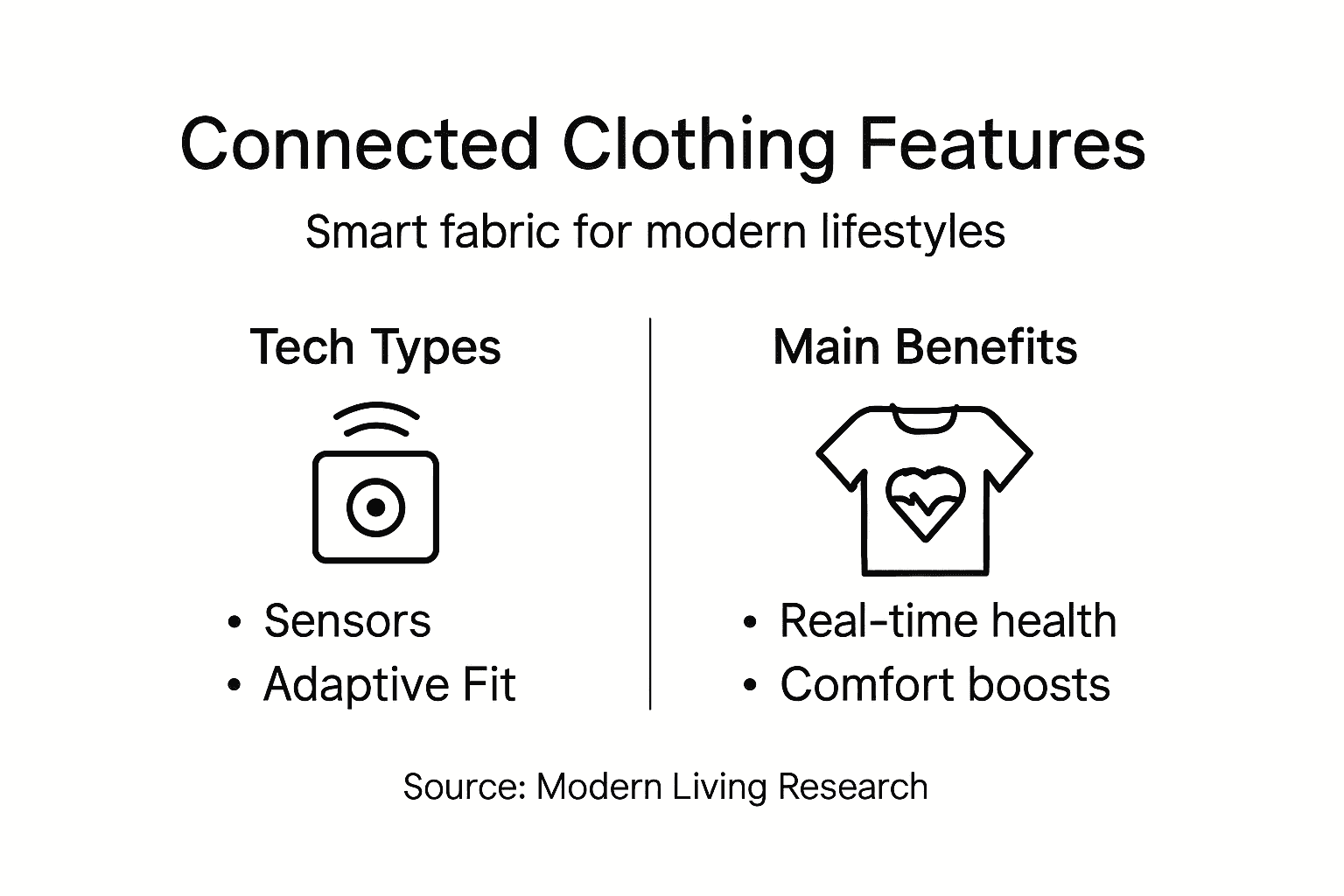
Consider these factors when weighing security, privacy, and cost of connected garments:
| Aspect | Why It Matters | What to Look For |
|---|---|---|
| Data privacy | Sensitive personal information | Transparent data policies |
| Security | Prevents unauthorized access | Strong encryption |
| Cost | High initial investment | Clear warranty/repair terms |
| Data ownership | Control over collected data | User deletion options |
Pro tip: Before purchasing, request the manufacturer’s privacy policy and security documentation in writing, and verify they use end-to-end encryption for data transmission and offer explicit user controls for data deletion.
Choosing and Caring for Connected Apparel
Selecting the right connected clothing means thinking beyond aesthetics. Start by identifying your primary use case. Are you buying a smart shirt for fitness tracking, posture correction, or health monitoring? Different garments excel at different functions, and choosing based on vague interest rather than specific need wastes money. Next, evaluate sensor accuracy and battery life carefully. A garment that requires daily charging becomes a nuisance quickly, and inaccurate heart rate readings defeat the purpose entirely. Check compatibility with your smartphone operating system and the companion app’s usability. Some manufacturers create clunky interfaces that make accessing your data frustrating. Finally, investigate the company’s data security features and encryption protocols before committing to the purchase. Look for end-to-end encryption and transparent privacy policies rather than trusting marketing claims.
Maintenance is Non-Negotiable
Once you own connected apparel, proper care determines whether it lasts months or years. This is where many people fail. Your smart shirt is not a regular t-shirt. Careful handling of integrated sensors and conductive yarns requires following manufacturer guidelines precisely. Most connected garments demand hand-washing or delicate machine cycles using cold water and mild detergent. Harsh chemicals, hot water, and aggressive drying destroy the electronic components. Store your smart clothing away from excessive moisture and extreme temperatures. Some garments include removable battery packs that you must detach before washing. Ignoring these steps means watching your $200 investment deteriorate into a useless piece of fabric.
The Practical Checklist
When shopping for connected apparel, verify these details before adding items to your cart:
- Battery life exceeds at least 3-5 days between charges
- Companion app works smoothly without constant crashes or bugs
- Warranty coverage includes sensor failures and electronic defects
- Repair services are available if components fail after warranty expires
- Care instructions are clearly documented and realistic for your lifestyle
- Reviews mention durability after 6 months to 1 year of regular use
Reputable manufacturers provide crystal clear care instructions because they want products lasting long enough to build customer loyalty. Cheap brands with vague guidance or dismissive support typically indicate lower quality internals.
Pro tip: Create a phone reminder for your specific garment’s care schedule, and inspect seams and electronic areas visually every month for signs of moisture damage or wear before it becomes irreversible.
Experience Smart Fashion That Works For You
Managing your health and comfort throughout the day can feel overwhelming especially when balancing work stress and fitness goals. Connected clothing offers proactive wellness monitoring and adaptive comfort but finding products that truly blend technology with style and durability is a challenge. That is where InvisiTechWear steps in with a curated selection of tech-infused apparel designed to keep you secure comfortable and connected without sacrificing fashion.
From biometric monitoring shirts to adaptive outerwear InvisiTechWear delivers on key pain points highlighted by the article such as seamless integration, durability, and smartphone compatibility. Explore our Hoodies and Jackets collections that fuse modern style with practical tech features. Each piece is crafted to help you stay on top of your health and enjoy discreet notifications or RFID protection wherever life takes you.
Don’t settle for ordinary when smart clothing can enhance your everyday life with real benefits. Visit InvisiTechWear now to shop innovative apparel and upgrade your wardrobe with seamless technology designed for modern living. Start with one smart piece and experience the future of functional fashion today.
Frequently Asked Questions
What is connected clothing?
Connected clothing refers to garments integrated with technology, such as biometric monitoring sensors, conductive fibers, and adaptive features, designed to enhance personal health, comfort, and convenience in daily life.
How does connected clothing improve daily health monitoring?
Connected clothing continuously tracks vital indicators like heart rate and stress levels, providing real-time insights that enable proactive wellness management and help users address potential health issues before they escalate.
What are the main types of connected clothing available?
The main types include biometric monitoring shirts, pressure-sensitive fabrics for posture correction, adaptive apparel that adjusts to environmental conditions, and garments with notification features that provide discreet alerts through haptic feedback.
How should I care for my connected clothing to ensure its longevity?
To care for connected clothing, follow the manufacturer’s washing instructions, usually requiring hand-washing or gentle cycles with cold water. Avoid harsh chemicals and hot water, and store the garments properly to prevent damage to the integrated electronics.


