

Think smartwear means sacrificing style for security? That misconception stops many urban professionals from discovering apparel that delivers both. Integrated smartwear has evolved dramatically, combining advanced technology with fashion-forward design to address real security threats and convenience needs. This guide clarifies what integrated smartwear offers, the technologies embedded within modern garments, and how you can select pieces that enhance your daily urban lifestyle without compromising your personal aesthetic.
Table of Contents
- Understanding Integrated Smartwear: Definition And Core Concepts
- Key Technologies Embedded In Integrated Smartwear
- Security And Convenience Benefits Of Smartwear In Urban Lifestyles
- Fashion Versus Functionality: Design Tradeoffs And Solutions
- Common Misconceptions About Integrated Smartwear
- Real-World Applications And User Experiences
- Choosing The Right Integrated Smartwear: Practical Tips
- Summary: Integrated Smartwear At The Intersection Of Style, Security, And Convenience
- Explore Stylish, Secure Integrated Smartwear At Invisitechwear
- What Is Integrated Smartwear?
Key takeaways
| Point | Details |
|---|---|
| Technology meets fashion | Integrated smartwear embeds RFID-blocking, biometric sensors, and wireless connectivity into stylish garments designed for urban living. |
| Security and convenience | Smartwear reduces device clutter by 35% while protecting against identity theft and enabling hands-free connectivity. |
| Design balance achieved | Modular components and sleek engineering allow smartwear to maintain comfort and style without bulk. |
| Misconceptions debunked | Modern smartwear is affordable, attractive, and delivers measurable security and lifestyle benefits. |
| Selection requires strategy | Prioritize features matching your lifestyle, verify certifications, and balance technology with personal style preferences. |
Understanding integrated smartwear: definition and core concepts
Integrated smartwear represents clothing and accessories that seamlessly combine fashion aesthetics with embedded technology to enhance functionality. Rather than attaching external gadgets to your outfit, this approach weaves technological components directly into fabric and garment construction. The result is apparel that looks and feels like conventional clothing while delivering advanced capabilities.
Three core technologies define modern integrated smartwear:
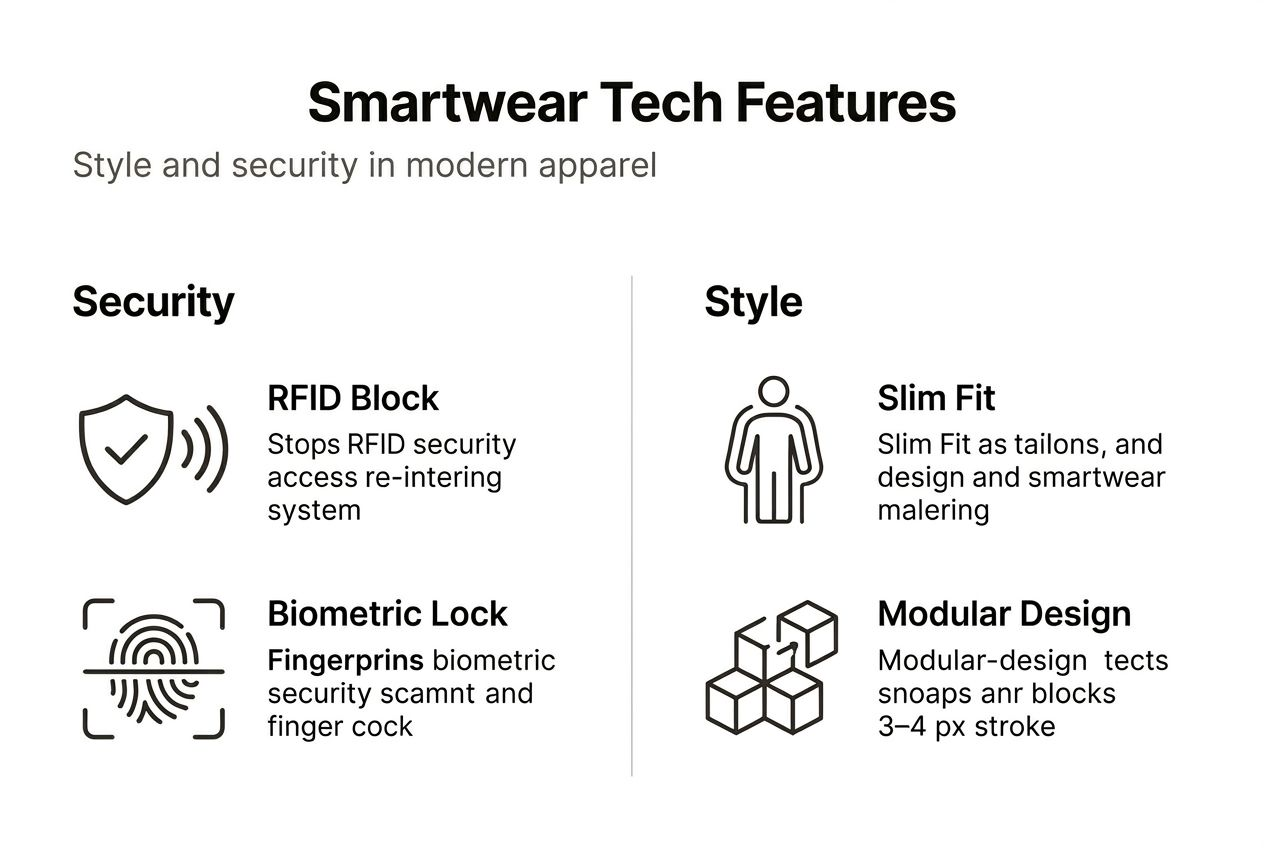
- RFID-blocking materials that shield credit cards and identification from unauthorized electronic scanning
- Biometric sensors monitoring health metrics like heart rate, body temperature, and movement patterns
- Wireless communication modules including Bluetooth and NFC for device connectivity and contactless payments
These technologies operate discreetly within garment layers, maintaining the natural drape and comfort you expect from quality apparel. The integration of biometric sensors like heart rate monitors, temperature, and motion detectors in smartwear enhances personal health monitoring and safety in real time without compromising style. Manufacturers achieve this integration through flexible circuit boards, conductive threads, and miniaturized components that distribute weight and maintain garment flexibility.
The importance of seamless integration cannot be overstated. Early smartwear prototypes failed commercially because bulky battery packs and rigid sensor housings created uncomfortable, unflattering silhouettes. Today’s solutions prioritize invisible technology that serves your needs without announcing its presence.
Key technologies embedded in integrated smartwear
Understanding the specific technologies within smartwear helps you evaluate which features matter most for your lifestyle. Each component serves distinct functions that address real urban challenges.
-
RFID-blocking technology creates an electromagnetic shield within wallet compartments, bag linings, and jacket pockets. This barrier prevents thieves using portable scanners from capturing credit card numbers and passport data as you move through crowded spaces. The technology uses metal-infused fabrics or specialized mesh layers that block radio frequencies between 10 kHz and 30 GHz.
-
Biometric sensors track physiological data throughout your day. Heart rate monitors embedded in shirt collars or jacket linings use optical sensors that detect blood flow beneath skin. Temperature sensors woven into fabric help identify fever symptoms or heat stress. Motion detectors track activity levels and posture. Accuracy of biometric sensors in smartwear can reach above 95% compared to medical devices, making them reliable tools for health awareness.
-
Wireless communication components enable your garments to interact with smartphones, payment terminals, and other devices. Bluetooth modules sewn into cuffs or collars let you control music playback or answer calls with gesture controls. NFC chips embedded near pockets facilitate contactless payments and access card functions. These components typically draw minimal power and recharge through USB ports hidden in seams or via wireless charging pads.
-
Power management systems distribute energy efficiently across components. Modern smartwear uses thin, flexible batteries that conform to body contours and last 2 to 5 days per charge depending on feature usage.
Combining these technologies creates garments that actively protect your security while simplifying device management in urban environments where convenience and safety both matter.
Security and convenience benefits of smartwear in urban lifestyles
The practical advantages of integrated smartwear become clear when you consider daily urban scenarios. These benefits directly address challenges tech-savvy professionals face navigating busy cities.
RFID-blocking fabrics provide genuine protection against a growing threat. Identity thieves equipped with portable scanners can capture credit card data from several feet away in crowded subway cars, coffee shops, and elevators. Smartwear with RFID protection basics built into pockets and compartments creates a passive defense that requires no effort on your part. You gain security simply by storing cards in designated areas.
Hands-free device control improves both convenience and safety during commutes and work. Answer calls or adjust volume through gesture sensors without fumbling for your phone while carrying groceries or navigating rush hour crowds. This functionality reduces distraction and keeps your devices secure in interior pockets rather than vulnerable in your hand.
“Smartwear transformed my morning routine. I consolidated my wallet, transit card, and fitness tracker into a single jacket. My commute feels less cluttered and more secure.” — Urban professional testimonial
Smartwear users report 35% reduction in separate device usage daily due to multi-function apparel. This consolidation means fewer items to track, charge, and potentially lose. When your jacket handles payments, health tracking, and connectivity, you eliminate the pocket clutter that comes with carrying multiple gadgets.
For urban professionals managing packed schedules across multiple locations, smartwear delivers seamless integration that supports rather than complicates your lifestyle. Understanding why choose RFID wallets extends naturally to appreciating the broader security and efficiency smartwear provides.
Fashion versus functionality: design tradeoffs and solutions
Balancing embedded technology with style and comfort represents the central design challenge for smartwear manufacturers. Early attempts produced garments that looked obviously technical, with visible wiring, bulky battery compartments, and stiff fabric panels that sacrificed comfort.

The primary challenge involves embedding electronics without creating bulk or restricting movement. Solutions include distributing components across garment surfaces rather than concentrating them in single locations. Flexible circuit boards that bend with fabric movement replace rigid traditional boards. Conductive threads woven directly into fabric eliminate the need for separate wiring.
Modular, upgradeable components address both functionality and sustainability concerns. Rather than discarding an entire jacket when battery technology improves, you can replace the power module through a discreet zippered compartment. This approach extends garment lifespan and allows you to adopt new features as they become available without buying completely new pieces.
| Design Element | Traditional Approach | Smartwear Solution |
|---|---|---|
| Power source | External battery pack | Integrated flexible battery in lining |
| Sensors | Attached devices | Woven into fabric structure |
| Connectivity | Separate phone required | Built-in Bluetooth/NFC modules |
| Aesthetics | Tech-forward appearance | Sleek, minimal design language |
| Maintenance | Complex electronics care | Machine washable with removable modules |
Pro Tip: Look for smartwear designs featuring removable tech components. This modularity lets you wash garments normally and upgrade individual features without replacing the entire piece, maximizing both value and longevity.
Market trends demonstrate rising acceptance of stylish smartwear among urban professionals who previously avoided technical apparel. Brands now prioritize design aesthetics that mirror high-fashion rather than outdoor gear. The result is jackets, shirts, and accessories that fit seamlessly into professional and casual wardrobes while delivering technological advantages. Learning how to style smart clothing helps you integrate these pieces naturally into your existing wardrobe.
Common misconceptions about integrated smartwear
Several persistent myths prevent potential users from exploring smartwear options. Addressing these misconceptions directly helps you make informed decisions based on current realities rather than outdated assumptions.
-
Myth: Smartwear is bulky and unattractive. Reality: Advanced materials and distributed component placement allow modern smartwear to match the slim profiles and aesthetic appeal of conventional apparel. Many pieces are indistinguishable from traditional garments until you examine their functional features.
-
Myth: Smartwear is unaffordable for most consumers. Reality: Entry-level smartwear pieces start around $100, with mid-range options between $150 and $250 delivering comprehensive features. This pricing aligns with quality conventional apparel while adding technological value.
-
Myth: Integrated smartwear lacks real practical benefits. Reality: RFID-blocking technology provides measurable protection against identity theft. Biometric sensors deliver health insights comparable to dedicated fitness trackers. Wireless connectivity reduces daily device juggling. These benefits address genuine urban lifestyle needs.
-
Myth: Smartwear requires constant charging and complicated maintenance. Reality: Modern power management extends battery life to multiple days. Many designs feature removable electronics modules, making garments machine washable like conventional clothing.
-
Myth: The technology will quickly become obsolete. Reality: Modular designs allow component upgrades without replacing entire garments. Core functions like RFID-blocking remain effective indefinitely as they rely on passive shielding rather than active electronics.
Pro Tip: When evaluating smartwear claims, request specific technical specifications and user reviews. Legitimate products provide clear information about battery life, washing instructions, and certification standards for security features.
Understanding these realities helps you approach smartwear as a practical category rather than a niche curiosity. The technology has matured significantly, delivering real value without the compromises that characterized early generations.
Real-world applications and user experiences
Practical examples illustrate how integrated smartwear functions in daily urban scenarios. These applications demonstrate tangible benefits beyond theoretical advantages.
Users consistently report increased confidence in crowded environments. Knowing your jacket pockets actively block RFID scanning reduces anxiety about identity theft in airports, public transit, and busy shopping districts. This psychological benefit complements the actual security protection.
Device consolidation simplifies daily routines significantly. One user described eliminating five separate items (wallet, fitness tracker, wireless earbuds case, transit card, and phone for contactless payment) by switching to a smartwear jacket with integrated functions. This consolidation freed pocket space and reduced the mental load of tracking multiple devices.
Modular designs support sustainability goals. Rather than discarding garments when batteries degrade or new sensors become available, users can replace individual components. This approach reduces waste and maintains the value of your initial investment over years rather than months.
Specific examples include:
- Jackets with RFID-blocking pockets, built-in Bluetooth for hands-free calls, and biometric sensors tracking heart rate during commutes
- Smart activewear combining moisture-wicking fabrics with embedded fitness tracking that syncs automatically to smartphone apps
- Professional blazers featuring discrete NFC chips for building access and contactless payment without carrying separate cards
- Backpacks with RFID-shielded compartments and integrated USB charging ports for devices
Exploring wearable technology examples provides additional context for how these innovations fit into modern urban wardrobes. The common thread across applications is seamless integration that enhances rather than complicates your daily experience.
Choosing the right integrated smartwear: practical tips
Selecting smartwear that aligns with your specific needs requires systematic evaluation across several dimensions. These guidelines help you identify pieces that deliver maximum value for your lifestyle and budget.
-
Identify your priority features before shopping. Do you need RFID protection for international travel? Biometric tracking for fitness goals? Wireless connectivity for hands-free communication? Understanding your primary needs focuses your search and prevents paying for unnecessary features.
-
Balance technological capabilities with style preferences. Choose pieces you genuinely want to wear regularly. Smartwear delivers value only if it integrates into your actual wardrobe rotation rather than sitting unused because it doesn’t match your aesthetic.
-
Verify product quality and authentic security certifications. Look for RFID-blocking claims backed by specific frequency ranges blocked and independent testing. Check biometric sensor accuracy against medical device standards. Research brand reputation and warranty terms.
-
Read detailed user reviews focusing on real-world performance. Pay attention to comments about battery life, washing durability, and how well technology functions after months of regular use. User experiences reveal practical issues not apparent in product descriptions.
-
Consider total cost including maintenance and potential upgrades. Factor in battery replacement costs, required accessories like charging cables, and availability of modular component upgrades when comparing options.
-
Learn proper care procedures before purchasing. Understand which components must be removed before washing, recommended cleaning methods, and storage requirements. Proper maintenance preserves both garment appearance and technological functionality.
Exploring resources like the smart apparel selection guide provides deeper insights into evaluation criteria. Combining these guidelines with practical styling smart clothing tips helps you build a smartwear wardrobe that enhances both function and fashion. Consider browsing urban fashion accessories tips for complementary pieces that complete your tech-enhanced style.
Summary: integrated smartwear at the intersection of style, security, and convenience
Integrated smartwear represents the practical convergence of fashion and technology, addressing real urban lifestyle needs without aesthetic compromise. Modern designs prove that security features, health monitoring, and wireless connectivity can coexist with style and comfort when engineering prioritizes seamless integration.
For tech-savvy urban professionals, smartwear delivers measurable advantages. RFID-blocking protects against identity theft in crowded environments. Biometric sensors provide health insights without separate devices. Wireless connectivity enables hands-free convenience during commutes and work. These benefits reduce daily gadget clutter while enhancing both security and efficiency.
The evolution from bulky prototypes to sleek, modular designs makes smartwear increasingly accessible and practical. Prices ranging from $100 to $250 for quality pieces align with conventional apparel costs while adding technological value. Modular components support sustainability by enabling repairs and upgrades rather than complete replacement.
Making informed smartwear choices requires understanding your specific needs, verifying product claims through certifications and reviews, and selecting pieces that genuinely fit your style preferences. When chosen thoughtfully, integrated smartwear enhances your lifestyle through invisible technology that serves without demanding attention.
Explore stylish, secure integrated smartwear at Invisitechwear
Ready to experience the security and convenience of integrated smartwear? Invisitechwear specializes in fashion-forward apparel and accessories that embed advanced technology without compromising style. Our curated collections feature RFID-blocking wallets and bags, tech-infused clothing, and minimalist accessories designed specifically for urban professionals who value both aesthetics and functionality.

Discover how RFID wallets for urban security protect your identity while maintaining sleek design. Explore our complete range of RFID-blocking wallets and bags engineered for modern threats. Learn about additional options through our comprehensive tech-infused clothing guide covering everything from smart jackets to connected accessories. Invisitechwear combines security, convenience, and style in every piece, helping you navigate urban life with confidence and ease.
What is integrated smartwear?
What exactly is integrated smartwear?
Integrated smartwear is clothing and accessories with embedded technology that enhances functionality while maintaining conventional fashion aesthetics. Unlike wearable devices you attach externally, integrated smartwear weaves components like RFID-blocking materials, biometric sensors, and wireless communication modules directly into garment construction. This approach delivers security, health monitoring, and connectivity features without visible tech additions.
What types of technology are typically embedded in smartwear?
Most integrated smartwear incorporates three core technologies. RFID-blocking materials shield cards and passports from electronic scanning. Biometric sensors track health metrics including heart rate, body temperature, and movement patterns. Wireless components like Bluetooth and NFC enable hands-free device control and contactless payments. Advanced pieces may combine multiple technologies for comprehensive functionality.
How does integrated smartwear improve urban security and convenience?
Smartwear addresses specific urban challenges through passive and active features. RFID-blocking pockets protect against identity theft in crowded spaces like subway cars and airports. Wireless connectivity enables hands-free communication, reducing distraction and keeping devices secure in interior pockets. Feature consolidation reduces separate device usage by up to 35%, simplifying daily routines and decreasing the items you need to track and charge.
Is smartwear affordable and stylish enough for everyday wear?
Modern smartwear ranges from $100 entry pieces to $250 comprehensive options, aligning with quality conventional apparel pricing. Design advances using flexible circuits and distributed components create slim profiles indistinguishable from traditional garments. Brands now prioritize fashion aesthetics that fit professional and casual wardrobes, making smartwear practical for daily wear rather than specialized technical situations.
How do I maintain integrated smartwear to preserve functionality?
Most smartwear features removable electronics modules, allowing machine washing like conventional clothing. Remove battery packs and sensor modules through discreet zippered compartments before laundering. Follow manufacturer guidelines for water resistance limits and drying methods. Store smartwear in cool, dry locations when not in use. Modular designs enable component replacement as technology advances, extending garment lifespan significantly beyond traditional apparel.


