

You’ve probably heard that smart fabrics are bulky, uncomfortable, or just gimmicks. That’s outdated. Today’s smart fabrics combine cutting-edge technology with sleek design, offering security features like RFID blocking and health monitoring through sensors woven seamlessly into everyday clothing. This guide breaks down what smart fabrics really are, how they work, and why they matter for tech-savvy professionals who refuse to compromise on style or functionality.
Table of Contents
- Introduction To Smart Fabrics
- How Smart Fabrics Work: Technology And Mechanisms
- Materials And Durability: What Makes A Fabric Smart?
- Smart Fabrics For Security: Protecting Your Data And Privacy
- Practical Applications: Health Monitoring And Fitness
- Common Misconceptions About Smart Fabrics
- Conceptual Framework For Understanding Smart Fabrics
- Conclusion And Next Steps For Consumers
- Explore Cutting-Edge Smart Apparel And Accessories
Key takeaways
| Point | Details |
|---|---|
| Definition and core tech | Smart fabrics integrate conductive fibers, sensors, and wireless connectivity into textiles for enhanced functionality. |
| Security and health benefits | RFID blocking prevents up to 98% of unauthorized scans while biometric sensors track heart rate and temperature with clinical accuracy. |
| Materials and care | Conductive fibers like silver and copper maintain functionality after 20-30 machine washes with proper gentle care. |
| Common myths debunked | Smart fabrics are comfortable, durable, and increasingly affordable with costs dropping 35-40% in recent years. |
| Consumer guidance framework | Four categories (sensing, actuating, communicating, power generation) help match smart fabric features to lifestyle needs. |
Introduction to smart fabrics
Smart fabrics represent the convergence of textile engineering and digital technology. These are textiles embedded with sensors, conductive fibers, and connectivity features that transform ordinary clothing into functional devices. Unlike traditional garments, smart fabrics actively interact with your body and environment.
You’ll find smart fabrics incorporating sensors and conductive materials in various apparel today. Biometric-monitoring shirts track your vitals during workouts. RFID-blocking jackets protect your credit cards from digital thieves. Even casual hoodies now feature integrated earphone organizers with cable management. The fabric innovation tech fashion landscape has evolved dramatically.
Technology trends have made smart fabrics both accessible and stylish. Miniaturization allows sensors smaller than a grain of rice. Flexible circuits bend with fabric movement. Wireless protocols like Bluetooth Low Energy enable seamless smartphone connectivity without adding bulk.
For young professionals navigating urban environments, smart fabrics offer practical solutions. Your jacket can block RFID scanners at crowded subway stations. Your shirt monitors stress levels during long workdays. You get security and health insights without carrying extra gadgets or sacrificing your personal style.
Key benefits include:
- Passive security protection through RFID-blocking technology
- Real-time health monitoring without bulky wearables
- Seamless integration with smartphones and apps
- Fashionable designs that don’t compromise functionality
- Convenience features like cable management and wireless connectivity
How smart fabrics work: technology and mechanisms
Smart fabrics rely on three core technologies working together. First, conductive fibers act as electrical pathways woven directly into the textile structure. These fibers, often made from silver-coated nylon or copper threads, transmit electrical signals throughout the garment without compromising fabric flexibility or comfort.
Second, integrated sensors detect various types of data. Smart fabrics incorporate conductive fibers and sensors to capture biometric information like heart rate, body temperature, and motion patterns. These sensors sit flat against your skin, measuring physiological signals with impressive accuracy. Some detect environmental factors like UV exposure or air quality.
Third, wireless communication technologies enable data transfer. Bluetooth connects your smart shirt to your smartphone. RFID technology in wallets and bags blocks unauthorized scanning attempts. NFC chips allow contactless payments or quick device pairing with a simple tap.
The data flow works like this:
- Sensors detect physiological or environmental changes
- Conductive fibers carry signals to a small processing unit
- The processor analyzes data and triggers responses
- Wireless modules transmit information to your connected devices
- Your smartphone app displays insights or alerts
Here’s what makes this technology remarkable:
“The beauty of smart fabrics lies in their invisibility. You wear them like normal clothes, yet they’re constantly working to protect your data, monitor your health, and enhance your daily convenience. The technology disappears into the fabric itself.”
The fabric innovation tech fashion sector continues advancing. Newer fabrics feature self-healing properties that repair small tears. Others incorporate energy harvesting, converting body heat or movement into electrical power to charge the sensors themselves.
Materials and durability: what makes a fabric smart?
The materials used in smart fabrics determine both functionality and longevity. Conductive fibers form the foundation. Silver-coated polyester threads offer excellent conductivity and antimicrobial properties. Copper-infused nylon provides durability at lower cost. Stainless steel fibers deliver superior strength for high-stress applications.
Polymers play a crucial supporting role. Piezoelectric polymers generate electrical charges from mechanical stress, powering some sensor types. Conductive polymers like PEDOT:PSS create flexible circuits that bend with fabric movement. These materials maintain electrical properties through repeated washing and wearing cycles.
Durability has improved dramatically. Quality smart fabrics withstand 20-30 machine wash cycles while maintaining full functionality. Some premium garments survive 50+ washes. The key lies in proper construction techniques that protect delicate electronic components from water damage and mechanical stress.
Care instructions matter significantly:
- Always check the care label before washing
- Use gentle or delicate wash cycles with cold water
- Remove any detachable electronic modules before washing
- Air dry or use low heat settings to prevent sensor damage
- Avoid bleach and harsh detergents that corrode conductive fibers
- Store garments flat or hung to prevent circuit stress
Durability testing ensures product reliability. Manufacturers subject smart fabrics to abrasion tests, flex cycles, and moisture exposure. Reputable brands meet standards like ISO 6330 for textile washing and ISO 12945 for fabric pilling resistance.
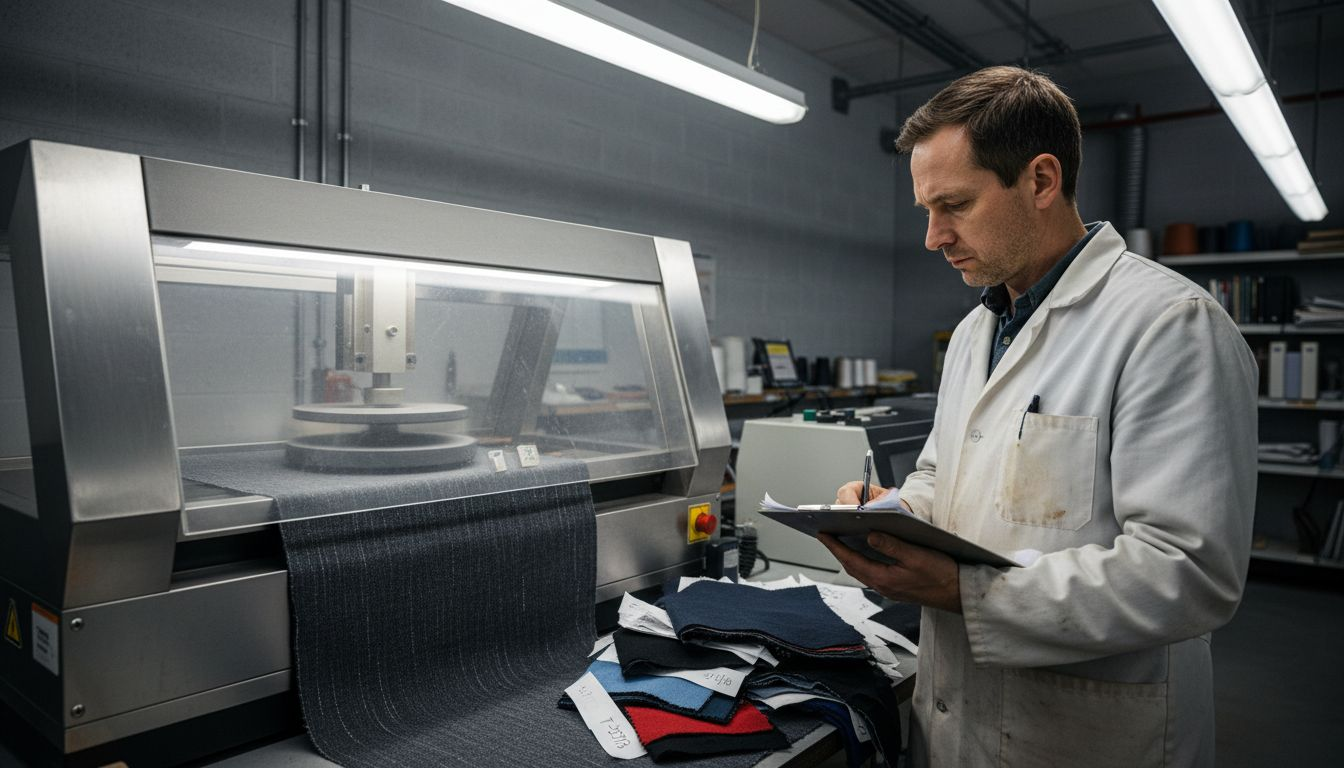
Pro Tip: Look for care labels specifying the number of guaranteed wash cycles and maximum water temperature. Quality smart fabric products clearly state these specifications, indicating the manufacturer stands behind their durability claims.
The fabric innovation tech fashion industry now uses advanced encapsulation techniques. This protects sensors and circuits within waterproof, breathable membranes. You get machine-washable smart clothing that requires minimal special handling. For detailed guidance, check out how to maintain smart clothing and how to care for tech fabrics resources.
Quality indicators include:
- Reinforced stitching around sensor areas
- Water-resistant coatings on electronic components
- Flexible circuit designs that move with fabric
- Clear wash cycle guarantees from manufacturers
- Antimicrobial treatments for odor control
Smart fabrics for security: protecting your data and privacy
Security-focused smart fabrics address a growing concern: digital theft. RFID-blocking fabrics prevent unauthorized wireless scans of credit cards, passports, and key fobs. These fabrics incorporate metallic fibers that create a Faraday cage effect, blocking electromagnetic signals from reaching your valuables. Testing shows they stop up to 98% of RFID scanning attempts.
Tampering detection represents another security layer. Smart jackets demonstrate real-time alerts with under 1 second response time when someone attempts to remove the garment or access pockets. Pressure sensors detect unauthorized touch. Your smartphone receives instant notifications, allowing immediate response to potential theft.
Common security applications include:
- Wallets with integrated RFID-blocking panels protecting credit cards
- Messenger bags featuring full RFID-shielded compartments for laptops and documents
- Travel jackets with tamper-alert pockets for passports and phones
- Backpacks with cut-resistant fabrics and alarm systems
The technology comparison reveals distinct approaches:
| Technology | Protection Type | Response Time | Power Required | Effectiveness |
|---|---|---|---|---|
| RFID Blocking | Passive electromagnetic shielding | Instant | None | 98% signal reduction |
| Tampering Sensors | Active pressure detection | Under 1 second | Battery or harvested | 95% detection accuracy |
| Cut-Resistant Fabric | Physical barrier | N/A | None | Withstands 50+ lbs force |
| GPS Tracking | Location monitoring | 30 seconds | Battery | Real-time positioning |
Benefits extend beyond theft prevention. RFID protection offers peace of mind in crowded spaces where digital pickpockets operate. You walk through airports, concerts, or subway stations without worrying about contactless card skimming. The protection works passively, requiring zero effort on your part.
Active alerting systems provide an extra security layer. If someone cuts your bag strap or reaches into a protected pocket, you know immediately. This real-time awareness deters thieves and helps you respond before valuables disappear.
For deeper insights into RFID security, explore rfid fashion blocks identity theft 2026 and rfid protection basics security guides. These resources explain exactly how RFID blocking works and which items need protection most urgently.
Practical applications: health monitoring and fitness
Biometric monitoring represents smart fabric’s most personal application. Sensors woven into shirts, sports bras, and compression wear track heart rate variability, body temperature, respiratory rate, and movement patterns. Smart fabric sensors detect heart rate and temperature with accuracy comparable to clinical monitors, typically within 5% deviation from medical-grade equipment.
The accuracy advantage matters for serious fitness tracking. Traditional chest strap monitors slip during intense workouts. Wrist-based trackers struggle with accuracy during activities involving arm movement. Smart fabric sensors maintain constant skin contact across large surface areas, capturing more reliable data during any activity.
Use cases extend beyond fitness:
- Fitness optimization through detailed workout analytics and recovery tracking
- Early illness detection by identifying fever onset or abnormal heart patterns
- Stress management via heart rate variability monitoring throughout your workday
- Sleep quality analysis when wearing smart pajamas or sleepwear
- Posture correction through motion sensors alerting you to poor positioning
Data integration brings convenience. Your smart shirt syncs automatically with fitness apps like Strava, Apple Health, or Google Fit. You don’t manually enter workout data or wear multiple devices. One garment captures everything, uploading metrics wirelessly while you exercise. Post-workout, you review detailed analytics showing exactly how your body responded to training stress.
For tech-savvy young professionals, this technology fits seamlessly into busy lifestyles. You wear your smart shirt to the gym before work, getting comprehensive health data without managing separate devices. The same shirt monitors stress levels during important meetings, helping you recognize when to take breaks. You gain health insights without adding complexity to your routine.
The technology suits various activities. Runners appreciate gait analysis. Cyclists monitor power output and cadence. Yoga practitioners track breathing patterns. Office workers receive posture reminders. The versatility makes smart fabrics valuable across different aspects of daily life.
Common misconceptions about smart fabrics
Myth: Smart fabrics are bulky and uncomfortable. Reality: Micro-scale fibers maintain natural fabric flexibility and breathability. Modern smart textiles feel identical to traditional clothing because sensors are paper-thin and circuits weigh mere grams. You won’t notice extra bulk or stiffness during normal wear.
Myth: Smart fabrics aren’t durable or washable. Reality: Quality smart garments maintain functionality after 20-30 standard wash cycles. Encapsulation technology protects electronic components from water damage. Some products survive 50+ washes without performance degradation. The key is following manufacturer care instructions about water temperature and drying methods.
Myth: Smart fabrics are prohibitively expensive and niche. Reality: Prices have dropped 35-40% over the past three years as production scales up. You can find RFID-blocking wallets under $30 and biometric-monitoring shirts around $80-120. While premium smart jackets still command higher prices, entry-level products offer accessible price points for curious consumers.
Myth: Smart fabrics require constant charging. Reality: Many smart fabric applications use passive technologies requiring zero power. RFID blocking works through metallic fiber weaving with no batteries needed. Even active monitoring systems often harvest energy from body heat or movement, eliminating charging requirements for weeks or months.
Pro Tip: When evaluating smart fabric products, focus on specific technical specifications rather than marketing hype. Look for wash cycle guarantees, sensor accuracy percentages, and battery life details. Read verified customer reviews mentioning long-term durability. These concrete details reveal product quality better than vague claims about innovation.
The misconceptions often stem from early smart fabric prototypes. First-generation products were indeed bulky, expensive, and fragile. But technology has advanced significantly. Today’s smart fabrics represent mature technology refined through years of development and consumer feedback.
Conceptual framework for understanding smart fabrics
Smart fabrics fall into four functional categories, helping you match technology to your specific needs. This classification system clarifies what different products actually do and which benefits matter most for your lifestyle.
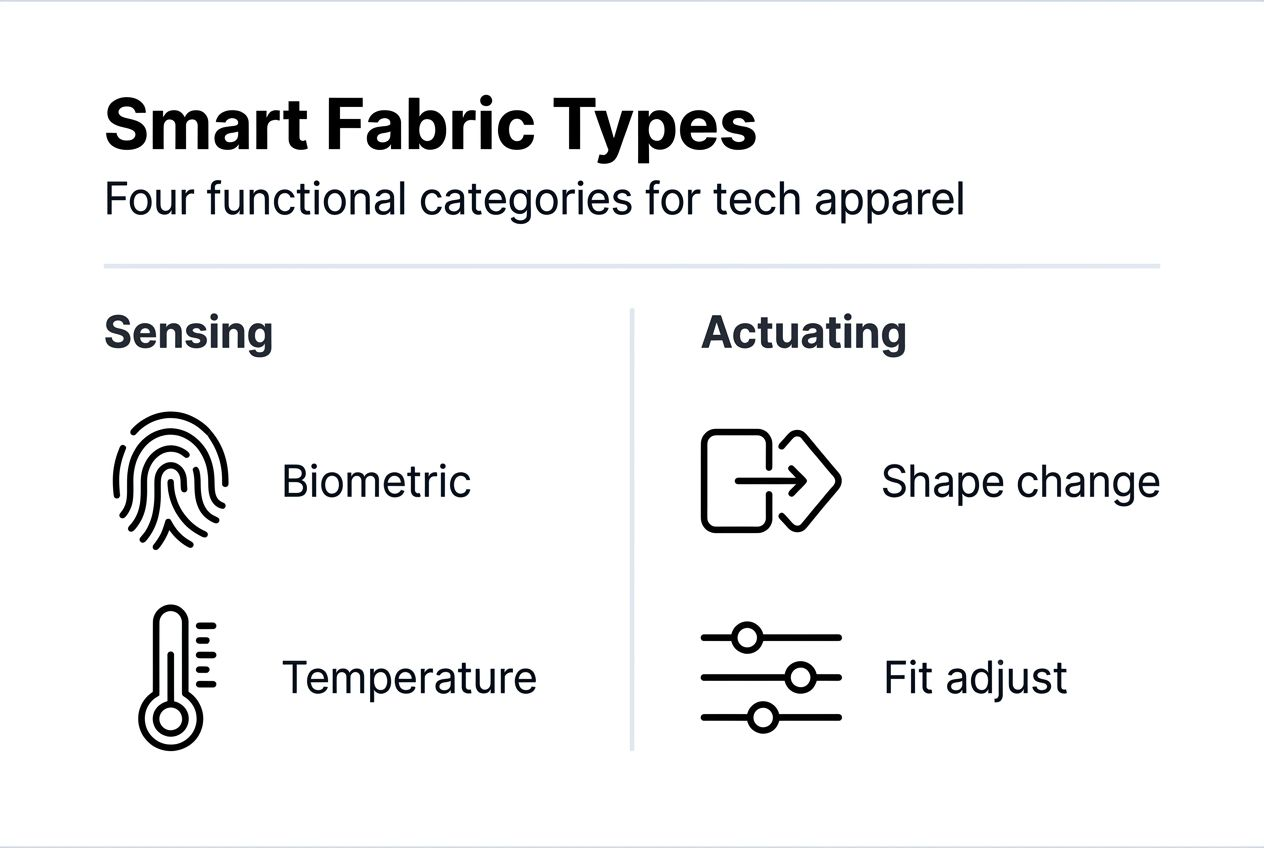
Sensing fabrics detect and measure environmental or physiological data. These textiles monitor your body temperature, heart rate, or motion patterns. They also sense external factors like UV radiation or air quality. Sensing fabrics provide information but don’t actively respond or change based on that data.
Actuating fabrics respond to stimuli by changing physical properties. Shape-memory fabrics adjust fit based on temperature. Color-changing textiles respond to light or heat. Heating elements warm garments when temperatures drop. These fabrics actively modify themselves to enhance comfort or functionality.
Communicating fabrics transmit data wirelessly to other devices. They connect to smartphones via Bluetooth, enabling real-time notifications and data syncing. NFC-enabled fabrics allow contactless payments or device pairing. RFID-blocking fabrics passively communicate by preventing unauthorized signal transmission.
Power-generating fabrics harvest energy from their environment. Piezoelectric fabrics convert mechanical stress from movement into electricity. Thermoelectric fabrics capture temperature differentials between body heat and ambient air. Solar fabrics integrate photovoltaic threads to capture light energy. These textiles reduce or eliminate battery requirements.
| Category | Primary Function | Example Applications | Power Needs | Key Benefit |
|---|---|---|---|---|
| Sensing | Data collection | Biometric monitoring shirts, UV-detecting swimwear | Battery or harvested | Health and environmental awareness |
| Actuating | Physical response | Heating jackets, shape-memory fits | Battery required | Adaptive comfort and functionality |
| Communicating | Data transmission | Bluetooth-connected apparel, RFID-blocking wallets | Passive or battery | Device integration and security |
| Power-Generating | Energy harvesting | Self-charging jackets, solar backpacks | Self-sufficient | Extended battery life or battery-free operation |
This framework empowers informed purchasing decisions. If you prioritize fitness tracking, focus on sensing fabrics with proven biometric accuracy. If security matters most, communicating fabrics with RFID blocking meet your needs. If you want minimal maintenance, passive technologies requiring no power offer convenience.
Many products combine multiple categories. A smart fitness shirt might sense your heart rate, communicate data to your phone, and harvest energy from your movement to power its sensors. Understanding these categories helps you evaluate which combinations deliver the most value for your specific use cases.
For comprehensive guidance on selecting products that match your needs, visit types of smart clothing for tech savvy fashion to explore detailed comparisons and recommendations.
Conclusion and next steps for consumers
Smart fabrics deliver tangible benefits across security, health, and convenience. RFID-blocking technology protects your financial data passively. Biometric sensors provide clinical-grade health insights without bulky devices. Wireless connectivity integrates seamlessly with your existing smartphone ecosystem. Modern designs prove you don’t sacrifice style for functionality.
When evaluating smart fabric products, consider your specific needs first. Do you prioritize data security during daily commutes? Focus on RFID-blocking accessories. Want detailed fitness analytics? Look for sensing fabrics with proven accuracy and app integration. Need minimal maintenance? Choose passive technologies requiring no batteries or charging.
Check technical specifications carefully. Verify wash cycle guarantees, sensor accuracy percentages, and wireless range. Read verified customer reviews mentioning long-term durability and real-world performance. Compare care requirements against your lifestyle to ensure the product fits your routine.
The smart fabric industry continues evolving rapidly. Watch for innovations in energy harvesting that eliminate battery charging. Advanced materials promise even greater durability and comfort. AI integration will enable predictive health insights beyond simple data tracking. For detailed selection guidance, explore the guide to selecting smart apparel resource.
Your next step: identify which smart fabric category aligns best with your priorities, then research specific products meeting those criteria with proven track records.
Explore cutting-edge smart apparel and accessories
Ready to experience how smart fabrics enhance daily security and convenience? InvisiTechWear offers innovative accessories that blend technology with style. Our RFID shielding blocking pouch case creates a Faraday cage around your phone and cards, blocking all wireless signals for complete privacy protection.

Our minimalist men’s RFID blocking wallet combines sleek design with security technology, holding 12 cards while preventing unauthorized scanning. For audio tech that complements your smart wardrobe, the E6S wireless Bluetooth earphones deliver noise-cancelling performance in a compact form factor. Explore our collection to discover how functional fashion protects and enhances your connected lifestyle.
What is smart fabric?
What exactly is smart fabric?
Smart fabric is textile material integrated with electronic components like sensors, conductive fibers, and wireless connectivity. These fabrics detect data such as heart rate or temperature, then communicate information to connected devices. Unlike traditional textiles, smart fabrics actively interact with your body and environment to provide security, health monitoring, or convenience features.
How do I wash and care for smart fabric clothing?
Most quality smart fabrics withstand 20-30 machine washes using gentle cycles and cold water. Remove any detachable electronic modules before washing. Air dry or use low heat settings to prevent sensor damage. Avoid bleach and harsh detergents that can corrode conductive fibers. Always check the care label for specific wash cycle guarantees and maximum temperature limits from the manufacturer.
Does wearing smart fabric clothing compromise my privacy?
Reputable smart fabric products store data locally on your device and use encrypted wireless connections. You control what information gets shared and with whom through app privacy settings. Many smart fabrics work passively without collecting personal data at all, like RFID-blocking wallets that simply prevent unauthorized scanning. Always review privacy policies before purchasing connected garments.
What’s the difference between sensing and actuating smart fabrics?
Sensing fabrics detect and measure data like body temperature or motion but don’t actively respond. They collect information for you to analyze. Actuating fabrics physically change in response to stimuli, such as heating elements that warm up when temperatures drop or shape-memory materials that adjust fit. Sensing provides awareness while actuating delivers adaptive functionality.
What should I look for when buying smart fabric products?
Check technical specifications including wash cycle guarantees, sensor accuracy percentages, and battery life details. Verify the fabric category matches your needs, whether security (RFID blocking), health (biometric monitoring), or convenience (wireless connectivity). Read verified customer reviews mentioning long-term durability. Compare care requirements against your lifestyle to ensure the product fits your routine without excessive maintenance demands.


