

TL;DR:
- Regular testing ensures RFID shielding remains effective and prevents silent security failures.
- Proper cleaning and storage are essential to maintain the wallet’s protective layer and prolong lifespan.
- Visual appearance is not indicative of RFID security; routine functional checks are critical.
Your RFID wallet is doing quiet, invisible work every single day. It stands between your credit card data and anyone with a cheap scanner looking to lift your info in a crowded subway or coffee shop. But here’s the thing most people overlook: a neglected wallet can lose that protective edge without showing any visible signs of failure. The lining wears, the shielding degrades, and you’re left carrying what feels like protection but isn’t. This guide walks you through everything from gathering the right supplies to testing your wallet’s blocking power, so you stay secure and look sharp doing it.
Table of Contents
- Gather your maintenance essentials
- Clean and care: Step-by-step for different RFID wallet materials
- Test the RFID blocking effectiveness regularly
- Troubleshooting and prolonging wallet lifespan
- Why most RFID wallet owners miss the real maintenance weak spots
- Upgrade your RFID wallet style and security
- Frequently asked questions
Key Takeaways
| Point | Details |
|---|---|
| Test monthly | Regular testing with an NFC app ensures your RFID wallet stays protective. |
| Clean smartly | Use gentle cleaners and follow material-specific steps to avoid damage. |
| Replace proactively | Swap your RFID wallet if tests fail or you notice physical wear. |
| Prevent overstuffing | Avoid carrying too many cards to extend wallet life and maintain shielding. |
Gather your maintenance essentials
Once you’re ready to keep your wallet in top condition, start by assembling everything you’ll need. Think of this like a basic toolkit. You wouldn’t clean a leather jacket with dish soap, and you shouldn’t approach your RFID wallet without the right gear either.
Here’s what belongs in your maintenance kit:
- Soft microfiber cloth for wiping down surfaces without scratching
- Mild soap or leather-safe cleaner depending on your wallet’s material
- Isopropyl alcohol wipes for metal wallets and snap closures
- A smartphone with NFC capability for quick shielding checks
- A contactless payment terminal or NFC test card for more accurate reads
- Leather conditioner if your wallet is full-grain or genuine leather
Understanding the RFID wallet benefits you’re protecting is half the motivation to keep up with maintenance. These wallets aren’t just stylish accessories. They’re functional tools, and tools need upkeep.
It’s critical to periodically test RFID wallets with technology you already own. Most people skip this step entirely, assuming the wallet works because it’s new or because it looks fine.
| Item | Purpose | Frequency of use |
|---|---|---|
| Microfiber cloth | Surface cleaning | Weekly |
| Mild soap or cleaner | Deep cleaning | Monthly |
| Leather conditioner | Prevent cracking and drying | Every 2 months |
| NFC app on smartphone | Quick shielding test | Monthly |
| Isopropyl alcohol wipe | Sanitize metal parts | Monthly |
| RFID test card | Accurate blocking verification | Quarterly |
Pro Tip: Download a free NFC reader app on your phone. Place your contactless card inside the closed wallet and try to scan it. If the app detects the card, your shielding has a gap. This takes under 60 seconds and gives you real data.
Clean and care: Step-by-step for different RFID wallet materials
With the right supplies on hand, thorough cleaning and care come next. RFID wallets come in leather, metal, and fabric, and each one needs a different approach. Using the wrong cleaner on the wrong material doesn’t just look bad. It can compromise the structural integrity of the shielding layer inside.
Leather RFID wallets
- Shake out any debris and wipe the exterior with a dry microfiber cloth.
- Dampen the cloth lightly with a leather-safe cleaner. Never soak the leather.
- Wipe in gentle circular motions, covering all panels and seams.
- Let the wallet air dry completely. Do not use a hair dryer or place it near a radiator.
- Once dry, apply a thin layer of leather conditioner to prevent cracking.
Metal RFID wallets
- Remove all cards and wipe the exterior with a dry cloth to remove dust.
- Use an isopropyl alcohol wipe to clean the surface and any button or clip mechanisms.
- Let it air dry before reinserting cards.
Fabric RFID wallets
- Spot-clean stains with a damp cloth and a drop of mild soap.
- Rinse the spot with a clean damp cloth to remove soap residue.
- Air dry flat to prevent warping.
| Material | Safe cleaner | Avoid |
|---|---|---|
| Leather | Leather-safe cleaner, conditioner | Alcohol, bleach, harsh detergents |
| Metal | Isopropyl alcohol wipe | Abrasive scrubbers, water immersion |
| Fabric | Mild soap, damp cloth | Machine washing, heat drying |
Pro Tip: Always let your wallet dry naturally at room temperature. Heat breaks down adhesives inside the wallet, which can loosen the RFID shielding layer over time.
The RFID blocking works through a passive Faraday cage effect built into the wallet’s lining. As confirmed by materials testing, routine cleaning does not impair this function, as long as you avoid soaking or using harsh chemicals that degrade the lining material.
Test the RFID blocking effectiveness regularly
Now that your wallet is clean and cared for, make sure its main feature, RFID security, is still working. This is the step most people skip, and it’s the most important one.
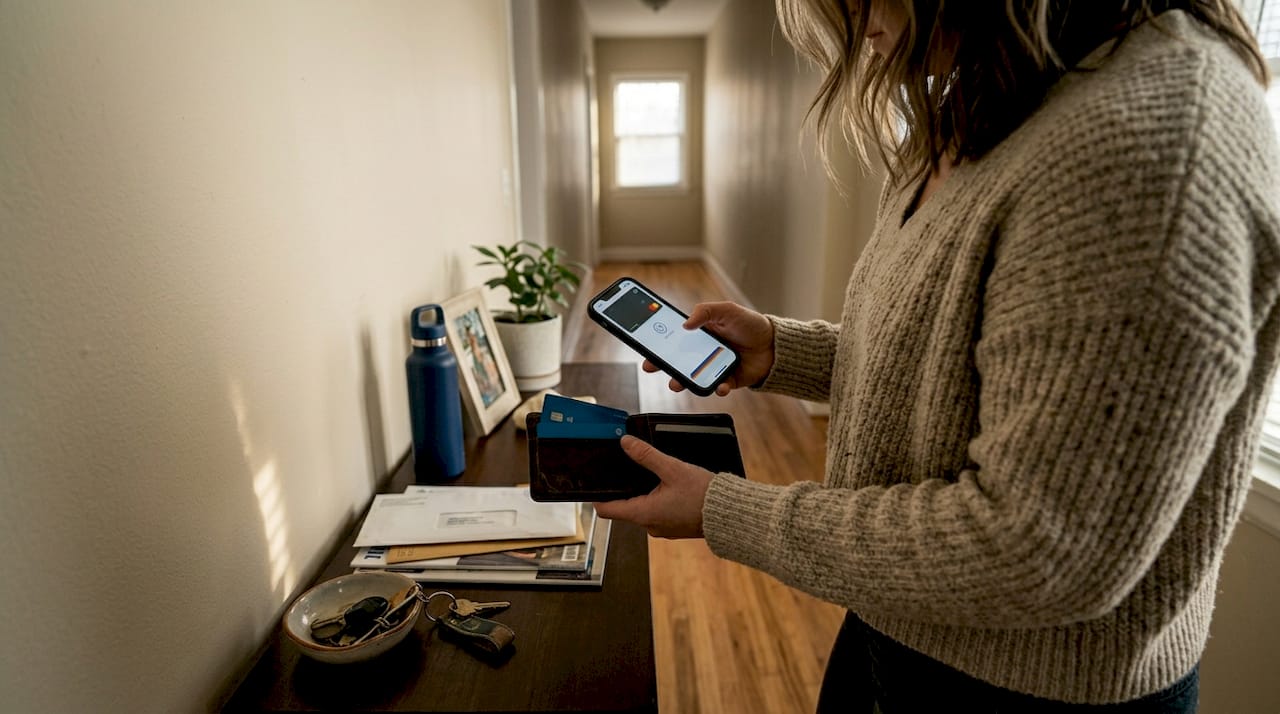
Test shielding monthly; 42% of retail wallets fail at a 10cm test distance. That’s not a fringe statistic. That’s nearly half of all wallets on the market underperforming on their core promise.
Here’s how to run your own test:
- Place your contactless debit or credit card inside the closed wallet.
- Open an NFC reader app on your smartphone.
- Hold the phone against the wallet at normal contact distance.
- If the app detects the card, your shield is failing.
- For a more accurate test, try at a contactless payment terminal. The card should not register a transaction while inside the wallet.
- If you have an RFID test card, use it the same way to avoid triggering real payment data.
| Testing method | Pros | Cons | Accuracy | |—|—|—| | NFC smartphone app | Free, fast, always available | Varies by phone model | Moderate | | Contactless payment terminal | Real-world simulation | Requires access to terminal | High | | RFID test card | Safe, no real card data at risk | Small upfront cost | High |
For more detail on testing RFID wallets at home, there are guides that walk through each method with specific app recommendations.
Pro Tip: If you carry your wallet every day, set a monthly phone reminder to run a quick NFC test. It takes less than two minutes and tells you exactly where your protection stands.
Troubleshooting and prolonging wallet lifespan
Even regular cleaning and testing sometimes reveal issues. Here’s how to tackle them and keep your wallet in top shape.
Common problems and what they mean:
- Loose inner lining: The shielding layer may be separating. This is a serious red flag.
- Snap or zipper failure: Structural damage can expose cards to scanning at the edges.
- False NFC readings: If your phone detects a card even through a new wallet, the shielding material may be defective.
- Cracked or peeling exterior: Cosmetic damage often signals deeper material stress.
Quick fixes vs. when to replace:
- Minor surface scuffs on leather? Condition and buff. Good as new.
- Loose lining that you can press back flat? Use fabric-safe adhesive carefully.
- Failed NFC test two months in a row? Replace the wallet. No patch fixes a degraded Faraday layer.
- Snaps or closures that won’t stay shut? Replace, because exposed edges are a security gap.
Habits that extend your wallet’s life:
- Never overstuff it. Excess pressure warps the shielding layer and stresses seams.
- Keep it away from direct sunlight and heat sources during storage.
- Rotate wallets if you own more than one, to reduce daily wear on any single piece.
- Store it in a dry place. Moisture degrades both leather and the adhesive holding the RFID lining.
- Follow the RFID wallet maintenance steps on a consistent schedule rather than reacting only when something looks wrong.
Periodic maintenance ensures RFID shields stay effective. Skipping functional checks, even when the wallet looks pristine, is how most people end up with a stylish accessory that no longer protects anything.
If you’re researching top RFID wallets as a replacement, look for ones with documented shielding specs and not just marketing claims.
Why most RFID wallet owners miss the real maintenance weak spots
With the essentials mastered, it’s time to challenge some common assumptions about RFID wallet upkeep. Most people think maintenance means keeping their wallet clean and conditioned. That’s necessary, but it’s only half the job.
The real weak spot isn’t visible. It’s functional. Over time, the shielding layer inside your wallet experiences stress from bending, pressure, and temperature changes. None of that shows up on the surface. Your wallet can look brand new and still have invisible gaps in its Faraday cage that a cheap scanner could exploit.
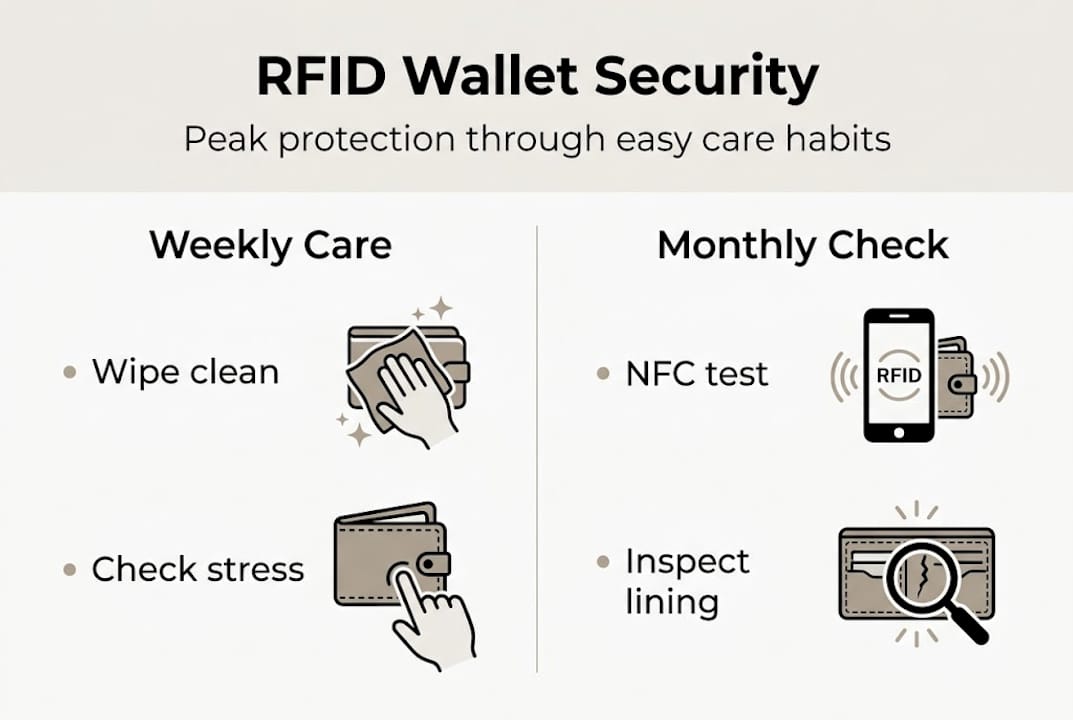
We’ve seen this pattern repeatedly: people invest in a quality wallet, care for the exterior diligently, and then never once verify that the shielding still works. They’re treating the wallet like a fashion item when it’s actually a security device that happens to look good.
The contrarian truth is that a slightly worn wallet that passes monthly NFC tests is safer than a pristine one that’s never been checked. Appearance is not a proxy for protection.
When choosing RFID wallets, prioritize designs that make testing easy and have documented shielding specifications. Then actually test them. Schedule a monthly reminder. Treat that check as seriously as you’d treat updating your phone’s security software. Your financial data deserves the same discipline.
Upgrade your RFID wallet style and security
After locking down your RFID wallet routine, discover models that raise both style and security.
If your current wallet is showing wear or failing tests, it’s the right moment to upgrade to something built for the long haul.

At InvisiTechWear, we’ve curated wallets that combine serious shielding with clean, modern design. The tri-fold carbon fiber wallet offers 9 card slots with an ID window and full RFID blocking in a slim, durable build. If you want something ultra-minimal, the metal slim RFID wallet pairs tactical carbon fiber with a money clip for front-pocket carry. And for versatility, the multi-functional minimalist wallet holds up to 12 cards in an ultra-thin bi-fold profile. Browse the full collection and find the one that fits your carry style.
Frequently asked questions
How often should you test your RFID wallet’s blocking effectiveness?
If you use your wallet daily, test it monthly using an NFC app or a contactless payment terminal. 42% of retail wallets fail at a 10cm test distance, so regular checks are not optional.
Does cleaning an RFID wallet damage the RFID shield?
No, routine cleaning does not harm the passive RFID blocking layer. The blocking is a passive Faraday cage effect built into the lining, and gentle cleaning with appropriate materials leaves it fully intact.
What are signs that an RFID wallet needs replacing?
If your wallet fails an NFC shielding test or the inner lining loosens or becomes visibly damaged, replace it. Periodic maintenance helps catch these issues early before they become a real security risk.
Can overstuffing an RFID wallet damage its effectiveness?
Yes, overstuffing places constant stress on the shielding layer and can create deformations or gaps that weaken the Faraday cage effect over time.
What’s the best way to store an RFID wallet when not in use?
Keep it in a dry, cool location away from strong magnets and heat sources, as both can degrade the shielding material and shorten the wallet’s functional lifespan.


