

TL;DR:
- Urban theft has surged, prompting fashion designers to embed security features into stylish accessories.
- Guardian Design creates discreet, aesthetic security solutions that blend protection seamlessly into everyday items.
- When shopping, prioritize verified features like RFID-blocking, lockable zippers, and hidden compartments for genuine security.
Street crime is no longer a distant concern for someone else to worry about. Urban theft has surged to alarming levels, with bag and phone snatches rising 153% year over year to 78,000 incidents in the UK alone. Yet the most exciting response to this threat isn’t coming from law enforcement. It’s coming from fashion designers. Today’s most stylish accessories quietly pack serious security features into their construction, so you can move through the city with confidence and look great doing it. This guide breaks down exactly how that works and what to look for.
Table of Contents
- Style and security: The new urban essentials
- Guardian design: Fusing protection with aesthetics
- Tech meets fashion: Smart accessories for safer cities
- What to look for: Features, pitfalls, and practical picks
- What most guides miss: Seamless security means empowerment, not anxiety
- Find your style-driven security essentials
- Frequently asked questions
Key Takeaways
| Point | Details |
|---|---|
| Security meets style | Modern accessories offer discreet security features without sacrificing aesthetics. |
| Smart solutions matter | Tech-enhanced products can elevate protection but require savvy, privacy-aware choices. |
| Choose seamless integration | Seek items where protective elements don’t announce themselves but blend into the design. |
| Empowerment, not anxiety | The right style-security blend adds confidence to your everyday urban life. |
Style and security: The new urban essentials
For years, “secure” accessories meant bulky money belts, padlocked luggage, and neon safety vests. Not exactly runway material. But the threat landscape has changed fast, and so has the design response.
Urban theft isn’t just about pickpockets anymore. Digital theft, RFID skimming (where criminals use a scanner to steal card data wirelessly from your wallet), and phone snatching have all become everyday risks for city dwellers. The UK saw 78,000 phone and bag snatch incidents in the year to March 2024, a 153% jump year over year. Across Europe, thefts rose 4.8% over the same period, pushing security firmly onto the fashion industry’s radar.
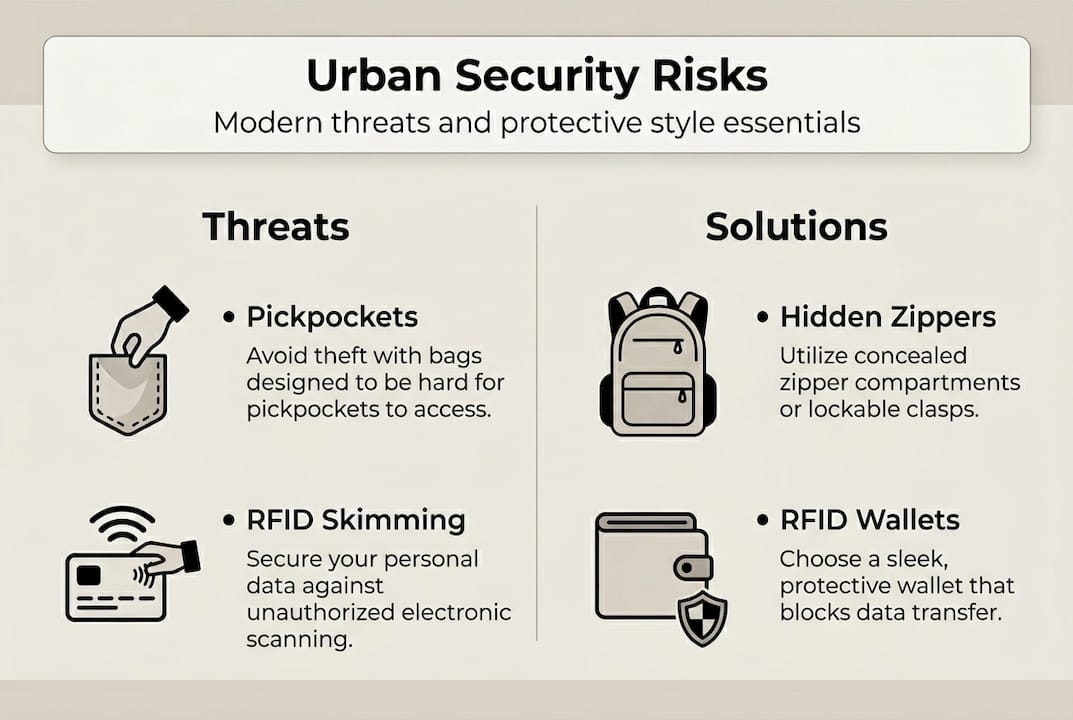
Here’s what makes this moment different. Younger urbanites, especially those aged 25 to 40, refuse to look paranoid. They won’t carry a bag that screams “I’m worried about crime.” That psychological barrier is real, and smart brands are designing around it.
The result is a wave of anti-theft fashion that looks indistinguishable from premium lifestyle accessories. Security is embedded, not advertised. You’d never know a bag had a cut-resistant lining just by looking at it. That’s the point.
Here’s what’s driving the shift:
- Rising digital threats like RFID skimming and contactless card fraud
- Higher smartphone values making phones a prime target for opportunistic thieves
- Urban density creating more situations where theft is easy and fast
- Consumer demand for products that solve real problems without sacrificing aesthetics
“The best security feature is the one nobody notices.” That’s the design philosophy reshaping urban accessories right now.
This isn’t a niche trend anymore. It’s becoming the baseline expectation for anyone who takes their everyday carry seriously.
Guardian design: Fusing protection with aesthetics
So what exactly does security-forward fashion look like in practice? The answer lies in a concept called Guardian Design, a 2026 macro-trend identified by WGSN (the world’s leading trend forecasting authority) that integrates anti-theft and privacy-protection features directly into clothing and accessories.
The philosophy is simple but powerful: protection should be invisible. When security features are obvious, they signal vulnerability. When they’re seamlessly built in, they just become part of a great product.
Let’s look at how that plays out across specific security features in accessories:
| Feature | How it works | Style impact |
|---|---|---|
| RFID-blocking lining | Metal-woven fabric blocks scanner signals | Zero visual change |
| Lockable zippers | Internal locking mechanism | Looks like standard hardware |
| Cut-resistant straps | Slash-proof materials woven into strap | Identical to standard straps |
| Hidden compartments | Pockets built into lining or base | Invisible from outside |
| Anti-scratch coatings | Surface treatments on bags and wallets | Enhances finish, adds durability |
What’s notable here is that none of these features compromise the look of the product. A wallet with RFID-blocking lining looks exactly like a wallet without it. A bag with cut-resistant straps looks like a premium bag. That’s innovative accessory design at its best.
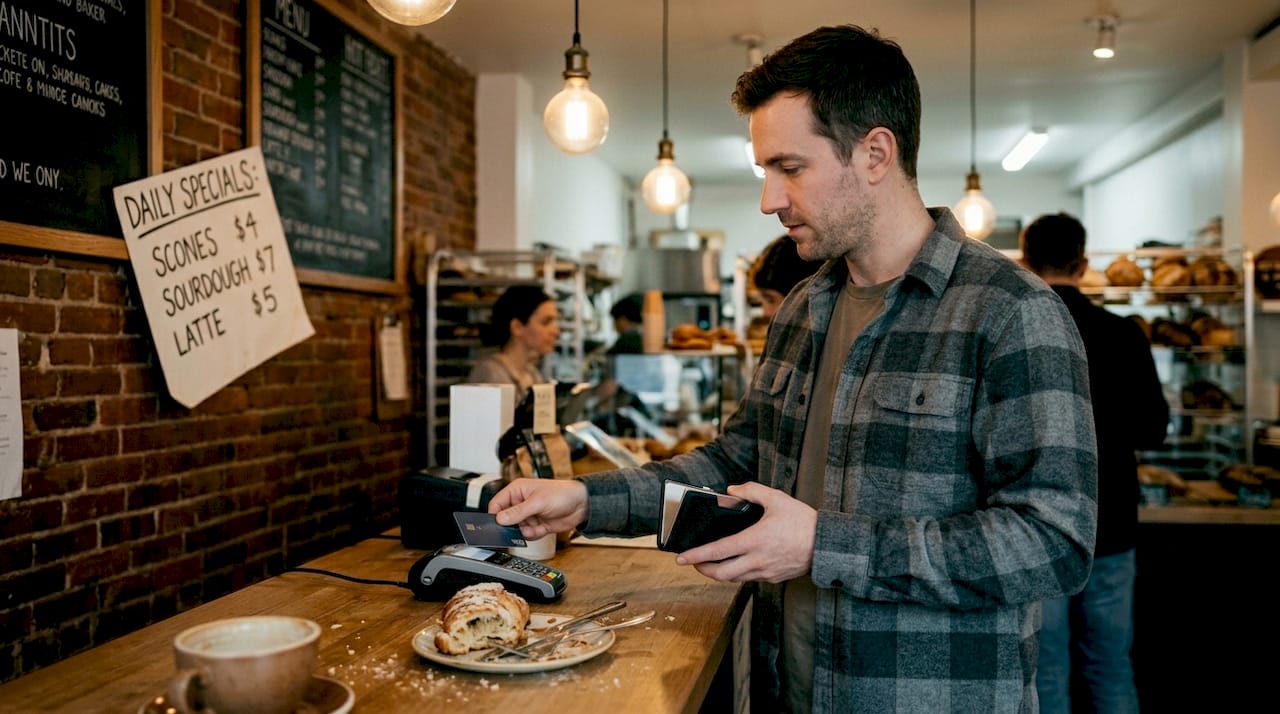
Brands that win in this space understand one key truth: signaling security creates anxiety. Embedding security creates confidence. The difference between a bag with a giant padlock on it and one with a discreet internal locking zipper isn’t just aesthetic. It’s psychological.
Pro Tip: When shopping for a secure bag or wallet, flip it inside out if you can, or check the product description for terms like “RFID-blocking lining,” “slash-resistant,” or “lockable zipper.” These are the quiet markers of genuine Guardian Design.
Tech meets fashion: Smart accessories for safer cities
Guardian Design covers the physical side of security. But a parallel revolution is happening in smart accessories, where technology adds a digital layer of protection to your everyday carry.
The most popular examples right now include phone slings, connected bags, and AI-enhanced wearables. Casetify’s phone slings and straps use metal chains and beaded designs to keep devices attached to your body, reducing snatch risk while looking intentionally stylish. These products target exactly the 25 to 40 urban demographic that wants function without sacrificing their aesthetic.
Here’s a quick breakdown of what smart accessories can actually do for you:
| Product type | Security benefit | Style factor |
|---|---|---|
| Phone slings with chains | Anti-loss, anti-snatch | High fashion appeal |
| RFID-blocking wallets | Blocks digital card theft | Minimal, clean design |
| Smart bags with alerts | Notifies if bag is left behind | Sleek, modern silhouettes |
| AI glasses | Situational awareness | Subtle, wearable tech |
But smart tech isn’t without trade-offs. Agentic AI wearables enhance urban safety but introduce real privacy risks through constant data collection. If a device is always on and always recording context, you need to ask who owns that data and how it’s stored.
There’s also the obsolescence problem. Tech moves fast. A connected bag that’s cutting-edge today may have unsupported firmware in three years. Physical security features like cut-resistant straps don’t expire.
- Choose tech accessories for stylish security that work even when the battery is dead
- Prioritize products where the physical design is strong, with tech as a bonus
- Check privacy policies for any wearable that connects to an app
- Look for technology in accessories that has a clear update and support timeline
Pro Tip: The best smart accessories function perfectly as physical objects first. The tech should enhance, not replace, solid construction. A phone sling with a weak clip is still a liability, no matter how stylish the chain looks.
What to look for: Features, pitfalls, and practical picks
Now that you know what’s out there, here’s how to actually evaluate a product before you buy it. Not every accessory that claims to be “secure” delivers on that promise.
Your buyer’s checklist:
- RFID-blocking protection — Check that it’s certified, not just claimed. Look for mention of specific blocking frequencies (13.56 MHz for most modern cards).
- Cut-resistant materials — Straps and panels should reference materials like Dyneema or stainless steel mesh.
- Subtle, secure closures — Magnetic snaps, internal zippers, and hidden pockets beat external buckles that can be popped quickly.
- Weight and wearability — Security features shouldn’t add significant bulk. If a bag feels heavy empty, reconsider.
- Brand transparency — Brands that explain their security features clearly are more trustworthy than those using vague marketing language.
The best RFID-blocking wallet picks combine slim profiles with verified blocking technology, proving that security and minimalism aren’t opposites. And once you understand RFID-blocking explained, you’ll spot the difference between genuine protection and marketing fluff fast.
Now for the pitfalls. Style enables discreet security that avoids fearmongering while building what designers call “shared vigilance” among Gen Z and millennials. But that same style focus can backfire. Dangling phone slings actually expose devices more than pockets do, creating a new vulnerability in the name of trend.
Watch out for these common mistakes:
- Buying based on looks alone without checking actual security specs
- Assuming “smart” means “secure” — connectivity adds complexity, not always safety
- Ignoring strap quality on bags, which is where most theft attempts happen
- Overlooking interior organization, which affects how quickly you can access and secure items
Pro Tip: Test any new bag or wallet in a low-stakes environment first. Walk around your neighborhood, practice accessing your phone and cards, and check whether the closures feel intuitive under pressure.
What most guides miss: Seamless security means empowerment, not anxiety
Most articles on secure accessories frame the conversation around fear. Theft is rising, so protect yourself. That framing misses something important.
The real power of Guardian Design isn’t that it protects you. It’s that it stops you from thinking about protection at all. When security is woven into a product you genuinely love, it disappears from your mental load. You’re not constantly checking your bag or guarding your wallet. You just move.
Overt security theater, meaning products that look defensive, creates a different problem. It keeps you in an anxious headspace and signals to others that you’re worried. That’s not confidence. That’s armor.
The next wave of innovation in accessories is heading toward something more interesting: security so well integrated with personal style that it becomes part of your identity, not a compromise on it. When your wallet, your bag, and your wearables all reflect who you are while quietly doing their job, that’s genuine empowerment. Not anxiety management.
We believe the best accessory you’ll ever own is one you never have to think about twice.
Find your style-driven security essentials
Knowing what to look for is only half the equation. Finding products that actually deliver on both style and security is where most people get stuck.
At InvisiTechWear, we’ve built our entire catalog around exactly this intersection. Our RFID-blocking wallets and bags are designed for urban professionals who want verified protection in a minimal, fashion-forward package. No bulk. No compromise. Our broader range of tech accessories covers everything from smart organizers to connected carry solutions, all curated for the 25 to 40 urbanite who refuses to choose between looking good and staying secure. Browse the collections and find your next everyday essential.
Frequently asked questions
What is ‘Guardian Design’ in fashion?
Guardian Design is a 2026 macro-trend identified by WGSN that integrates anti-theft and privacy-protection features into clothing and accessories without compromising aesthetics. It prioritizes invisible security over obvious protective elements.
Why do urban accessories need advanced security?
Urban theft rates are rising sharply across multiple categories, with 78,000 phone and bag snatch incidents recorded in the UK in a single year. Everyday accessories now need embedded features that protect against both physical theft and digital threats like RFID skimming.
How can I check if an accessory balances style and security?
Look for security features that are discreetly integrated, such as RFID-blocking lining or lockable compartments, without interrupting the item’s overall design. Discreet security integration avoids fearmongering while still addressing real urban risks.
Are smart tech accessories safe for privacy?
Some wearables enhance safety but may raise privacy risks due to constant data collection. Agentic AI wearables bring real benefits but require you to check privacy settings and understand how your data is stored and used before committing to a product.


