

Urban life demands constant vigilance over your belongings, yet most people assume security means sacrificing style. Anti-theft fashion challenges this outdated belief by seamlessly integrating advanced protection technologies into everyday accessories and apparel. From RFID-blocking wallets that shield your credit cards to slash-resistant bags that deter thieves, these innovations prove you can look sharp while staying secure. This guide explores the materials, technologies, and smart features transforming how young professionals protect their valuables in crowded cities, helping you make informed choices that match your lifestyle and aesthetic preferences.
Table of Contents
- Core Security Features Of Anti-Theft Fashion
- From Physical Protection To Digital Security: Bridging Technologies
- Smart Features And Design For Everyday Urban Security And Style
- Selecting The Right Anti-Theft Fashion For Your Lifestyle
- Explore Secure And Stylish Anti-Theft Gear At Invisitech Wear
- Frequently Asked Questions
Key takeaways
| Point | Details |
|---|---|
| Security meets style | Anti-theft fashion integrates RFID-blocking, slash-resistant materials, and smart tracking without compromising modern aesthetics. |
| Dual protection approach | Physical barriers like cut-resistant fabrics combine with digital shields such as Faraday cage technology for comprehensive defense. |
| Smart features enhance recovery | GPS tracking and biometric locks significantly improve your chances of recovering stolen items and preventing unauthorized access. |
| Personalized selection matters | Choose features based on your specific urban threats, whether electronic pickpocketing, physical theft, or digital tracking. |
| Mobility and convenience | Adjustable designs and lightweight materials ensure protection doesn’t hinder your daily movement through urban environments. |
Core security features of anti-theft fashion
Anti-theft fashion starts with understanding the primary threats urban professionals face daily. Pickpockets target accessible pockets and easy-to-open bags in crowded transit systems. Slash-and-grab thieves use blades to cut through bag straps or fabric in seconds. Electronic criminals scan RFID chips in credit cards and passports from several feet away. Modern anti-theft apparel essentials address each vulnerability with specific technologies.
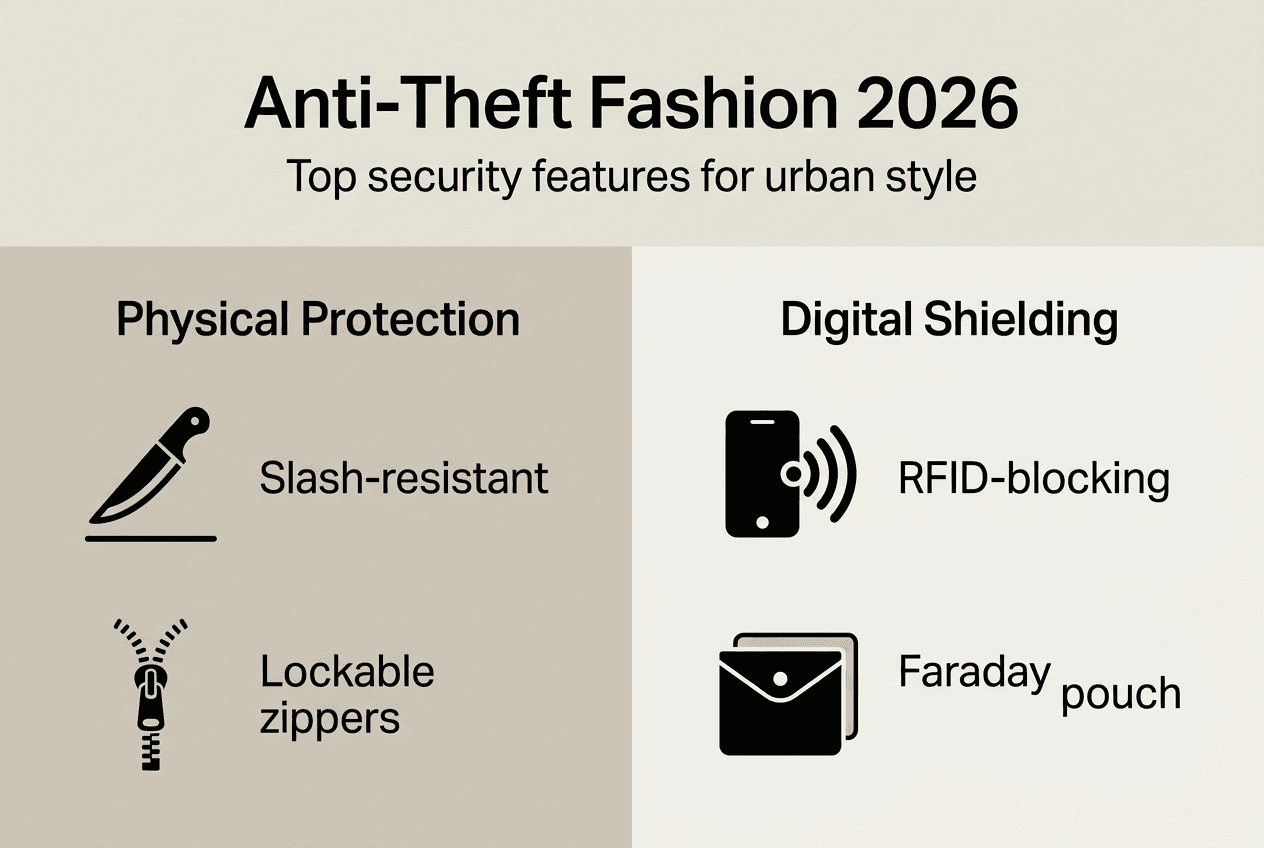
Hidden zipper technology represents the first line of defense against pickpockets. These closures sit beneath flaps or within seams, making them nearly impossible to locate and open quickly. Unlike traditional exposed zippers that advertise access points, hidden designs force thieves to spend precious seconds searching, time they rarely have in public spaces. This simple feature dramatically reduces opportunistic theft attempts.
Cut-resistant materials provide physical barriers against blade attacks. Steel mesh woven into fabric or specialized synthetic fibers create layers that resist cutting without adding excessive weight. When a thief attempts to slash through a bag strap or panel, these materials catch the blade and prevent clean cuts. The technology mirrors body armor principles but adapts them for everyday fashion items.
Lockable zippers add another security layer by preventing unauthorized opening even if someone locates the zipper pull. Small clips or combination locks thread through zipper pulls, creating a physical barrier. While determined thieves might still cut fabric, this feature stops quick-access attempts and signals that your bag contains protected valuables. Combined with hidden placement, lockable zippers create formidable obstacles.
RFID-blocking materials prevent electronic pickpocketing of credit cards, passports, and transit cards. Thin metallic fabrics or specialized polymers block radio frequency signals that criminals use to scan chip-enabled cards remotely. These materials integrate into wallet linings, bag compartments, and even clothing pockets. The slash-resistant materials and RFID-blocking technology work together to address both physical and digital theft vectors simultaneously.
Pro Tip: Match your anti-theft features to your top security risks for best effectiveness. Frequent subway commuters benefit most from slash-resistant straps and hidden zippers, while international travelers should prioritize RFID-blocking compartments for passport protection.
From physical protection to digital security: bridging technologies
Physical barriers alone no longer suffice in an era where digital theft poses equal or greater risks. Your smartphone contains banking apps, email access, and location data that criminals exploit. Credit cards broadcast RFID signals that enable contactless payments but also create scanning vulnerabilities. Anti-theft fashion now addresses these digital threats alongside traditional physical protection.
Faraday cage apparel blocks electromagnetic signals across multiple frequencies. These specialized fabrics contain conductive materials that create an electromagnetic shield, preventing Wi-Fi, GPS, Bluetooth, and cellular signals from entering or leaving enclosed compartments. When you place your phone in a Faraday-lined pocket or bag, it becomes electronically invisible. Tracking attempts fail because no signals can reach the device.

Physical isolation surpasses software solutions like airplane mode for preventing digital tracking. Software modes rely on device compliance and can be overridden by malware or sophisticated tracking tools. Physical signal barriers provide absolute protection regardless of device settings or software vulnerabilities. This makes Faraday technology essential for professionals handling sensitive information or concerned about location privacy.
RFID-blocking fabric in bags and wallets prevents electronic pickpocketing with remarkable effectiveness. Studies show RFID-blocking wallets and bags reduce unauthorized access risk by up to 99%. Criminals using portable RFID readers can no longer extract card numbers, expiration dates, or security codes while standing near you in elevators or on sidewalks. The technology creates an invisible shield around your cards.
Understanding how physical and digital protections complement each other helps you build comprehensive security. The following comparison clarifies their distinct roles:
| Protection Type | Primary Threats | Key Technologies | Best Use Cases | | — | — | — | | Physical Anti-Theft | Pickpockets, slash thieves, grab-and-run | Cut-resistant materials, hidden zippers, lockable closures | Crowded transit, tourist areas, street festivals | | Digital Anti-Theft | RFID skimming, device tracking, data extraction | Faraday cages, RFID-blocking fabrics, signal isolation | Airports, hotels, international travel, sensitive meetings |
Both protection types work best when combined. A slash-resistant bag with RFID-blocking compartments protects your physical belongings while shielding your digital identity. This dual approach addresses the full spectrum of urban security threats young professionals encounter daily.
Pro Tip: Combine physical protection with digital shielding for maximum security in urban settings. Choose bags with both cut-resistant construction and Faraday-lined pockets to address all threat vectors simultaneously.
Smart features and design for everyday urban security and style
Smart technologies elevate anti-theft fashion beyond passive barriers to active security systems. These features don’t just prevent theft; they help recover stolen items and provide real-time awareness of your belongings. Modern designs integrate these capabilities without sacrificing the sleek aesthetics young professionals demand.
Smart bags with GPS tracking offer real-time location monitoring through smartphone apps. If someone steals your bag, you can track its movement and share coordinates with authorities. Research indicates GPS tracking improves recovery of lost or stolen items by up to 80%. This dramatic improvement over traditional recovery rates makes GPS-enabled bags worthwhile investments for anyone carrying valuable electronics or documents.
Biometric fingerprint locks prevent unauthorized bag access through biological authentication. Only registered fingerprints can unlock these closures, making them nearly impossible to bypass without detection. Unlike combination locks that can be observed or guessed, biometric security adds a difficult-to-bypass layer of protection. The technology once reserved for high-security facilities now fits into compact bag locks.
Slash-resistant fabrics and reinforced straps deter physical theft attempts by up to 70%. These materials don’t just slow thieves; they often force them to abandon attempts entirely. Reinforced construction includes steel cables woven through straps, double-stitched stress points, and layered fabric panels. The visible quality of these features also serves as a psychological deterrent, signaling that your bag won’t provide an easy target.
Adjustable crossbody straps improve both security and comfort in crowded urban settings. Wearing bags across your body rather than on one shoulder makes them harder to snatch or cut away. Adjustability lets you position bags in front of your body in high-risk areas or shift them to your back in safer environments. This flexibility matters because security and convenience remain priorities in anti-theft design.
When selecting and wearing anti-theft bags for optimal protection and style, follow these proven strategies:
- Position bags in front of your body in crowded spaces like subway platforms and busy sidewalks where pickpockets operate most effectively.
- Adjust strap length so bags sit at hip level, making them visible in your peripheral vision without requiring constant attention.
- Use lockable zippers for main compartments containing valuables, leaving easily accessible pockets for items you need frequently.
- Enable GPS tracking features before entering high-theft areas, ensuring real-time monitoring if separation occurs.
- Choose neutral colors and minimal branding that don’t advertise expensive contents or attract unnecessary attention from potential thieves.
Comparing smart features across popular anti-theft bag models helps identify which technologies deliver the best value:
| Feature | Entry Level Models | Mid-Range Models | Premium Models | Security Benefit |
|---|---|---|---|---|
| RFID Blocking | Limited pockets | Multiple compartments | Full-bag coverage | Prevents card skimming |
| GPS Tracking | Not included | Basic location | Real-time + geofencing | Enables recovery |
| Biometric Lock | Not included | Not included | Fingerprint access | Blocks unauthorized opening |
| Cut-Resistant Material | Partial coverage | Full fabric | Steel-reinforced straps | Deters slash theft |
Pro Tip: Prioritize features like GPS and biometrics if you frequently travel or carry valuables. Daily commuters benefit most from RFID-blocking and slash-resistant construction, while occasional users can start with basic hidden zipper designs.
Selecting the right anti-theft fashion for your lifestyle
Your security needs depend on your daily routines, travel patterns, and the specific threats in your environment. A financial professional carrying client documents faces different risks than a tech worker with expensive electronics. Understanding these distinctions helps you invest in features that actually protect your vulnerabilities rather than paying for unnecessary capabilities.
Assess your primary risk categories to guide feature selection. Electronic theft through RFID skimming poses the greatest threat in airports, hotels, and tourist districts where criminals target travelers. Physical theft including pickpocketing and bag snatching peaks in crowded transit systems, street festivals, and busy shopping districts. Digital tracking threats matter most for professionals handling confidential information or anyone concerned about location privacy. Each risk category demands specific countermeasures.
Prioritize RFID-blocking features if you frequently use credit cards and passports in crowded city areas. International travelers benefit enormously from wallets and bags with comprehensive RFID protection. The technology costs little to implement but provides substantial peace of mind. Consider how often you use contactless payments or carry multiple cards simultaneously, as these behaviors increase your exposure to electronic pickpocketing.
Choose slash-resistant bags when facing high theft risk or traveling frequently. Features depend on individual threats like travel frequency and electronic pickpocketing risk. Commuters using public transit daily encounter more physical theft attempts than those driving personal vehicles. Business travelers visiting unfamiliar cities need robust protection against opportunistic thieves who target distracted visitors.
Adjustable straps enhance carry comfort and security in crowded settings by letting you reposition bags quickly. Crossbody configurations keep bags close to your body and within your field of vision. The ability to tighten straps in high-risk areas or loosen them in safe spaces adds practical flexibility. This seemingly minor feature significantly impacts daily usability and security effectiveness.
Consider smart features like GPS tracking if you carry high-value items regularly. Laptops, cameras, and tablets represent substantial investments worth protecting with active monitoring. GPS-enabled bags cost more initially but provide ongoing security benefits that passive features cannot match. Calculate the replacement cost of your typical bag contents to determine whether tracking capabilities justify their expense.
Balance style preferences with security features for daily wear. The most secure bag provides no benefit if you leave it at home because it clashes with your wardrobe. Modern anti-theft fashion offers diverse styles from minimalist designs to bold statements. Identify aesthetic preferences first, then select security features within that style category.
Ask yourself these questions when selecting anti-theft fashion:
- Which environments do I spend most time in: crowded transit, busy streets, airports, or quieter suburban areas?
- What valuables do I carry daily: electronics, cash, credit cards, passports, or confidential documents?
- How often do I travel internationally or visit unfamiliar cities where theft risks increase?
- Do I prefer crossbody bags, backpacks, or traditional shoulder bags for comfort and accessibility?
- What’s my budget range for security features, and which threats concern me most?
- Does my professional image require subtle security features or can I embrace visible protection elements?
Explore options that align with your answers. A minimalist who values discretion might choose RFID protection basics integrated into slim wallets. Someone carrying expensive camera equipment benefits from comprehensive slash-resistant backpacks with GPS tracking. Your lifestyle dictates which features deliver genuine value versus unnecessary complexity.
Explore secure and stylish anti-theft gear at Invisitech Wear
Protecting your belongings shouldn’t mean compromising your personal style or daily convenience. Invisitech Wear specializes in fashion accessories that seamlessly blend cutting-edge security technologies with modern aesthetics designed for urban professionals.
Our RFID-blocking wallets and bags collection features minimalist designs that shield your credit cards and passports from electronic pickpocketing while maintaining the slim profiles you need for everyday carry. Each piece integrates Faraday protection and durable materials that stand up to daily urban use. The RFID blocking men’s slim wallet exemplifies this approach, offering comprehensive card protection in a sleek package that fits comfortably in any pocket.
For comprehensive device protection, explore our RFID blocking Faraday pouch that shields phones, key fobs, and cards from tracking and unauthorized scanning. Visit our collections to find items matching your security needs and style preferences, ensuring you stay protected without sacrificing the aesthetic that defines your professional image.
Frequently asked questions
What materials are typically used in anti-theft fashion?
Anti-theft fashion incorporates cut-resistant steel mesh, specialized synthetic fibers, RFID-blocking metallic fabrics, and Faraday cage linings. These materials collectively protect against physical cuts, electronic pickpocketing, and signal tracking. Steel mesh and synthetic fibers resist blade attacks, while metallic fabrics block radio frequencies that enable card skimming and device tracking.
How effective is RFID-blocking technology in preventing card theft?
RFID-blocking technology reduces unauthorized access risk by up to 99% when properly implemented. The metallic fabrics create electromagnetic shields that prevent criminals from scanning chip-enabled cards remotely. This protection works passively without requiring batteries or activation, making it reliable for everyday use in crowded urban environments.
Do anti-theft bags significantly increase weight or bulk?
Modern anti-theft bags use lightweight materials that add minimal weight compared to traditional bags. Cut-resistant fabrics and RFID-blocking linings are thin and flexible, integrating seamlessly into bag construction. Most users notice no practical difference in weight or bulk, especially in mid-range and premium models designed for daily urban use.
Can GPS tracking in smart bags work internationally?
GPS tracking functions globally wherever cellular networks or Wi-Fi connections exist. Most smart bags use companion smartphone apps that rely on your phone’s data connection to display location information. International travelers should verify their phone plan includes data roaming or purchase local SIM cards to maintain tracking capabilities abroad.
Are biometric locks on bags reliable for daily use?
Biometric fingerprint locks offer reliable security with quick access for registered users. Modern sensors work in various weather conditions and recognize fingerprints even with minor dirt or moisture. Battery life typically lasts several months with daily use, and most systems include backup access methods if batteries fail unexpectedly.
How do I maintain anti-theft features in my bags and wallets?
Maintain anti-theft features by cleaning bags according to manufacturer instructions, avoiding harsh chemicals that might damage RFID-blocking materials. Check lockable zippers periodically for smooth operation and lubricate if needed. For GPS-enabled bags, keep companion apps updated and charge batteries regularly to ensure tracking remains functional when needed.


