

TL;DR:
- Tech-enhanced lifestyle products seamlessly blend design and security for urban living.
- Privacy and security are critical, requiring devices with offline functions and regular updates.
- Style, security, and privacy should guide the selection of everyday urban tech products.
Most people treat style and security as separate decisions. You pick an outfit, then worry about your front door lock. You choose a wallet for how it looks, not what it blocks. But that mental split is becoming obsolete fast. Today’s most compelling lifestyle products for urban professionals aged 25 to 40 blur those lines completely, weaving AI, IoT, and wearable tech into everyday objects that look sharp and work harder than anything that came before. This guide breaks down exactly how fashion tech in urban lifestyles is reshaping what you carry, wear, and secure your home with.
Table of Contents
- The emergence of tech-enhanced lifestyle products
- Smart home security: style meets urban safety
- Wearables: balancing style, health, and privacy
- Security and privacy: navigating the convenience trade-off
- Our perspective: The real secret to stylish, secure living
- Explore stylish techwear and smart lifestyle products
- Frequently asked questions
Key Takeaways
| Point | Details |
|---|---|
| Seamless tech integration | Smart urban lifestyle products blend AI, IoT, and style to deliver functional, secure living. |
| Style-driven security | Biometric and predictive smart home tech keep urban spaces safe without sacrificing aesthetics. |
| Wearable choices matter | Select wearables by balancing health features, battery, privacy, and offline options. |
| Privacy trade-offs | Urban tech convenience comes with surveillance risks—prioritize privacy controls and firmware updates. |
| Conscious shopping | Pick lifestyle products that balance style, proven security, and privacy to match your city needs. |
The emergence of tech-enhanced lifestyle products
Tech-enhanced lifestyle products are not gadgets bolted onto fashion. They are objects where the technology is the design. Think RFID-blocking wallets that look like premium leather cardholders, smart locks with brushed metal finishes that blend into a modern apartment door, or fitness rings so minimal you forget you are wearing them. The defining feature is seamless integration: the tech serves the form, not the other way around.
For urban consumers between 25 and 40, this matters because city living creates a specific set of demands. You need products that move fast, look polished in a meeting or at a rooftop bar, and quietly handle security threats you may not even see. Contactless payment fraud, digital pickpocketing, and smart home vulnerabilities are real concerns in dense urban environments. Style alone does not cut it anymore.
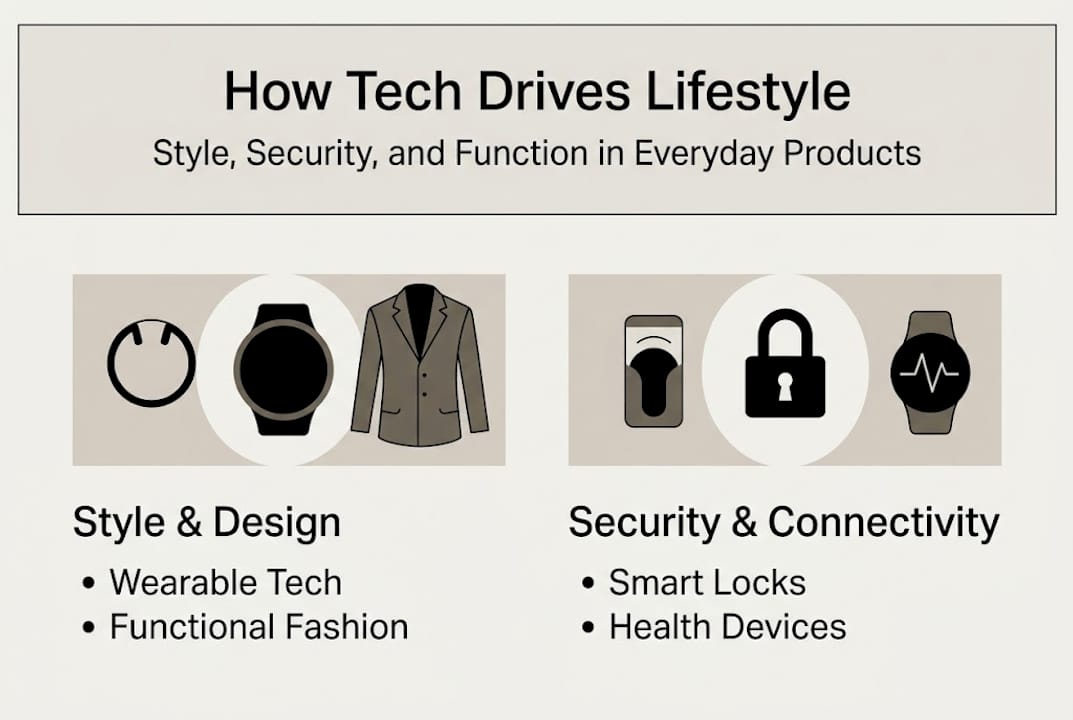
2026 consumer tech trends show that AI, IoT, and wearables are now the primary drivers of lifestyle product innovation, with consumers prioritizing style, functionality, and security in equal measure. The wearables market alone is on track to hit 280 million units by 2028, up from 150 million in 2019. That is not a niche trend. That is a category shift.
Here is what the new generation of tech-enhanced lifestyle products actually looks like:
- Smart locks with biometric fingerprint readers, NFC, and AI-powered threat detection
- Health-tracking wearables like smart rings and AI glasses that monitor HRV, sleep, and glucose
- RFID-blocking wallets and bags that protect contactless cards without adding bulk
- Bluetooth audio accessories with noise cancellation and touch controls built into minimal designs
- Home security systems that use facial recognition and integrate with smart home ecosystems
“The best tech products for urban living are the ones you stop noticing as tech. They just work, look great, and protect you without demanding your attention.” — Product design perspective on urban techwear
This is the foundation. Now let’s look at how this plays out in specific product categories.
Smart home security: style meets urban safety
Smart home security used to mean chunky keypads and blinking LED panels. In 2026, it means a sleek biometric lock that recognizes your fingerprint in 0.3 seconds, auto-locks when your door closes via a gyroscope sensor, and connects to your entire smart home ecosystem without any visible hardware clutter.
Integrated security with AI threat detection and biometric authentication is now the standard for urban home automation, combining facial recognition, predictive alerts, and automation ecosystems into a single, elegant experience. The shift from reactive to predictive security is the biggest change. Older systems waited for a breach. New AI-driven systems flag anomalies before they become problems.
Here is a side-by-side look at key smart lock technologies:
| Feature | UWB | NFC | Biometric | Matter/Thread |
|---|---|---|---|---|
| Unlock method | Hands-free proximity | Tap to unlock | Fingerprint/face | Ecosystem sync |
| Range | Up to 10 meters | Under 5 cm | Contact only | Network-based |
| Security level | Very high | High | Very high | Protocol-level |
| Best for | Keyless entry | Quick tap access | Primary auth | Smart home integration |
The Aqara U400 smart lock is a strong example of this convergence. It uses UWB for precise hands-free unlocking, supports Matter over Thread for cross-ecosystem compatibility, and includes NFC, Bluetooth, and fingerprint authentication in a single, minimal unit. It even auto-locks when the door closes, using a built-in gyro sensor.
Pro Tip: When shopping for a smart lock, prioritize models with predictive AI alerts and compatibility across multiple smart home platforms like Apple Home, Google Home, and Amazon Alexa. Single-ecosystem locks become a liability if you switch platforms.
For blending style with function, the best urban security setups share one quality: you barely notice them. Biometric safes with matte finishes, cameras disguised as architectural elements, and locks that match door hardware. Security that looks like design is the goal. That is also what separates urban tech style from generic gadgetry.
Wearables: balancing style, health, and privacy
Wearables have moved well past step counting. The current generation tracks heart rate variability, sleep stages, blood oxygen, and even early illness signals. The challenge is finding one that fits your life without becoming a surveillance device you wear voluntarily.
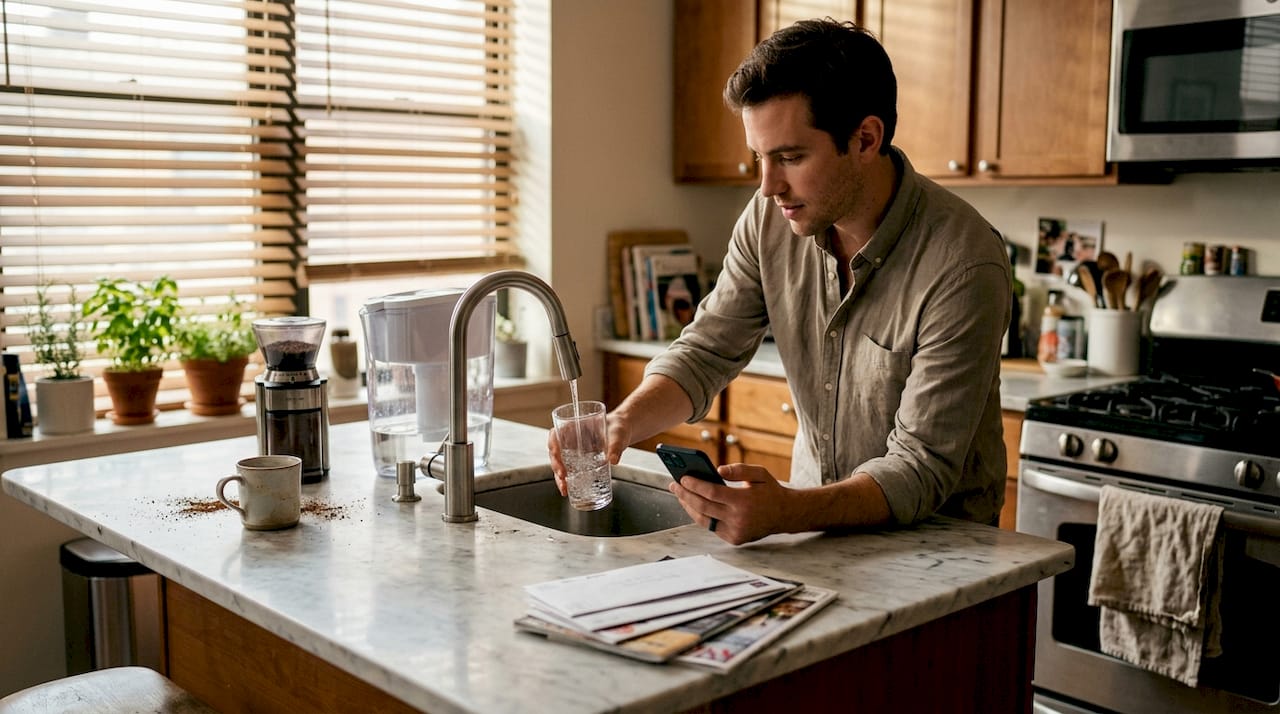
The wearables market is projected to grow to 280 million units by 2028, fueled by smart glasses like Ray-Ban Meta and health monitors tracking HRV, sleep quality, and glucose levels. The category is expanding fast, and so is the range of options at every price point.
Here is how three leading wearables compare:
| Device | Key features | Battery life | Cost (3-year) | Privacy |
|---|---|---|---|---|
| Oura Ring 4 | Clinically validated sleep, HRV, readiness score | 7 days | High | Cloud-dependent |
| RingConn Gen 2 Air | Sleep, HRV, SpO2, lightweight | 10 days | ~35% of Oura | Moderate |
| Ray-Ban Meta | AI assistant, camera, audio, style | 4 hours | Mid-range | Lower (always-on camera) |
The Oura Ring 4 achieves a clinically validated sleep accuracy score of 8.9 out of 10, while the RingConn Gen 2 Air delivers roughly 80% of that functionality at about 35% of the three-year cost. That is a real trade-off worth understanding before you buy.
How to choose a wearable that actually fits your life:
- Define your primary use case first: health tracking, audio, or social connectivity
- Check offline capability before buying, since cloud-dependent devices create privacy exposure
- Compare battery life against your travel and charging habits
- Review the privacy policy for data sharing and third-party access
- Consider sustainability by looking at refurbished options, which many millennials now prefer
“The most underrated feature in any wearable is the ability to function without a cloud connection. Offline-capable devices give you the data without giving away your patterns.” — Privacy-focused modern wearables and fashion perspective
For styling wearable tech, the ring format wins in urban settings. It reads as jewelry, not gadgetry. That subtlety matters when your wearable needs to work in a boardroom and a gym on the same day. Tech-infused fashion is at its best when the technology disappears into the aesthetic.
Security and privacy: navigating the convenience trade-off
Every connected device you add to your life is also a potential entry point for someone else. That is not a reason to avoid tech-enhanced products, but it is a reason to shop with your eyes open.
AI-enhanced cybersecurity threats are rising alongside demand for secure payments and identity protection, especially as geopolitical instability increases digital risk for everyday consumers. The threats are not hypothetical.
Common risks in tech-integrated urban products include:
- Relay attacks on smart locks, where criminals amplify your key fob signal to unlock your door remotely
- Data breaches from wearable health apps storing sensitive biometric data on vulnerable servers
- Surveillance overload, with cities like Chicago operating over 45,000 public cameras creating passive tracking
- Firmware vulnerabilities in smart home devices that go unpatched for months
- RFID skimming targeting contactless payment cards in crowded transit environments
The UWB technology in smart locks prevents relay attacks using time-of-flight measurement, which verifies that your phone is physically close rather than just in signal range. IP65 weatherproofing and auto-lock via gyro sensor add further layers of passive protection. These are not marketing features. They solve real attack vectors.
“The most privacy-conscious consumers in 2026 are not avoiding tech. They are choosing devices that work offline, update automatically, and do not sell their behavioral data to third parties.”
Pro Tip: Before buying any connected device, check two things: how often the manufacturer releases firmware updates, and whether the device has meaningful offline functionality. Devices that only work when connected to a cloud server are the highest-risk category.
It is also worth noting the Gen Z retro tech backlash, where younger consumers are actively rejecting surveillance-heavy tech in favor of analog and nostalgia-driven designs. For urban millennials, the sweet spot is different: you want the functionality, but on your own terms. Check out top tech accessories comparisons to see how leading products stack up on privacy and performance.
Our perspective: The real secret to stylish, secure living
Here is what most tech product reviews miss: the best urban lifestyle products are not the ones with the longest feature list. They are the ones that make you forget you are using technology at all.
The convenience-versus-surveillance trade-off is real, and most consumers underestimate it. Every smart device you add narrows the gap between helpful and exposed. The brands that get this right build privacy controls into the product itself, not buried in a settings menu.
Our take: stop chasing specs and start asking whether a product works well when the internet goes down, whether it updates itself without your intervention, and whether it looks good enough that you will actually use it every day. Those three filters eliminate most of the noise.
“Great urban living is about invisible security, not just smart tech badges.”
True style in 2026 is subtle, functional, and never trades your privacy for a feature you will use twice. Shop for devices that align with your values, not just your wishlist. Explore next-gen fashion insights to see where the category is heading and what products are worth your attention.
Explore stylish techwear and smart lifestyle products
If this guide resonated, the next step is finding products that actually deliver on the promise of style, security, and function together. InvisiTechWear curates exactly that kind of collection for urban professionals who refuse to compromise on either aesthetics or performance.
From wireless sports headphones with noise cancellation built for city commutes, to the Lenovo XT62 earphones combining Bluetooth 5.3 with touch controls and HIFI audio, the range is built around real urban use cases. Browse the full techwear lifestyle collection to find accessories and apparel that blend seamlessly into your daily routine without sacrificing an ounce of style.
Frequently asked questions
What technology trends define stylish lifestyle products in 2026?
AI, IoT, and wearables emphasizing seamless integration, security, and smart design are the leading trends shaping urban lifestyle products this year. The focus has shifted from standalone gadgets to fully integrated systems that serve both form and function.
How do smart locks ensure security and ease of use for urban homes?
Smart locks use UWB, biometrics, and Matter/Thread compatibility to deliver hands-free unlocking and seamless integration across smart home platforms. These technologies work together to prevent relay attacks and support multiple authentication methods simultaneously.
What should I look for when choosing a wearable for health and privacy?
Compare battery life, health monitoring accuracy, and offline capability before committing. The Oura Ring 4 versus RingConn Gen 2 Air comparison shows that cost and features do not always align the way you expect.
Are there privacy risks with lifestyle technology in urban living?
Yes. Surveillance, data breaches, and tech overload are real concerns, especially in dense urban environments. Choosing offline-capable devices and checking firmware update frequency are the most effective ways to reduce your exposure.


