

TL;DR:
- Style-driven tech integrates security features into fashionable accessories without visible bulk.
- Guardian Design combines anti-theft and privacy elements with sleek, playful aesthetics for urban users.
- Demand is driven by city theft risks, digital data concerns, and a desire for multi-purpose, stylish protection.
Most people assume that serious security features belong on gear that looks serious too: bulky, utilitarian, and decidedly unstylish. That assumption is getting left behind fast. A new design movement is reshaping everyday accessories, embedding RFID-blocking layers, cut-resistant fabrics, and signal-blocking textiles directly into bags, wallets, and jackets that look like they belong on a city street, not a security catalog. This guide breaks down what style-driven tech actually means, why it matters for urban professionals in 2026, and how you can use it to protect yourself without sacrificing the aesthetic you’ve worked hard to build.
Table of Contents
- Defining style-driven tech: Where design meets security
- The Guardian Design trend: Anti-theft, privacy, and playful elegance
- Why urban lifestyles drive demand for stylish security
- Balancing subtlety with strong protection: Real-world edge cases
- Our perspective: Why ‘style-first’ tech matters in 2026
- Next steps: Elevate your style and security
- Frequently asked questions
Key Takeaways
| Point | Details |
|---|---|
| Fashion meets function | Style-driven tech blends high design with built-in security and privacy features you need. |
| Guardian Design leads trends | 2026 introduces anti-theft and privacy tech integrated into playful, everyday accessories. |
| Urban needs drive demand | Young city dwellers want gear that protects without sacrificing their look. |
| Balance is crucial | The best products hide security, not style—choose subtle, durable pieces for everyday use. |
Defining style-driven tech: Where design meets security
Many wonder whether style and security can coexist. Let’s define how style-driven tech makes this possible.
Style-driven tech is not about strapping a gadget onto a bag and calling it innovation. According to Vogue, “fashionable technology accessories” prioritize stylish design while embedding functional security and privacy features for urban professionals. That distinction matters. The goal is to make the technology invisible so the design can do the talking.
This movement resonates with young professionals because it solves a real tension. You want a wallet that fits your minimalist aesthetic, but you also want protection from digital pickpockets. You want a commuter bag that looks sharp in a meeting but won’t get slashed open on the subway. Style-driven tech addresses both without compromise.
“Style-driven tech refers to fashionable technology accessories that prioritize stylish design while embedding functional security and privacy features for urban professionals.”
What separates style-driven tech from a regular smartwatch or fitness tracker? Smartwatches are visible by design. They signal that you’re wearing technology. Style-driven tech does the opposite. It hides its capabilities inside materials and silhouettes that read as purely fashionable. A slim leather wallet with an RFID-blocking layer looks identical to one without it. A jacket with a signal-blocking inner pocket looks like any other well-cut jacket.
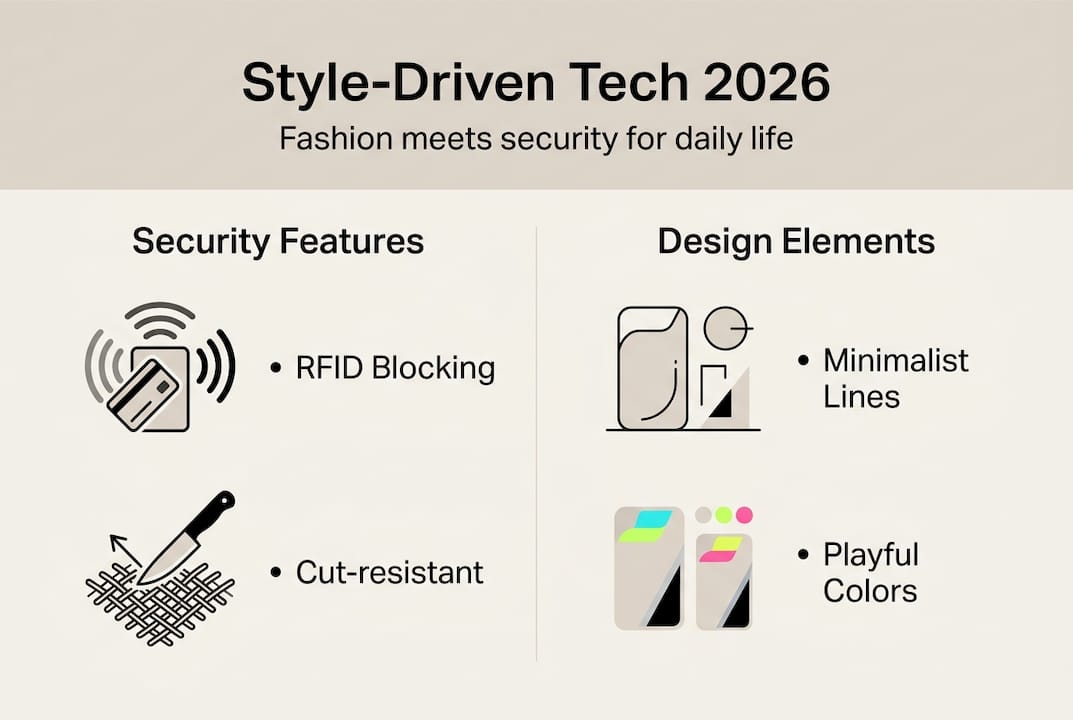
The key features that define this category include:
- Subtle, clean silhouettes that don’t telegraph security features
- Concealed tech layers like RFID-blocking liners and cut-resistant panels
- Multi-functional use so one item handles both daily style and daily protection
- Material innovation that keeps pieces lightweight and wearable
If you want to explore how this category is evolving, fashionable tech accessories are setting a new standard for what everyday carry can look like. The broader conversation around blending style and security is also worth understanding before you shop. For a practical breakdown of how these features translate to real daily use, stylish security and convenience covers the ground well.
The Guardian Design trend: Anti-theft, privacy, and playful elegance
With the basics defined, let’s see how the leading industry trend, Guardian Design, brings these principles to life in 2026.
Guardian Design is not a niche concept. It’s a full macro-trend forecasted by WGSN, one of the world’s most respected trend agencies. The Guardian Design macro-trend integrates anti-theft features like lockable zippers, cut-resistant fabrics, and RFID-blocking pockets alongside privacy-protection elements like signal-blocking fabrics and surveillance-resistant textiles, all without compromising aesthetics. That last part is the hard part, and it’s what makes the trend significant.
In 2026, Guardian Design is being shaped by a secondary aesthetic called “Unserious Everything.” This is where utility meets bold, playful accents. Think bright hardware on a cut-resistant crossbody, or a signal-blocking phone pouch in a vivid color. The idea is that protection does not need to look defensive or paranoid. It can look fun, confident, and intentional.
Here’s how Guardian Design features map across common product categories:
| Product type | Guardian Design feature | Aesthetic integration |
|---|---|---|
| Bags and backpacks | Cut-resistant straps, lockable zippers | Clean lines, minimal branding |
| Wallets | RFID-blocking liner | Slim profile, premium materials |
| Jackets and hoodies | Signal-blocking inner pocket | Standard tailoring, no visible tech |
| Phone cases | Faraday-style shielding | Minimalist, matte finishes |
Seamless integration is the whole point. If a security feature changes how a product looks or feels in a way that draws attention, it has failed the design brief. The best Guardian Design pieces pass a simple test: would you know the tech was there if nobody told you?

Pro Tip: When shopping for Guardian Design accessories, check whether the security features are built into the material itself or added as a visible attachment. Built-in is almost always better for both aesthetics and long-term durability.
For a deeper look at how specific features are being implemented across 2026 collections, the security features guide is a solid starting point.
Why urban lifestyles drive demand for stylish security
Guardian Design shapes the look and function of these products, but why do city professionals crave them? Let’s explore the real-world motivators.
City life is genuinely riskier than most people admit. Over 200 phone and bag thefts occur daily in the UK alone, and Gen Z vigilance around data theft and surveillance is pushing cost-conscious buyers toward multi-functional items that solve more than one problem at once. That stat is not abstract. It represents real losses that happen on real commutes.
Here are the core motivators driving demand among urban professionals:
- Physical theft risk. Crowded transit, busy streets, and shared spaces create constant opportunity for bag snatching and pickpocketing.
- Digital theft risk. RFID skimming, where a thief reads your card data wirelessly without touching your wallet, is a growing concern in dense urban areas.
- Surveillance awareness. Gen Z in particular is alert to how personal data gets captured and shared, making signal-blocking features genuinely appealing.
- Multi-purpose value. Buying one item that handles style, security, and daily function is smarter than buying three separate products.
Consider a typical morning commute. You’re on a packed train, bag pressed against strangers, phone in hand. A cut-resistant backpack with a lockable zipper means nobody is reaching into your bag unnoticed. An RFID-blocking wallet means your contactless cards stay private even when someone stands close enough to scan them. You don’t think about any of this consciously because the gear handles it quietly.
That invisible confidence is what tech fashion tips point to as the real value proposition. And if you want to see how specific products deliver on this promise, wearable technology for secure style gives you concrete examples to evaluate.
Balancing subtlety with strong protection: Real-world edge cases
Knowing why these products matter, it’s time to unpack some of the trade-offs and challenges brands face when merging tech and fashion.
Not every attempt at style-driven tech lands well. Some products overcorrect by making security features too visible, which creates what critics call “fear marketing.” When a bag looks like it was designed for a war zone, it signals anxiety rather than confidence. That’s the opposite of what Guardian Design intends. A notable example: the Issey Miyake x Apple pocket drew criticism for exposing rather than concealing its tech integration, breaking the seamless aesthetic that defines the category.
Here’s a quick comparison of approaches that work versus those that fall short:
| Approach | What it looks like | Result |
|---|---|---|
| Built-in RFID liner | Invisible, inside the wallet | Clean design, full protection |
| Visible anti-theft strap | External metal cable on bag | Functional but draws attention |
| Signal-blocking inner pocket | Standard jacket lining | Seamless, no aesthetic cost |
| Oversized lock hardware | Prominent padlock on zipper | Looks defensive, not stylish |
Durability is another real consideration. E-textiles (fabrics with embedded electronic or protective properties) need to survive washing, daily wear, and the general abuse of city life. Look for products that specify washability and material resilience. A signal-blocking lining that degrades after six months of use is not a security feature, it’s a marketing claim.
Pro Tip: Before buying any style-driven tech accessory, search for the specific care instructions. If a brand does not clearly state whether the security features survive washing, that’s a red flag worth taking seriously.
For a broader view of where the category is heading, innovation in accessories covers the 2026 landscape well. And if you want practical guidance on maintaining your gear, security tips for fashion tech is worth bookmarking.
Our perspective: Why ‘style-first’ tech matters in 2026
Here’s the take that most trend roundups miss: the best style-driven tech is not really about technology at all. It’s about design philosophy. The brands getting this right are the ones that start with how a product should look and feel, then engineer the security features to fit that vision. The ones getting it wrong do it in reverse, bolting style onto a security product and hoping nobody notices.
The next wave we’re watching is what we’d call playful resilience. It’s the idea that your gear can be bold, colorful, and expressive while still being genuinely protective. That combination is becoming a status signal for city dwellers who are informed enough to know what’s inside their accessories. It’s not about looking tough. It’s about looking like you’ve thought carefully about how you move through the world.
The brands that will win this decade are the ones that treat invisible protection as a design feature, not a selling point. If you want to understand where this is all going, anti-theft fashion insights lays out the trajectory clearly. Demand more from your accessories. You deserve gear that protects you without announcing that it does.
Next steps: Elevate your style and security
If you’re ready to upgrade your everyday accessories with this next-gen approach, here’s how to get started.
The principles behind Guardian Design are not just a trend forecast. They’re a practical framework for choosing gear that works as hard as you do without compromising your look. At Invisitechwear, the entire product line is built around this philosophy: security features that disappear into clean, modern designs you’ll actually want to carry.
A great entry point is the RFID-blocking slim wallet, which delivers full card protection inside a minimalist profile that fits any pocket. From there, explore bags, jackets, and accessories built to the same standard. Style and security are not a trade-off here. They’re the same thing.
Frequently asked questions
How does style-driven tech differ from regular wearable technology?
Style-driven tech prioritizes aesthetics and seamless security features, blending fashion with privacy and anti-theft solutions instead of just adding gadgets to accessories. Regular wearables make the technology visible by design, while style-driven tech hides it entirely within the product.
What security features are most common in style-driven tech accessories?
Look for lockable zippers, RFID-blocking pockets, cut-resistant fabrics, signal-blocking textiles, and hidden compartments, all designed to keep your belongings and data safe. The Guardian Design macro-trend integrates all of these without compromising aesthetics.
Why are young urban professionals especially interested in style-driven tech?
Rising theft and data risks in cities and a desire for multi-use, stylish gear make these accessories ideal for daily security and convenience. Urban risks and Gen Z vigilance around surveillance are the primary drivers of this demand.
Are style-driven tech accessories durable and easy to care for?
Most well-designed products emphasize washable, durable materials and flexible e-textiles, but always check product specs for maintenance advice. Washable e-textiles are a key benchmark for quality in this category.


