

The old tradeoff between looking good and staying secure is over. Innovation in personal items now integrates smart textiles, miniaturized sensors, biometric monitoring, GPS tracking, and wireless charging to enhance security, convenience, and style. Tech-first design means your accessories do more for you every day. This article reveals what innovation looks like in personal items and what to watch for as fashion meets function.
Table of Contents
- Why innovation matters in personal items
- The technology inside: How smart materials and sensors work
- Market forces driving adoption: The rise of smart, stylish accessories
- Security and convenience redefined: Innovations that protect and simplify
- Challenges and ethical questions: Barriers to mainstream adoption
- Looking ahead: The next wave of innovation in personal items
- Upgrade your everyday: Shop the latest in innovative personal items
- Frequently asked questions
Key Takeaways
| Point | Details |
|---|---|
| Innovation fuses style and function | Modern accessories now offer greater security and convenience without sacrificing aesthetics. |
| Tech inside is smarter and smaller | Miniaturized sensors and smart fabrics power advanced features like health monitoring and anti-theft technologies. |
| Adoption is fast but faces challenges | Market growth is rapid, yet privacy, battery limits, and costs remain major hurdles to wider use. |
| Look for emerging trends | Sustainable materials, AI-powered customization, and connected ecosystems are the next frontiers to watch. |
Why innovation matters in personal items
What makes a personal item innovative? It’s the seamless integration of smart textiles, biometric locks, and embedded sensors that deliver real utility without sacrificing aesthetics. These features transform wallets, bags, jewelry, and eyewear into active tools that protect your data, track your belongings, and simplify daily routines.
Two perspectives dominate the conversation. Optimists see fusion of fashion and tech as symbiotic, delivering health and safety gains. Critics highlight privacy risks and high costs that may exclude many consumers. Both views matter as you evaluate which innovations align with your priorities.
Core benefits include enhanced security through RFID blocking and GPS tracking, convenience via wireless charging and haptic alerts, and a new style language that signals you’re forward-thinking. These advantages explain why innovation matters for tech-savvy fashion enthusiasts.
Key innovation drivers:
- Smart textiles that respond to environmental changes
- Biometric authentication for secure access
- Miniaturized sensors for health and location tracking
- Wireless connectivity for seamless device integration
“The convergence of fashion and technology is not just about adding gadgets to clothing. It’s about reimagining how we interact with our environment and express our identity through what we wear.”
The technology inside: How smart materials and sensors work
Understanding why innovation matters, let’s see how advanced technology shows up in the pieces you wear or carry. Sensor-embedded fabrics, flexible batteries, Bluetooth connectivity, edge AI, and haptic feedback are key underlying mechanics that power today’s smartest accessories.
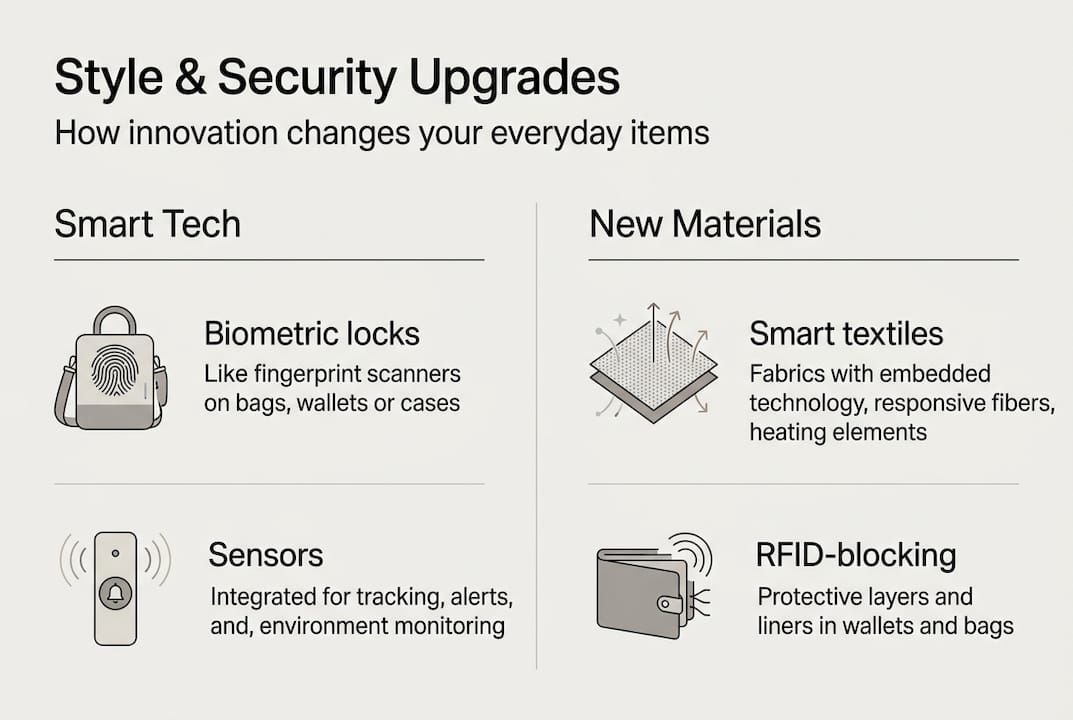
Miniaturization is the breakthrough. Engineers compress processors, batteries, and antennas into millimeter-scale components that fit inside jewelry clasps, bag linings, and eyewear frames. This allows designers to maintain clean lines and elegant proportions while embedding powerful functionality.
| Item Type | Core Innovation | Primary Benefit |
|---|---|---|
| Smart jewelry | Biometric sensors, haptic alerts | Health tracking, discreet notifications |
| Connected bags | GPS modules, RFID blocking | Theft prevention, contactless security |
| Tech eyewear | Micro-displays, bone conduction audio | Hands-free communication, AR overlays |
| Wearable wallets | NFC chips, flexible batteries | Contactless payments, slim profile |
Practical limitations remain. Battery life typically ranges from one to seven days depending on usage intensity. Costs run higher than traditional accessories, with premium smart items starting around $200. Durability concerns arise when electronics meet daily wear and tear. Future solutions include solar-charging fabrics, modular battery packs, and more robust waterproofing.
Pro Tip: Check whether your smart accessory supports firmware updates. This extends product lifespan and adds new features over time, protecting your investment.
Explore more about tech fashion materials and review smart clothing examples to see how these technologies apply across categories.
Market forces driving adoption: The rise of smart, stylish accessories
Now that you know what’s inside, let’s look at how innovation is taking hold and reshaping the marketplace. The wearable tech market is projected to grow from USD 84.53 billion in 2025 to USD 176.77 billion by 2030, reflecting a compound annual growth rate of 15.9%. The fitness wearables segment alone is expected to reach USD 34.1 billion in 2025.

Major segments include wearable fitness trackers, smart bags with integrated charging and GPS, and connected eyewear that overlays digital information onto your field of view. Fashion enthusiasts are driving demand because they refuse to choose between style and substance.
Featured products pushing innovation forward:
- Oura Ring: Tracks sleep quality, heart rate variability, and stress levels in a sleek titanium band
- Ray-Ban Meta glasses: Combines classic eyewear design with built-in cameras and audio for hands-free content capture
- Smart handbags: Offer wireless phone charging, GPS tracking, and RFID-blocking compartments in luxury materials
- Minimalist wallets: Feature NFC payment chips and carbon fiber RFID shields in ultra-slim profiles
This growth reflects a fundamental shift. You no longer accept accessories that only look good or only work well. You expect both, and brands are responding with products that deliver on that promise. Discover current wearable tech trends and compare best smart accessories to find options that match your style.
Security and convenience redefined: Innovations that protect and simplify
If you’re ready to see how innovation changes your day-to-day experience, here’s how new features truly elevate safety and ease. GPS trackers in bags and bikes boost recovery rates from 3-5% to over 30%, while smart locks and RFID blocking are becoming standard.
| Feature | Security Benefit | Convenience Benefit |
|---|---|---|
| GPS tracking | Real-time location alerts, recovery assistance | Find misplaced items instantly |
| RFID blocking | Prevents contactless card skimming | Protects multiple cards simultaneously |
| Biometric locks | Eliminates key/code vulnerability | Unlock with fingerprint or face scan |
| Haptic alerts | Discreet theft notifications | Silent reminders for phone, keys, wallet |
| Wireless charging | Tamper-evident power sources | Charge devices on the go |
How GPS recovery works in real life:
- Attach or embed a GPS module in your bag, bike, or jacket
- Pair the device with your smartphone app
- Set geofence boundaries that trigger alerts when crossed
- Receive instant notifications if your item moves unexpectedly
- Share live location data with law enforcement for faster recovery
How RFID blocking protects your data:
- RFID-enabled credit cards broadcast signals when scanned
- Thieves use portable readers to capture card data from several feet away
- RFID-blocking materials create a Faraday cage around your cards
- This cage absorbs and deflects electromagnetic signals
- Your card data remains secure even in crowded spaces
Pro Tip: Most users forget to enable location permissions and background app refresh for GPS trackers. Without these settings, your device can’t send alerts when you’re away from your phone.
For a deeper look at protective gear, review must-have security gadgets and compare options in our tech accessories comparison.
Challenges and ethical questions: Barriers to mainstream adoption
Of course, new technology isn’t without its issues. Let’s address what savvy users should consider before investing. High costs, battery limitations, surveillance risks with always-on microphones, and device longevity are current drawbacks that affect purchasing decisions.
Privacy concerns center on biometric data collection and AI processing. When your ring tracks your sleep patterns or your glasses record your surroundings, who owns that data? How is it stored, and can third parties access it? These questions lack clear answers across many products.
Battery life remains a practical barrier. Charging your wallet or jewelry every few days adds friction to daily routines. Some users find this inconvenience outweighs the benefits, especially when traditional alternatives require no power at all.
Upfront costs run high. Premium smart accessories often cost three to five times more than conventional equivalents. Ongoing expenses include subscription fees for GPS tracking services, replacement batteries, and software updates that may require new hardware.
Key risks and mitigation strategies:
- Privacy exposure: Review data policies, disable unnecessary sensors, use local processing when available
- Battery dependency: Choose items with week-long battery life, carry portable chargers, maintain backup non-smart versions
- Cost barriers: Prioritize one or two high-impact items, wait for second-generation models with lower prices
- Obsolescence: Select brands with strong update track records, verify compatibility with open standards
“We’re at a crossroads where the promise of seamless technology meets legitimate concerns about surveillance and autonomy. The winners will be products that empower users with control and transparency, not those that extract data at the expense of trust.”
Balance these considerations by exploring top tech wearables and staying informed about fashion tech trends that prioritize user rights.
Looking ahead: The next wave of innovation in personal items
Understanding today’s limitations sets up how tomorrow’s accessories could go further. Let’s explore what’s next for innovation in personal items. Smart handbags with wireless charging, jewelry measuring wellness and stress, and future potential for hyper-personalization and eco-friendly materials are reshaping the landscape.
Sustainable materials and circular design concepts are gaining traction. Brands are experimenting with biodegradable electronics, recycled metals, and modular components that allow you to upgrade sensors without replacing entire products. This reduces waste and lowers long-term costs.
Ultra-personalized accessories through data and AI will tailor functionality to your specific routines. Imagine a wallet that learns your spending patterns and alerts you to unusual transactions, or a bag that adjusts its security settings based on your location and time of day.
Integration with smart home and urban environments will create seamless experiences. Your jacket could unlock your front door as you approach, your glasses could display transit schedules when you glance at a bus stop, and your jewelry could authenticate payments without pulling out your phone.
How fashion-forward consumers can stay ahead:
- Follow brands that prioritize open standards and interoperability
- Test new features through rental or trial programs before committing
- Join communities that share reviews and real-world performance data
- Advocate for privacy protections and right-to-repair policies
The next wave will reward those who demand both innovation and accountability. Stay current with stylish wearable tech that balances cutting-edge features with timeless design.
Upgrade your everyday: Shop the latest in innovative personal items
Ready to bring tomorrow’s innovation to your wardrobe? Here’s where to start. We’ve curated a collection of cutting-edge accessories that solve real convenience and security needs without compromising on style.
Our RFID-blocking wallets and bags protect your contactless cards from digital pickpockets while maintaining sleek, minimalist profiles. The RFID slim wallet combines carbon fiber shielding with a pop-up card holder, giving you instant access to your most-used cards in a design that fits comfortably in any pocket.
Every product we feature reflects the innovations discussed in this guide: smart materials, thoughtful engineering, and a commitment to making your life easier and more secure. Whether you’re looking for GPS-enabled bags, biometric locks, or wireless charging solutions, you’ll find options that match your aesthetic and functional requirements.
Join a community that values form, function, and peace of mind. Shop InvisiTechWear to explore our full range of tech-infused accessories designed for modern living.
Frequently asked questions
How do smart accessories enhance everyday security?
Innovations like GPS trackers and RFID blocking significantly reduce theft risk and increase recovery chances from 3-5% to over 30%. These features provide real-time alerts and protect your financial data from contactless skimming.
What are the main technology trends in personal items for 2026?
Key trends include smart textiles, miniaturized sensors, biometric monitoring, sustainable materials, and seamless integration with other devices. These innovations deliver health tracking, location services, and wireless connectivity in stylish form factors.
What are the risks of using tech-enabled personal items?
Main risks include privacy concerns, battery limitations, and costs, so users should review security settings and product support. Always-on microphones and biometric data collection raise surveillance questions that require careful evaluation.
Which smart personal items are best for both style and function?
Leading options include the Oura Ring, smart handbags with charging capability, and connected eyewear like Ray-Ban Meta glasses. These products balance elegant design with practical features like health tracking, GPS, and hands-free communication.


