

RFID-blocking gear has become one of the most debated accessories in personal security. Some people swear by it; others call it a marketing gimmick. The truth sits somewhere in the middle. RFID skimming is possible in theory but rare in real life, with most card fraud still coming from physical skimmers. That said, the right RFID-blocking accessory does more than protect your data. It signals that you take your security seriously, and it can look great doing it. This guide breaks down how the technology works, when it actually matters, and how to pick gear that fits your lifestyle.
Table of Contents
- How RFID works and where your daily risks lie
- The science behind RFID-blocking gear: Does it actually work?
- RFID skimming: Real risks vs. hype
- Choosing the right RFID-blocking accessory for your style and needs
- Stylish and trusted RFID-blocking gear for modern efficiency
- Frequently asked questions
Key Takeaways
| Point | Details |
|---|---|
| Wireless skimming is rare | RFID wireless identity theft is much less common than public perception suggests. |
| Quality matters most | Only gear with full metal or lined construction achieves 100% blocking in tests. |
| Travel and crowds raise risk | RFID-blocking gear is most valuable during international travel or in crowded transit situations. |
| Layered security is best | Combining gear with bank alerts and digital wallets gives the strongest real-world protection. |
| Style meets function | Modern RFID-blocking gear offers protection without sacrificing design or convenience. |
How RFID works and where your daily risks lie
RFID stands for Radio Frequency Identification. It is the technology embedded in your contactless credit cards, transit passes, hotel key cards, and even your passport. A tiny chip stores your data, and a reader sends out a radio signal to pull that data wirelessly, no swipe or insert required. Understanding RFID explained helps you see exactly where your exposure starts.
Contactless cards use 13.56 MHz radio frequencies, and a reader typically needs to be within a few centimeters to pull data. That proximity requirement is actually your first line of defense. Still, in dense urban environments like subway cars, airport security lines, or packed festivals, that gap closes fast.
“RFID skimming is theoretically possible, but the real-world risk remains low for most consumers. Physical skimmers at ATMs and point-of-sale terminals cause far more documented losses.” — RFID privacy risks
Here is where tech-savvy consumers are most likely to encounter risk:
- International travel: Airports and border crossings involve passport scans and crowded queues
- Urban commutes: Packed subway cars put strangers within centimeters of your wallet
- Festivals and events: High foot traffic and distracted crowds create opportunity
- Shared workspaces: Open office environments with multiple unknown devices nearby
- Tourist hotspots: Pickpocket-heavy areas where digital theft can accompany physical theft
Reviewing RFID protection steps and understanding RFID basics gives you a clearer picture of where your cards are most exposed and what you can do about it.
The science behind RFID-blocking gear: Does it actually work?
RFID-blocking gear works by creating what engineers call a Faraday cage, a conductive enclosure that blocks electromagnetic fields. Metal mesh and metallic fabrics absorb or redirect radio waves before they reach your card’s chip. The result is that a reader simply cannot communicate with your card while it sits inside the wallet or sleeve.
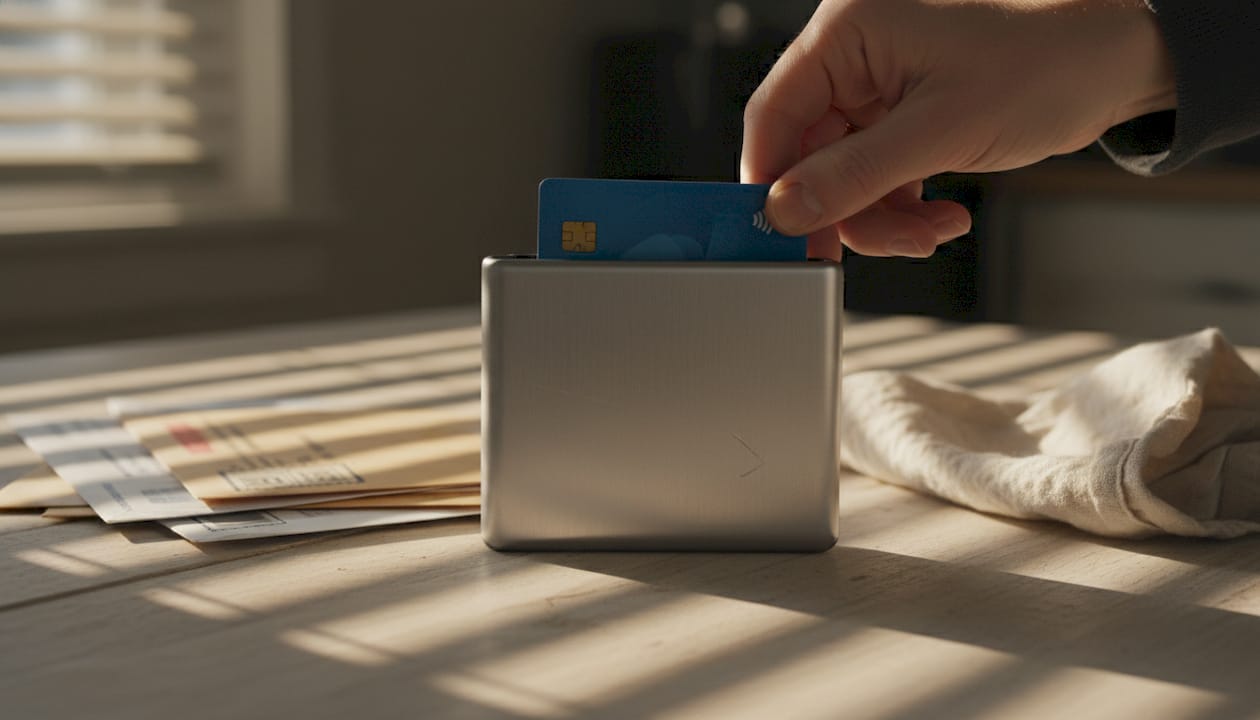
Not all blocking gear performs equally. Budget options often use partial lining or thin metallic coatings that leave gaps. Metal wallets achieve 100% blocking with attenuation above 40 dB, which is the industry standard for effective protection. Fabric-lined wallets vary widely depending on the density and continuity of the metallic layer.
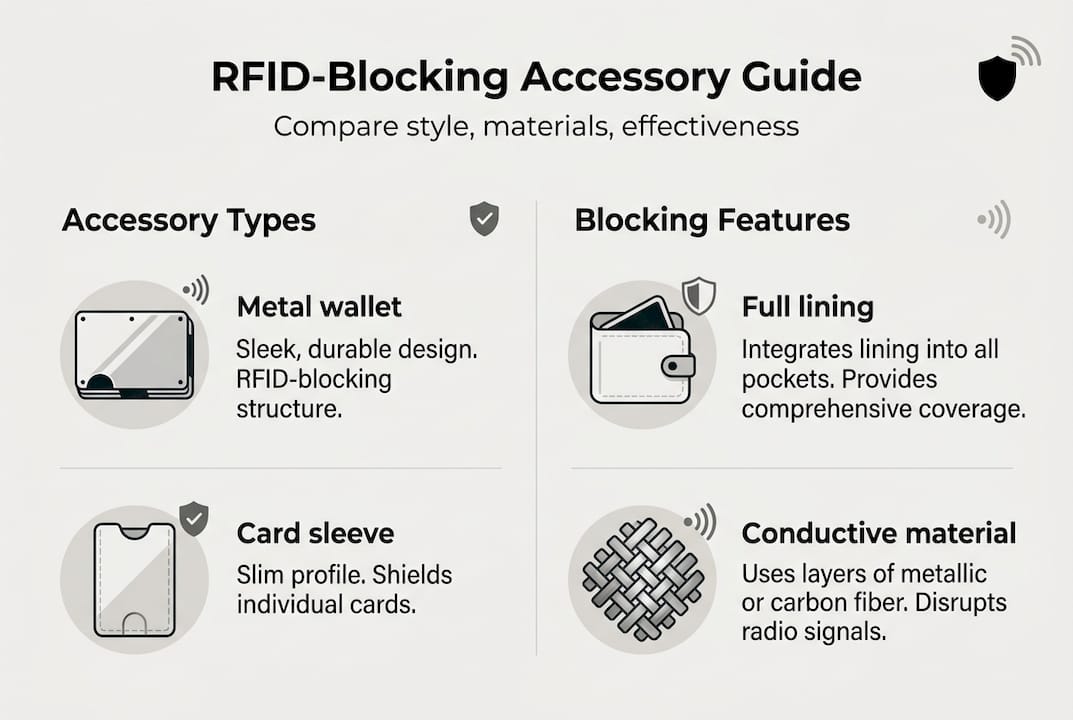
Here is a quick comparison of common RFID-blocking options:
| Accessory type | Material | Blocking effectiveness | Style factor |
|---|---|---|---|
| Metal wallet | Aluminum or stainless steel | Very high (100% in tests) | Sleek, minimalist |
| Fabric wallet with lining | Metallic mesh fabric | High if fully lined | Versatile, many designs |
| Card sleeve | Thin aluminum sheet | Moderate to high | Compact, portable |
| Budget wallet | Partial metallic coating | Low to moderate | Varies |
| Regular leather wallet | No shielding | None | Classic |
You can run a simple test at home. Place your contactless card inside the wallet and try tapping it on a payment terminal or scanning it with an NFC-enabled phone. If the card reads through, the wallet is not blocking. If it fails to read, you have real protection. Check out this RFID accessory comparison and the RFID-blocking guide for deeper product breakdowns.
Pro Tip: Always check that the wallet’s lining covers the full interior with no exposed edges or gaps. A wallet that only lines one side leaves your cards partially exposed to a determined reader.
RFID skimming: Real risks vs. hype
Here is the stat that surprises most people: there are zero documented mass RFID identity theft cases on record. Meanwhile, physical card skimming compromised 243,000 cards according to FICO’s 2025 data. That is a massive gap between the perceived threat and the actual one.
Some security researchers label RFID-blocking gear “security theater” for everyday use. But that label misses the nuance. The layered approach combining RFID gear with bank alerts, digital wallets, and smart habits is what experts actually recommend. No single tool covers every angle.
| Threat type | Documented cases | Primary prevention |
|---|---|---|
| Physical card skimming | Hundreds of thousands annually | Chip cards, card monitoring |
| Wireless RFID skimming | Near zero mass cases | RFID-blocking gear, proximity awareness |
| Data breach (online) | Millions per year | Strong passwords, two-factor authentication |
| Lost or stolen card | Very common | Immediate cancellation, digital wallets |
“Contactless payments are often safer than swiping or inserting a chip because the transaction uses a one-time encrypted token, not your actual card number.” — RFID privacy risks
So when does RFID gear genuinely make sense? Here are the scenarios where it earns its place:
- You travel internationally and carry a passport with an embedded RFID chip
- You commute daily through dense urban transit systems
- You carry multiple contactless cards and want centralized protection
- You frequent high-traffic tourist areas or large public events
- You want peace of mind without changing your daily routine
Understanding RFID security and privacy helps you decide where you personally fall on that spectrum. If you are still weighing the decision, reading about choosing RFID wallets and browsing RFID wallets and bags gives you a concrete starting point. For travel-specific use cases, RFID travel cases offer a useful real-world perspective.
Choosing the right RFID-blocking accessory for your style and needs
The market is full of options, and the best one depends on how you live. A slim card sleeve works for someone who carries two cards and a phone. A full passport cover makes sense for frequent flyers. A structured bag with a built-in RFID lining suits urban commuters who want hands-free protection across multiple items at once.
Verified, full-coverage gear is the standard to aim for in high-risk settings. Partial coverage is better than nothing, but it is not something you want to rely on when you are navigating a crowded international airport. Here is a step-by-step process for picking the right accessory:
- Identify your highest-risk scenario. Travel, daily commute, or occasional crowded events each call for different levels of protection.
- Choose the right form factor. Wallet, sleeve, passport holder, or bag. Match it to how many cards and documents you carry.
- Check the material and coverage. Look for full metallic lining with no gaps. Aluminum and stainless steel offer the strongest shielding.
- Run the NFC test before you commit. Place your card inside and try a contactless payment. No read means real protection.
- Factor in your style. A wallet you actually use every day is more effective than a technically superior one sitting in a drawer.
Pro Tip: Look for designs that double as minimalist fashion accessories. Slim metal wallets and structured leather-look bags with RFID lining give you protection that blends into your everyday aesthetic without screaming “security gear.”
For a deeper breakdown of what to look for, the guide on choosing RFID gear walks through materials and testing in detail. And if you want to see how RFID-blocking fashion has evolved into genuinely stylish territory, that resource is worth a look. For a technical perspective on how readers are blocked, blocking RFID readers covers the mechanics clearly.
Stylish and trusted RFID-blocking gear for modern efficiency
At InvisiTechWear, we build accessories for people who refuse to choose between looking good and staying protected. Every piece in our lineup is designed with full-coverage RFID lining, tested against real NFC readers, and styled to fit seamlessly into a modern wardrobe. Whether you are heading through airport security or navigating a packed city commute, our gear works quietly in the background so you do not have to think about it.

Our slim RFID wallet is one of our most popular picks for everyday carry. It combines a pop-up card mechanism with full aluminum shielding in a profile thin enough to disappear into any pocket. If you want to explore the full range, our RFID wallets and bags collection covers everything from passport holders to structured totes, all built with the same commitment to real protection and clean design.
Frequently asked questions
Do I really need RFID-blocking gear for everyday use?
For most people, the wireless skimming risk is low day to day, but RFID-blocking gear adds genuine peace of mind in crowded or travel settings where proximity to strangers is unavoidable. Risk is low for most consumers outside specific high-risk scenarios.
How can I test if my RFID-blocking wallet really works?
Place your contactless card inside the closed wallet and tap it on a payment terminal or scan it with an NFC phone app. If the card does not read, the wallet is blocking. Metal wallets achieve 100% blocking in NFC app tests, making this a fast and reliable check.
What materials should I look for in reliable RFID-blocking gear?
Metal mesh, aluminum, and full-lined carbon fiber with no gaps offer the strongest protection. Faraday cage principles work best when the shielding material covers the entire interior without breaks or thin spots.
Is RFID skimming really a common crime?
No. Wireless RFID identity theft is extremely rare, with zero documented mass cases on record. Physical card skimming at ATMs and terminals causes far more documented losses each year.
Is RFID-blocking gear recommended for travel?
Yes. Experts point to airports, crowded transit systems, and international destinations as the settings where RFID-blocking gear provides the most practical benefit. Experts suggest RFID gear for travelers as a best practice in high-risk locations.


